A Practical Guide to Accountant Lead Generation
Most accounting firms rely on referrals until that pipeline quietly stops delivering, leaving owners searching for a repeatable way to acquire clients. This guide explains how accountant lead generation actually works, what approaches are worth the investment, and what a functioning acquisition system looks like in practice.
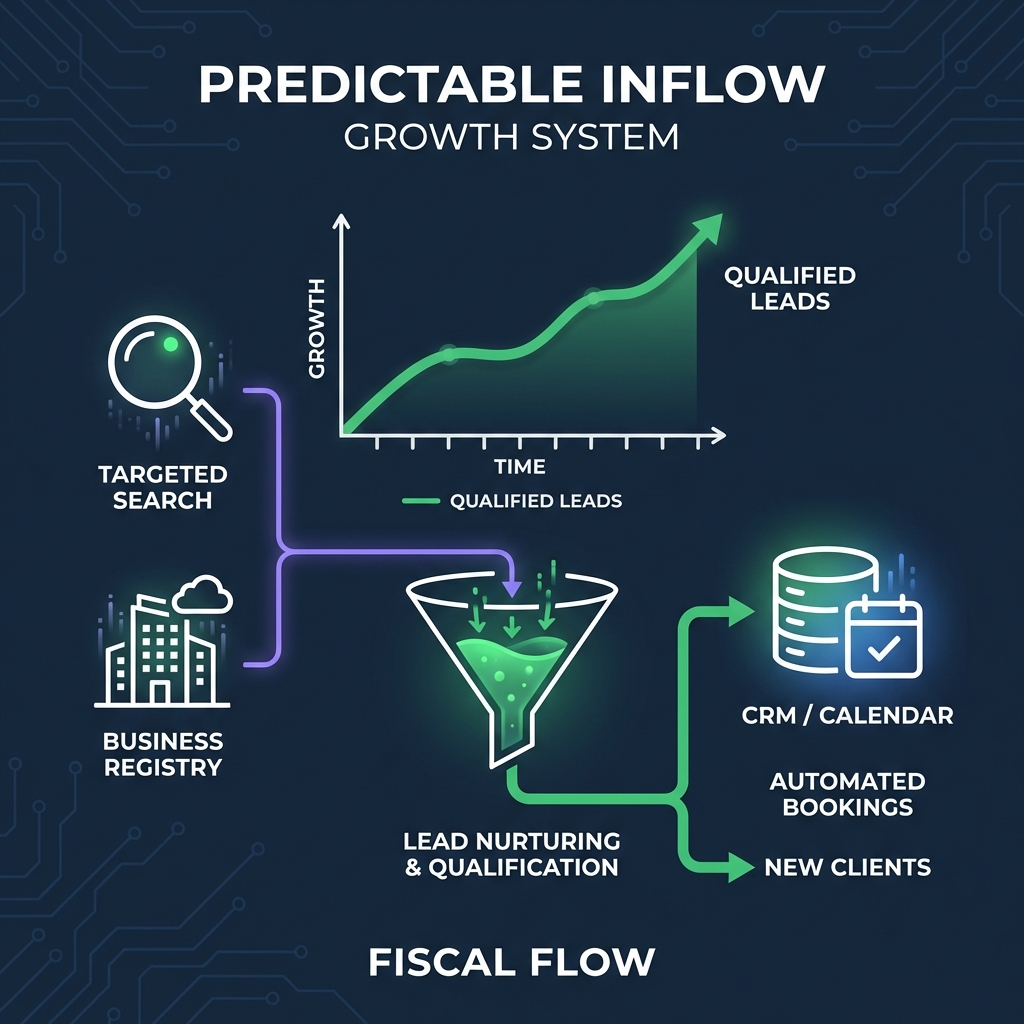
Why accountant lead generation is harder now
The supply of accountants is growing. Employment for accountants and auditors in the US is projected to grow 5% from 2024 to 2034, which means more practices competing for the same pool of business clients. Firms that previously relied on local reputation and word-of-mouth referrals are now competing in a search-driven market where visibility determines who gets the inquiry.
Online searches for financial and accounting advice have risen sharply year-on-year, but only 9% of consumers in the UK currently take financial advice, indicating a large gap between demand and capture. The firms closing that gap are those with deliberate acquisition infrastructure, not simply those with the longest track record.
MARKET NOTE Referral growth is not a lead generation system. It is a passive outcome of doing good work. When referrals slow, as they do for most firms at some stage, there is no fallback if no acquisition infrastructure exists.
Why the standard approach to lead generation fails accounting firms
A recurring theme among accountants seeking lead generation help is that initial attempts with generic marketing agencies produced little to no qualified inquiry. The core problem is that most lead generation advice is written for B2C businesses or SaaS products, not professional services firms with long sales cycles and high client lifetime value.
Running paid ads without positioning
Google and Meta paid campaigns can generate enquiries, but without a defined niche and a landing page built around a specific client type, the traffic produced is broadly irrelevant. A firm advertising general accounting services to a general audience will pay for clicks from sole traders looking for self-assessment returns when they actually want to work with growing SMEs. Ad spend without positioning is a reliable way to confirm that paid acquisition does not work, before actually testing whether it can.
Treating a website as a finished product
A website alone is insufficient for lead generation without clear calls-to-action and structured content that earns search visibility. Most accounting firm websites are digital brochures that describe services without directing a visitor toward any specific action. A site that does not rank for the searches your ideal clients are making, and does not convert the visitors it does receive, contributes nothing to pipeline.
The core framework for accountant lead generation
A functioning lead generation system for an accounting firm has five interdependent components. Diversified strategies are required for accounting firm growth in 2026, as SEO alone is insufficient and algorithmic shifts continue to affect search visibility. Each component below addresses a specific failure point that causes single-channel approaches to stall.
- Niche positioning: Define the specific client type, industry, or service need you are targeting before building any acquisition channel. Vague positioning produces vague leads. A firm that publicly serves e-commerce businesses, for example, can build content, ads, and referral relationships around a specific audience with specific problems, which increases conversion at every stage of the funnel.
- Search infrastructure: Build a structured set of landing pages and supporting content targeting the search terms your ideal clients are actually using. This is not one homepage and a services page. It is a deliberate architecture of pages, each targeting a specific query type, linked together in a way that signals topical authority to search engines.
- Paid acquisition: Once organic search infrastructure is in place, paid campaigns on Google and Meta can be used to accelerate inquiry volume. Paid and organic together produce more consistent lead flow than either channel alone, because paid campaigns capture demand immediately while organic compounds over time.
CRM automation and digital onboarding sit behind the acquisition channels. They ensure that when a lead arrives, it is followed up promptly, qualified through a consistent process, and, once converted, onboarded without requiring significant manual administration. A firm that generates leads but cannot process them efficiently will not scale regardless of how many enquiries come in.
Comparing the main approaches to accountant lead generation
There is no universally correct approach to accountant lead generation. The right option depends on the size of the firm, the target niche, the existing digital footprint, and the internal capacity to manage leads once they arrive. The table below compares the three most common routes accounting firms take, based on the practical outcomes each tends to produce.
| Approach | What works | Where it fails |
|---|---|---|
| DIY Marketing | Low upfront spend. Full control over messaging and brand voice. Suitable for firms with time to invest in content and SEO learning. | Slow to produce results. Requires consistent time investment that most firm owners do not have. High risk of building on incorrect assumptions about what drives search ranking or ad performance. |
| Generic Marketing Agency | Offloads execution. Can produce volume of activity quickly, including social posts, blogs, and ad campaigns. | Rarely produces qualified accounting-specific leads. Agencies without accounting sector experience typically apply generic B2B templates that do not reflect how accounting clients search or make decisions. |
→
How to implement accountant lead generation in a structured sequence
The order in which a firm builds its lead generation infrastructure matters. Starting with paid ads before fixing positioning, or building content before defining a target client, produces wasted spend and inconsistent results. The following sequence reflects the logical dependency between each component.
- Audit your current digital footprint: Identify which pages, if any, currently rank for relevant searches and what search terms your ideal clients are using to find accountants in your niche. This audit determines whether you are working with an existing foundation or starting from scratch.
- Define a specific niche before creating any new content or ad copy: Use business registry data and search volume data to identify a client segment with sufficient demand and manageable competition. Positioning to a specific niche is not optional. It is the prerequisite that determines whether every other investment in lead generation produces a return.