A Practical Implementation Guide to Digital Marketing for Accountants
Most accounting firms that invest in digital marketing see poor results because the strategies they use were designed for e-commerce or B2C businesses, not professional services firms with compliance obligations and long client decision cycles. This guide covers what actually works for accounting practices in 2026, based on the specific constraints and growth patterns that define the sector.
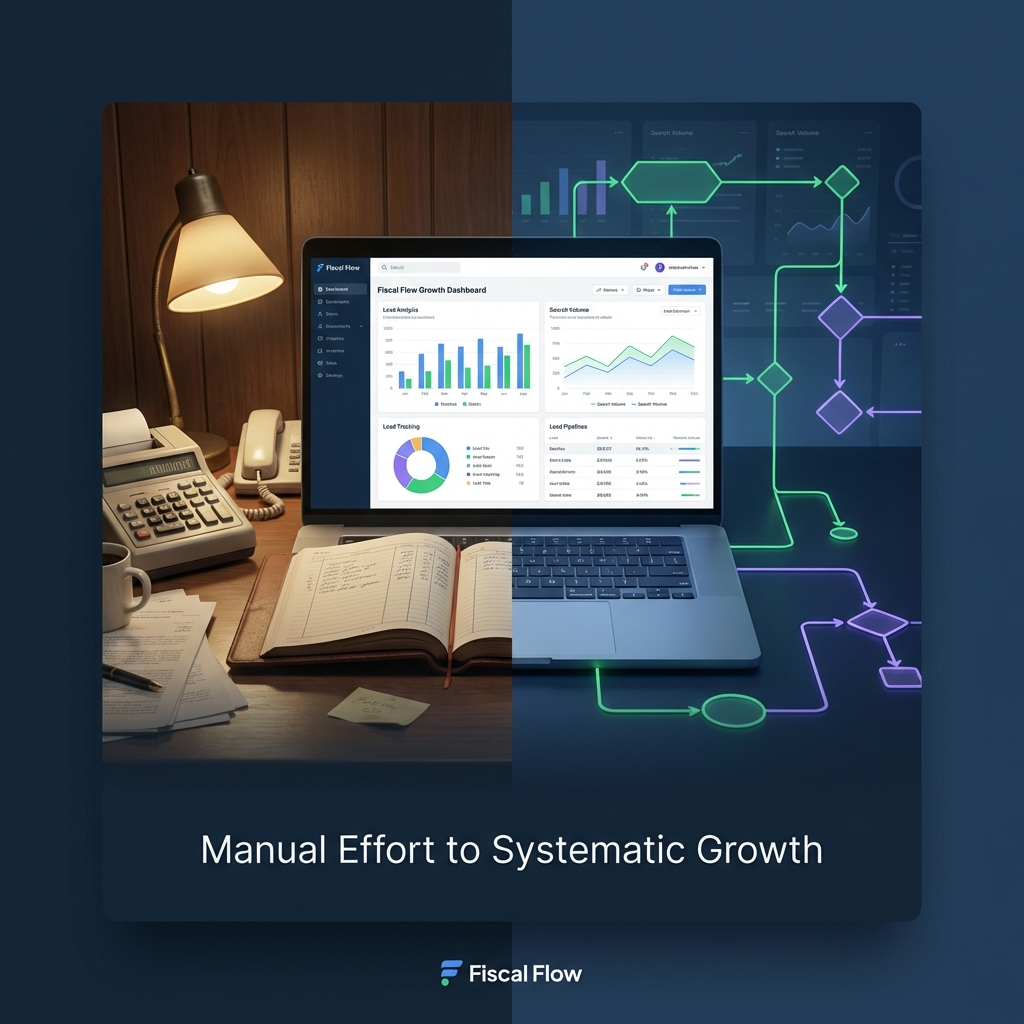
Why Digital Marketing for Accounting Firms Is Harder Than It Looks
According to Capterra’s 2026 accounting technology report, content marketing systems are the top operational concern for accounting firms this year. That signals a shift: firms that previously relied on referrals are now actively looking for structured approaches to digital demand generation. The problem is that most of the available guidance on digital marketing is not written with accounting practices in mind.
Accounting firms operate under constraints that most marketing frameworks ignore entirely. Client confidentiality obligations limit what you can say publicly. Tax season compresses available time to near zero for months at a stretch. Your clients are business owners who make decisions slowly and require trust before they engage. Generic digital marketing advice, built around frequency, virality or broad audience reach, does not map onto any of those realities.
CONTEXT The research from AccountingWeb’s digital accounting trends report identifies real-world pain points from SME owners dealing with accounting firms. Visibility in search, professional credibility online and the ability to respond to inbound enquiries efficiently are the three factors that most influence whether a firm wins or loses a new client digitally. None of these require daily social media posting or paid ad spend in the early stages.
Why the Standard Approach to Digital Marketing Fails Accounting Firms
Research from TaxProMarketer identifies four recurring failure patterns in accounting firm marketing: outdated websites with no conversion architecture, poor local SEO implementation, paid ads that generate unqualified traffic, and declining organic traffic caused by algorithm changes the firm was not prepared for. Each of these is a systems failure, not a budget failure. Spending more on the same approach does not fix a structural problem.
The Generalist Agency Problem
Most marketing agencies that take on accounting firm clients apply the same frameworks they use for retail or hospitality. They focus on follower counts, post frequency and awareness metrics that do not translate into qualified client enquiries for a professional services firm. The language, the offer structure and the targeting logic are all misaligned with how accounting clients actually evaluate and select a firm. The result is activity without conversion.
The DIY Trap
Accounting firm owners who attempt digital marketing themselves typically underinvest in the two areas that generate results: search architecture and conversion infrastructure. They may update a LinkedIn profile or publish occasional blog posts, but without a coherent structure connecting search intent to a specific landing page to a qualified consultation booking, individual tactics produce inconsistent outcomes. Karbon’s 2026 digital marketing guide for accountants confirms that tactics like SEO blog optimisation and LinkedIn activity only generate leads when they are connected to clear calls to action and conversion pathways on the firm’s website.
The Core Framework: How a Digital Marketing System for Accountants Actually Works
Fiscal Flow’s approach to digital marketing for accounting firms is built around five connected components. Each component addresses a specific gap that causes firms to generate traffic without clients, or enquiries without conversions. The framework is designed for firms with two to twenty staff who cannot afford to have a dedicated marketing team managing daily execution.
- Niche positioning strategy: Identify the highest-demand client segment your firm can credibly serve, using national business registry data and Google search data to confirm real volume before committing to a positioning. This step prevents the common mistake of targeting ‘all small businesses’ and instead builds a specific, searchable presence around a sector or service.
- SEO architecture and landing page systems: Build a structured set of pages that match the specific search queries your target clients are using when they are actively looking for an accountant. This is distinct from general brand content. Each page is built to convert a specific intent, with a clear next step that routes the visitor toward a consultation booking.
- Paid acquisition through Meta and Google: Once the organic architecture is in place and converting, paid channels can amplify reach within the same niche. Paid ads for accounting firms work when the targeting is specific to a business type or sector rather than a broad geographic radius. Without niche targeting, ad spend generates unqualified traffic that consumes budget without producing clients.
CRM automation and digital client onboarding complete the system. Generating an enquiry is only half the process. If a prospect submits a form and receives no response for 48 hours, or receives a generic reply that does not match their specific situation, the conversion is lost. Fiscal Flow integrates automated follow-up sequences and digital onboarding workflows directly with the firm’s existing practice management software, so new clients can be processed efficiently without adding administrative workload to the team.
Comparing Digital Marketing Options: Costs and Realistic Outcomes
The most common question from accounting firm owners is not ‘how does this work’ but ‘what does it cost and how do I know if it is working.’ The table below compares three realistic approaches based on the constraints typical of a firm with two to fifteen staff. The figures are not projections. They reflect the structural differences between approaches in terms of time, risk and measurable output.
| Option | What Works | What to Watch |
|---|---|---|
| DIY Digital Marketing | No agency fees. Full control over messaging and pace of execution. | High time cost for partners. Tactics rarely connect into a system. Results are inconsistent and difficult to attribute. Most firms stall within 90 days. |
| Generalist Marketing Agency | Faster execution than DIY. Some agencies have design and paid ad capability. | Strategies are rarely adapted for professional services compliance constraints. Reporting often focuses on traffic and impressions rather than qualified enquiries. Client churn is common when results do not appear in the first 60 days. |
→
How to Start Implementing a Digital Marketing System for Your Accounting Firm
The most practical starting point is not a rebrand or a social media calendar. It is an audit of your current search presence and conversion infrastructure. Specifically: what search queries bring visitors to your site, what pages those visitors land on, and what percentage of those visitors take any action toward a consultation. Most firms that run this audit for the first time find they are receiving some organic traffic but losing all of it because there is no structured path from page visit to enquiry.
- Audit your existing Google Search Console data to identify which queries are already sending visitors to your site. If you do not have Search Console set up, that is the first practical step. This data tells you what demand already exists for your firm’s services before you spend anything on paid acquisition.
- Review each key page on your website against a single question: does this page contain a specific, relevant call to action that routes the visitor toward booking a consultation? Karbon’s research confirms that call-to-action placement on the homepage is one of the most direct conversion variables for accounting firm websites. If your contact page is the only place a visitor can initiate contact, you are losing enquiries at every other page.