A Practical Guide to SEO for CPA Firms
Most CPA firm owners understand that clients search for accountants on Google before they ever ask for a referral, yet the majority of firms have no documented system for appearing in those searches. This guide covers the core components of a functional SEO setup for accounting practices, what typically prevents results, and how to evaluate whether a specialist-built system makes more sense than a generic agency relationship.
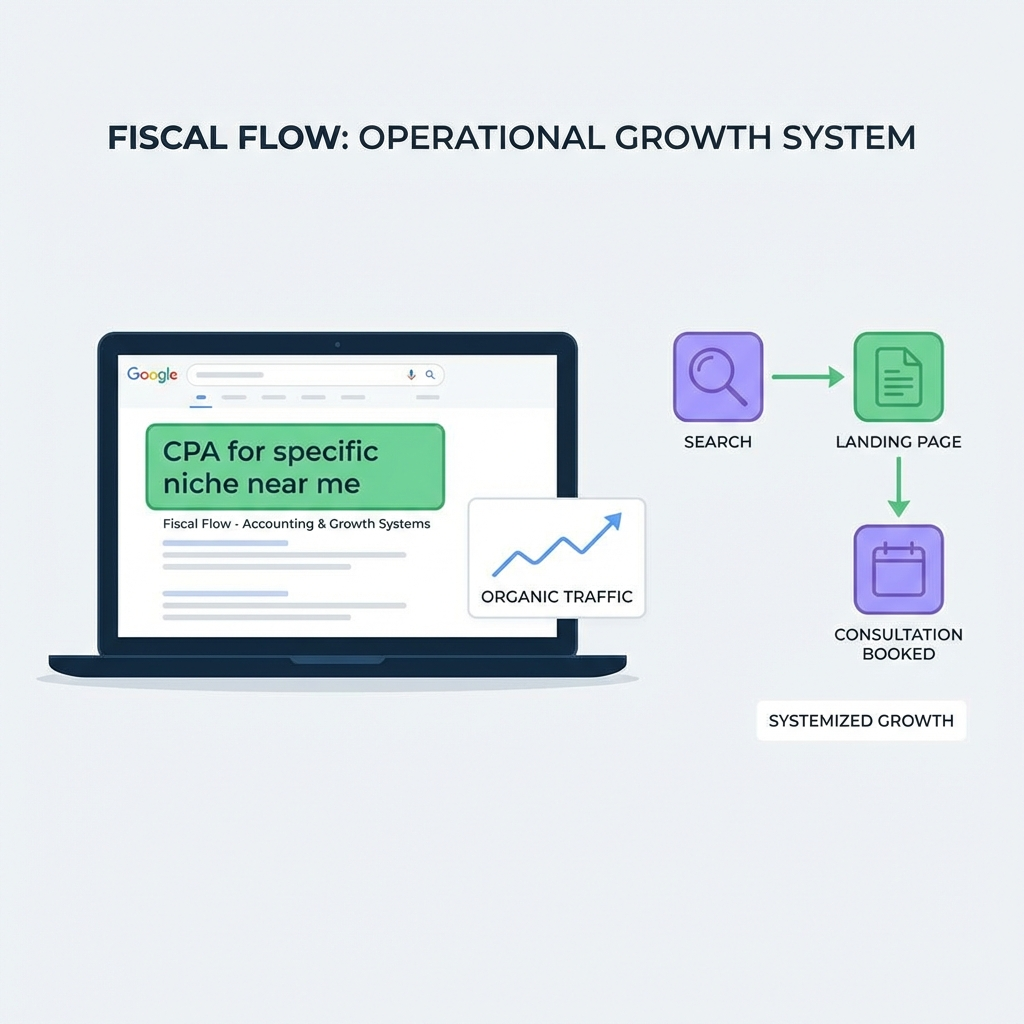
Why organic search is harder for CPA firms now
The structure of how people find professional service providers online has shifted materially in the last three years. Referral networks that once sustained steady intake are contracting as senior professionals retire and business owners default to Google searches when they need a CPA. According to the U.S. Bureau of Labor Statistics, over 1.4 million accountants and auditors are employed in the United States, and the majority of small and mid-size firms within that population are now competing for the same local search positions.
The technical environment is also changing. Search is evolving beyond traditional link-based ranking into what analysts are calling Answer Engine Optimisation and Generative Engine Optimisation, where AI-driven platforms cite authoritative sources directly in responses rather than returning a list of links. Research from Cal Partners on professional services marketing in 2026 confirms that citations and demonstrated authority are now the primary signals that determine whether a firm appears in AI-generated answers. A CPA firm with a thin or unstructured web presence is increasingly invisible not just on Google but across the full range of platforms where clients are actively searching.
CONTEXT Firms that built their intake on referrals from a specific professional network face a compounding problem: when that network ages or contracts, there is no organic search infrastructure to absorb the shortfall. Building an SEO system takes three to seven months to produce consistent results, which means the time to start is before the intake problem becomes critical.
Why the standard approach to SEO fails accounting firms
The majority of CPA firms that have tried SEO and seen no return made one of two errors: they hired a generic digital marketing agency that applied a small-business template to a professional services context, or they attempted to manage it internally without a defined system. Both paths produce the same outcome: intermittent content, unstructured site architecture and no clear connection between search rankings and client intake.
Generic agencies do not understand how CPA clients search
A tax preparation client searching in January searches differently from a business owner looking for a fractional CFO in September. These are different service lines, different client profiles and different keyword structures that require separate landing pages built around specific search intent. A widely discussed thread in the r/Accounting community identified poorly structured websites as the primary reason local accounting firms fail to rank despite years of online presence. Generic agencies treat all service pages as equivalent, which fragments authority and produces no clear ranking signal for any individual service.
Compliance and data security requirements are often ignored
CPA firms operate under regulatory obligations that affect how they can communicate services online, what client data they store through contact forms and how their digital infrastructure must be secured. The IRS requires tax preparers to maintain a written data security plan that covers all systems handling taxpayer data, which includes web forms and CRM tools connected to a firm’s website. Generic SEO setups rarely account for this, and the gap creates compliance exposure that a CPA firm owner may not discover until a data incident or audit surfaces the problem.
The core components of a working SEO system for CPA firms
An effective SEO system for a CPA firm is not a collection of isolated tactics. It is a structured sequence that starts with niche positioning, builds a technically sound site architecture around that positioning, and then generates and distributes content that addresses the specific questions your target clients are already asking in search. Fiscal Flow’s framework for accounting and CPA firms covers each of these layers as an integrated build rather than a menu of separate services.
- Niche and service positioning: Before any technical SEO work begins, the firm needs a defined position in the market. This means identifying the service line and client type where search demand is high and current competition is weak, using a combination of national business registry data and Google search data. A firm trying to rank for every accounting service in a major metro will rank for none of them.
- SEO architecture and landing page system: Each service and each target geography needs its own structured landing page built to match the search query a prospective client would actually type. The page must answer the searcher’s question directly, demonstrate the firm’s credibility in that specific area, and carry a clear path to a consultation. Site structure, internal linking and technical page health are configured at this stage.
- Content that addresses real client questions: Practitioners working through SEO challenges in professional forums consistently report that the most effective content for accounting firms addresses specific client pain points, such as tax savings strategies or entity selection decisions, rather than general firm promotion. This content builds topical authority over time and serves as the citation base that AI-driven search platforms draw from when generating answers about local accounting services.
The three components above form a closed loop. Positioning determines which keywords and content topics are worth pursuing. Architecture ensures the site can rank for those topics. Content builds the authority signals that allow rankings to hold and expand. Firms that implement only one or two of these components typically see limited results because the missing layer prevents the system from functioning as designed.
Comparing your options: cost and realistic outcomes
CPA firm owners evaluating SEO investment have three practical options: build and manage it internally, hire a generic digital marketing agency, or work with a provider that specialises exclusively in accounting firm growth. Each option carries a different cost structure, time requirement and risk profile. The table below summarises the practical tradeoffs so you can make a decision based on your firm’s current capacity and intake targets.
| Option | Practical Advantages | Known Limitations |
|---|---|---|
| DIY SEO | No agency fee. Full control over content and messaging. | Requires 8 to 15 hours per month from a fee-earner. No existing site architecture means setup takes significantly longer. Most firms stall at the content production stage. |
| Generic Digital Agency | Frees up internal time. Basic technical site issues are usually addressed. | Agency staff do not understand CPA service lines or client search behaviour. Compliance considerations around IRS data security requirements are typically not factored into the setup. Results are inconsistent. |
→
How to assess your current SEO setup and take the next step
Before committing to any SEO investment, a CPA firm owner should complete a structured audit of their current position. This does not require technical expertise. It requires honest answers to a set of diagnostic questions about how your firm currently appears in search, what pages you have for each service line, and what happens when a prospective client submits an enquiry through your website.
- Search your primary service and city combination in an incognito browser window. Note whether your firm appears in the Map Pack, in organic results, or not at all. If a direct competitor appears above you, visit their site and compare the structure of their service pages to yours.
- Audit your existing service pages. Each core service your firm offers, whether tax preparation, bookkeeping, business advisory or any other, should have its own dedicated page that is written for the specific search query a prospective client would use, not for internal firm navigation purposes.