
Why more leads will not fix a client quality problem
Most accounting firms that feel stuck are not short of enquiries. They are short of the right ones, and that is a positioning and pricing question before it is a traffic question. This is for firm owners with a full diary and thin margins.
When a firm comes to us asking for more leads, the first thing we do is ignore the request. Not out of contrarianism, but because in most cases the numbers do not support it. The enquiries are arriving. The diary is full. The problem sits further upstream, in what we would call a client quality problem: the firm has been accepting whoever turns up, and the mix of work that results cannot fund the practice properly.
Buying traffic on top of that mix makes the situation worse, faster. You end up with more of the same clients, more admin, and the same thin margin spread over longer hours.
What follows is the sequence we work through instead, and why it starts with the client list rather than the ad account.
We would not touch ads first

If you hired us tomorrow, the ad account would stay closed for a while. That surprises people, because paid acquisition is one of the things we build. The reason is practical. Advertising amplifies whatever your firm already does with an enquiry. If your intake process says yes to almost everyone and prices on gut feel, more enquiries simply means more of that.
We tend to see firms arrive after a period of steady growth in volume with no matching movement in profit. The instinct is to push harder on the top of the funnel. The more useful move is to look at what is happening once someone gets in.
Busy diary, thin money

The pattern is consistent enough to be diagnostic. The calendar is full from Monday to Friday, the team is at capacity, work is going out of the door, and yet the bank balance moves slowly. Partners are working evenings on compliance jobs that were priced two years ago and have grown quietly since.
This is not a productivity failure. Firms in this state are usually working harder than they need to. It is a composition problem. The portfolio contains a large number of low value, high contact clients, and they set the pace of the practice. Everyone feels the effect. Very few firms measure it, because the top line keeps rising and hides the rest.
Leads are the easy part. Any competent marketer can fill an accountant's inbox. Deciding who you serve best, and pricing the work properly, is the part that actually changes the numbers.
Name the actual problem
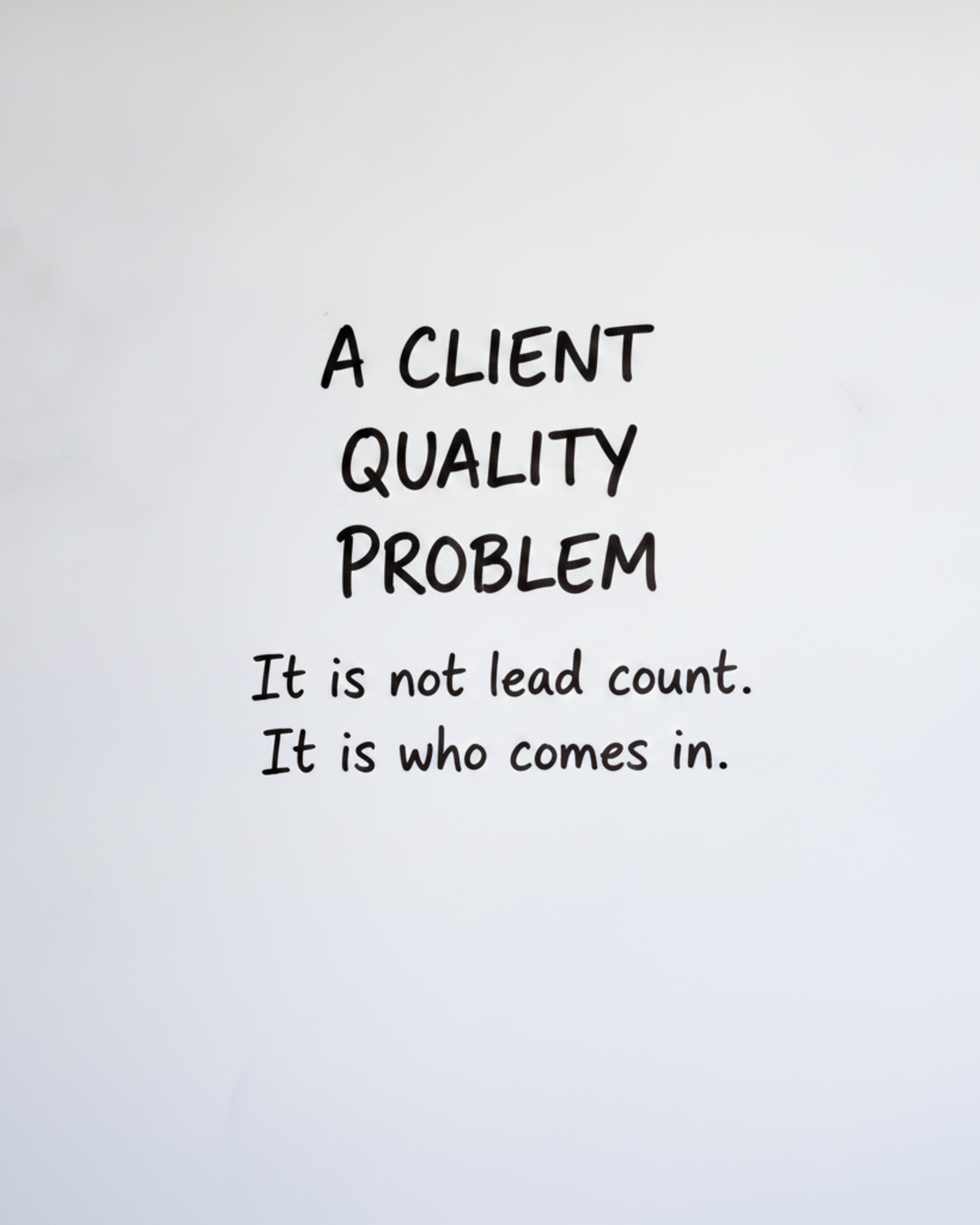
So it is worth being precise about what is wrong. It is not lead count. It is who comes in, and what the firm agrees to do for them once they are through the door.
Calling it a client quality problem changes what you go and fix. A lead problem sends you to Google Ads, a directory listing or a referral push. A client quality problem sends you to your own client list, your pricing, and the language on your website that decided who felt welcome in the first place. Those are different projects with different costs, and only one of them addresses the reason the money is thin.
The default answer is more traffic

The common response is to buy volume. A Google Ads budget, a Meta campaign, an SEO retainer aimed at broad terms like accountant plus town name. Sometimes all three at once, on the reasonable logic that growth comes from more people knowing you exist.
We build these channels, so this is not an argument against them. It is an argument about order. Paid and organic acquisition are distribution. They carry a message about who you serve to people who might match. When that message is undefined, the channel does the only thing it can do, which is to broadcast a generic offer to a general audience and bring back a general result.
Filling an inbox is the easy part

Here is the uncomfortable bit. Generating enquiries for an accounting firm is not difficult. There is persistent search demand, the intent is clear, and the buying cycle is short compared with most professional services. Any competent marketer with a budget can fill your inbox inside a month.
The difficulty is in what those enquiries are worth. A hundred enquiries from sole traders who want the cheapest self assessment in the county is a marketing success and a business failure. We have seen firms judge a campaign by cost per lead and never look at the eventual fee, the hours consumed, or how many of those clients were still there eighteen months later.
Start with the client list you have

The first working session we run has nothing to do with channels. We sit down with the existing client list and go through it properly, because the answer to who you should be marketing to is almost always already in the practice.
We are looking for clusters. Which sectors appear more than twice. Which clients you enjoy, which ones your team handles without escalation, which ones renew without a conversation about fees. We combine that with national business registry data and search demand so the pattern is tested against the market rather than against memory. The firm usually knows the answer before we finish the list.
Saying yes to everyone has a bill

That exercise surfaces the other half of the picture. Alongside the clients who fit, there is usually a group who were accepted in a quieter year and never reviewed since. They pay the least, they contact the office the most, their records arrive late and incomplete, and their work absorbs senior time that was meant for advisory.
Nobody decided to build that group. It accumulated one reasonable yes at a time, each defensible in isolation. Growth by acceptance is the default setting for a firm without a defined position, and the bill arrives years later in the form of a team at capacity and a margin that will not move.
Nobody checks the margins

The reason this runs unchecked for so long is that the reporting hides it. Firms watch turnover, client count and recovery at a practice level. All three can look healthy while a third of the portfolio is being served below cost.
Accountants are, of course, entirely capable of this analysis. They do it for clients every week. It rarely gets done in house because it requires time that the current client mix has already spent. When we do run it, the distribution is usually sharper than expected. A small group of clients carries the profit, a middle group washes its face, and a long tail quietly consumes the difference.
The real cost is your best hours
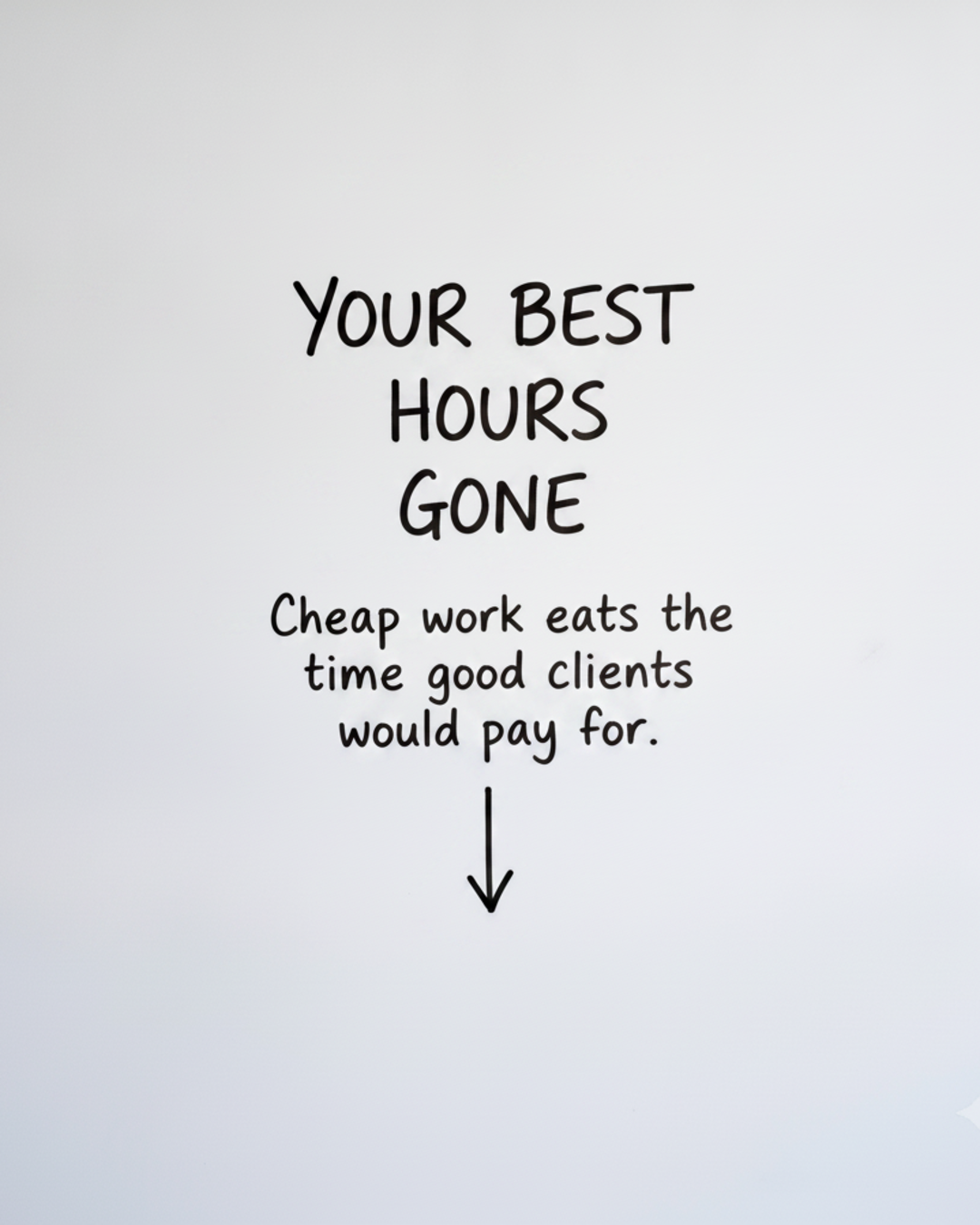
The cash cost of underpriced work is the obvious part. The bigger cost is capacity. Cheap work does not just earn less, it occupies the hours that better clients would have paid a proper fee for, and it usually occupies the hours of your most experienced people because those are the ones who can clear it quickly.
That is why firms in this position cannot buy their way out with more enquiries. There is no room to serve them. Any growth plan that does not first release capacity is asking a full practice to absorb more work, and the practice will do what it has always done, which is to absorb it at the same price.
Pick them, then price them

The fix runs in that order and it is not complicated. First, decide who you serve best, using the clusters in your own list and the demand data behind them. Second, price for that group specifically, based on the actual work the engagement requires rather than the fee you happened to quote the last similar client.
Selection without pricing gives you a niche you still cannot afford to serve. Pricing without selection gives you a rate card that half your clients will refuse. Done together, they set the shape of the practice, and every marketing decision after that becomes straightforward because you know exactly who the message is for.
Speaking to fewer people works better

What this unlocks on the marketing side is narrower messaging, and narrower messaging performs. A page written for one type of business, naming the software they use, the deadlines they worry about and the mistakes their peers make, converts at a rate a general accountancy page cannot approach.
It also filters. The wrong enquiries stop arriving because the site no longer invites them, which reduces the volume of unpaid consultations your team runs each month. Firms find this counterintuitive at first, since speaking to fewer people feels like turning down revenue. In practice it raises the quality of what lands and shortens the time from enquiry to signed engagement.
Good accountants are scarce

Here is the underlying market fact that makes all of this work. From the client's side, a genuinely good accountant who understands their sector is hard to find. They are not comparing eight excellent options on price. They are trying to find one firm that clearly knows their business.
Be that firm for a defined group and the growth becomes durable, because you are supplying something scarce rather than competing on availability. Fees hold, referrals arrive from inside the sector, and the work becomes easier to deliver because you have seen the same situation many times before. That is a slower start than an ad campaign and a much better position two years in.
Where to start
None of this means advertising is a waste. Paid and organic acquisition are how a defined position reaches the market at scale, and we build both. The point is sequence. Selection and pricing come first, distribution second, and firms that reverse the order tend to spend a year proving it.
There is a caveat worth stating. If your client mix is already coherent and your margins are sound, then you may genuinely have a volume problem, and the answer really is more traffic. That is the less common case, but it exists.
If your firm looks like the one described here, the qualification questions below will give you a straight answer either way, including the answer that says now is not the time.