
Why your website attracts the wrong clients, and what it is really costing you
Most firms treat poor enquiry quality as a traffic problem and spend accordingly. In practice, the words on the page are doing the sorting long before anyone fills in a form. This is written for firm owners who are getting enquiries but not the ones they want.
When a firm tells us its website attracts low quality clients, the first instinct is almost always technical. Rankings, keywords, page speed, maybe a fresh round of Google Ads. The assumption is that the right people are simply not seeing the site yet.
We rarely find that to be the case. In most audits we run, the traffic is adequate and the enquiries are steady. The problem is what happens in the thirty seconds after someone lands. The page describes compliance work in language that could belong to any firm in the country, so the only meaningful comparison left to the reader is price.
That is a copy problem, and it is fixable. What follows is how the sorting actually works, why it goes unnoticed for years, and what changes when the page is built to earn trust before it lists services.
It is probably not your SEO
The firms that come to us with this complaint are usually visible enough. They rank for their town, they show up for their core services, and the contact form gets used. What frustrates them is who is using it. Sole traders wanting a one off return, businesses shopping three quotes, people who open with a question about cost.
The wrong clients keep finding you anyway, and more visibility simply brings more of them. Search does its job by matching a query to a page. It has no view on whether the enquiry is worth having. That judgement is made by the reader, based entirely on what your page said to them.
Only price shoppers are calling

Here is the part that makes this expensive. The enquiries you receive are visible, so they shape your view of the market. The enquiries you never receive are invisible, so they shape nothing at all.
The best buyers, the owner-managed business with three entities and a property portfolio, the founder about to raise, read the same page you do. They are looking for evidence that you have handled a situation like theirs before. When the page offers a service list and a phone number, they close the tab and carry on looking. You never learn they were there. What you see instead is a stream of price led enquiries and a growing suspicion that the market has gone cheap.
Good clients are not buying accounts filing. They are buying an advisor they trust. If the page never makes that case, the only people left comparing you are comparing on price.
Your words do the sorting
It helps to stop thinking of the website as a brochure and start thinking of it as a filter. Every line on the page either includes a type of reader or excludes them. That filtering happens whether you designed it or not.
A page that says "accountants for small businesses in Suffolk" invites everyone and qualifies nobody. A page that says "we work with construction firms turning over one to ten million, and here is how we handle CIS and retention" turns away most visitors and pulls in the ones you actually want. Same traffic, different sorting. The mechanism is the copy, and it is running every day regardless of how much attention it gets.
We file your accounts, and so does everyone

Look at the homepage of ten firms in any UK town and the pattern is near identical. Annual accounts. Self assessment. VAT returns. Payroll. Bookkeeping. Company secretarial. Six tiles, six icons, a line about being friendly and proactive.
None of it is wrong. All of it is interchangeable. The list describes the outputs of the work rather than the judgement behind it, and outputs are the one thing every competitor can also claim. When a reader compares three sites that say the same six things, they have been handed no criteria other than fee and proximity. That is not the reader being cheap. That is the page failing to give them anything else to weigh.
Anyone can do that

The clients worth having already know that filing is table stakes. They assume any qualified firm can meet a deadline, and they are broadly right. What they cannot assess from the outside is whether you will spot the problem before it becomes a problem, whether you will tell them something they did not ask about, and whether you understand their sector well enough to be useful in a live decision.
That is what they are shopping for. A service list answers a question they were not asking, so it reads as a signal that you see yourself as a processor rather than an advisor. They then price you accordingly, which is exactly the outcome the firm was trying to avoid.
Three pages and a waiting game
The typical structure we inherit is small. A home page, a services page and a contact form. Traffic arrives, moves through those three pages in whatever order it likes, and either fills in the form or leaves.
Nothing on that journey does any work. The home page introduces the firm, the services page lists the tasks, the contact page asks for a name and a message. There is no point at which the reader is told who this firm is built for, no explanation of how the relationship actually runs through the year, and no evidence that another business like theirs has been through it. The firm has effectively set up a switchboard and is waiting to see who dials in.
No reason to pick you

Strip that structure back and the reader is left with a genuine question they cannot answer. Why this firm rather than the one two doors down with a similar page and similar tiles.
In the absence of a reason, people default to the criteria they can actually measure. Cost. Response speed. Whether the office is convenient. None of those favour a firm trying to move up market. We often ask owners to read their own homepage and highlight any sentence a competitor could not truthfully put on their own site. The highlighted portion is usually a few words long, and sometimes there is nothing at all. That gap is the whole problem, and it has nothing to do with rankings.
The traffic looked fine, so nobody looked
This survives for years because the dashboard never flags it. Sessions are up, the site ranks, the form gets submissions. Every measurable number suggests the marketing is working, so when the client mix disappoints, attention turns to volume.
The usual response is more of the same. Another SEO retainer, a bigger ads budget, a directory listing or two. All of that increases the number of people reading a page that was already failing to make the case, which means the firm pays more to be sorted the same way. We see this pattern in a large share of the audits we run, and the analytics are almost never the thing that reveals it. Reading the page is.
Small jobs eat the week
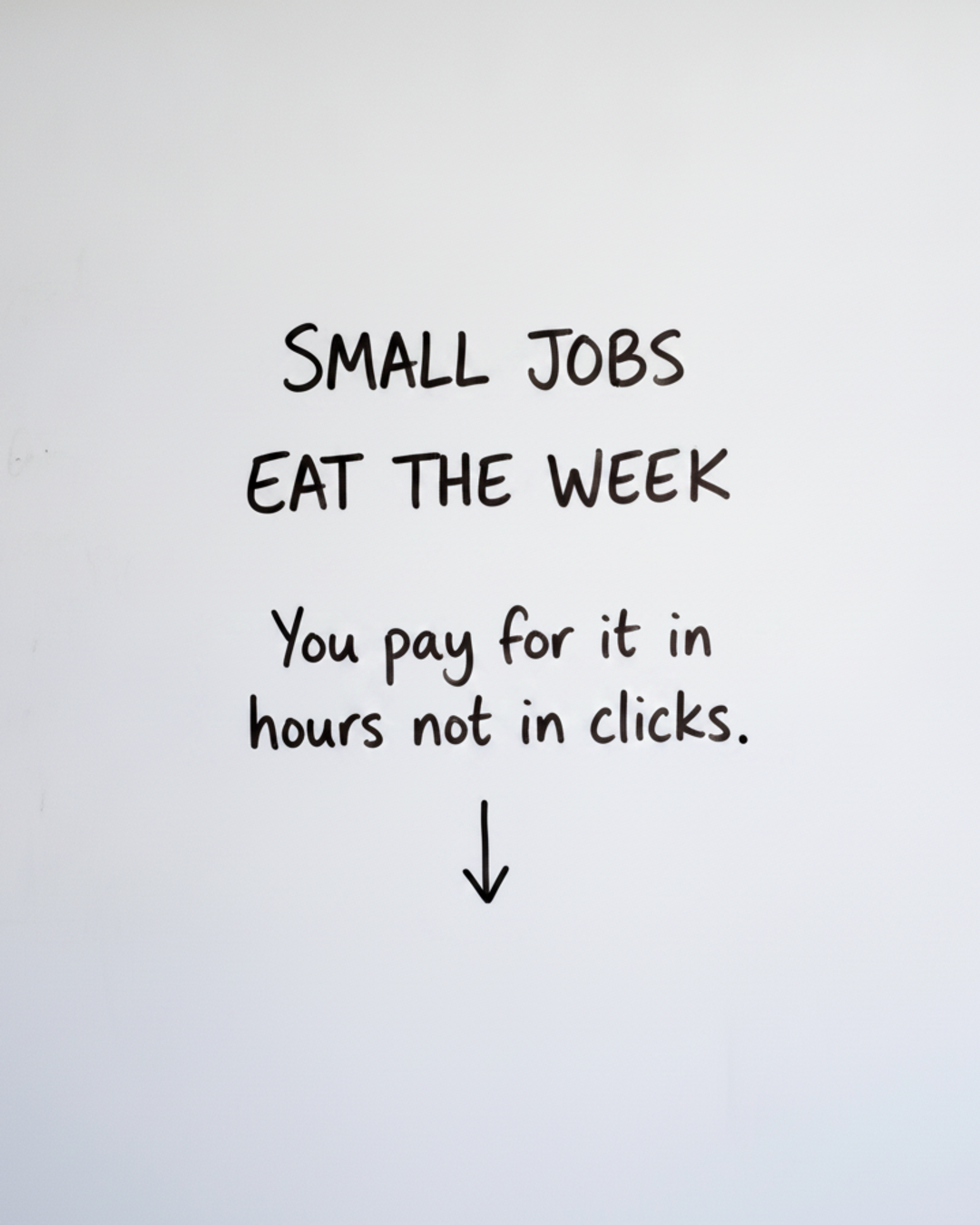
The real cost does not appear in the marketing budget. It appears in capacity. A practice built on low value work fills its calendar with clients who need chasing for records, query answering out of season, and hand holding on tasks that carry thin margins.
Partners end up doing recovery work on jobs that were mispriced at the point of enquiry, and there is no room left in the week for the advisory work the firm actually wants to sell. You pay for it in hours rather than clicks, which is why it rarely gets attributed back to the website. The site quietly determined the shape of the client book, and the client book determined how the team spends its time.
Build trust before the service list
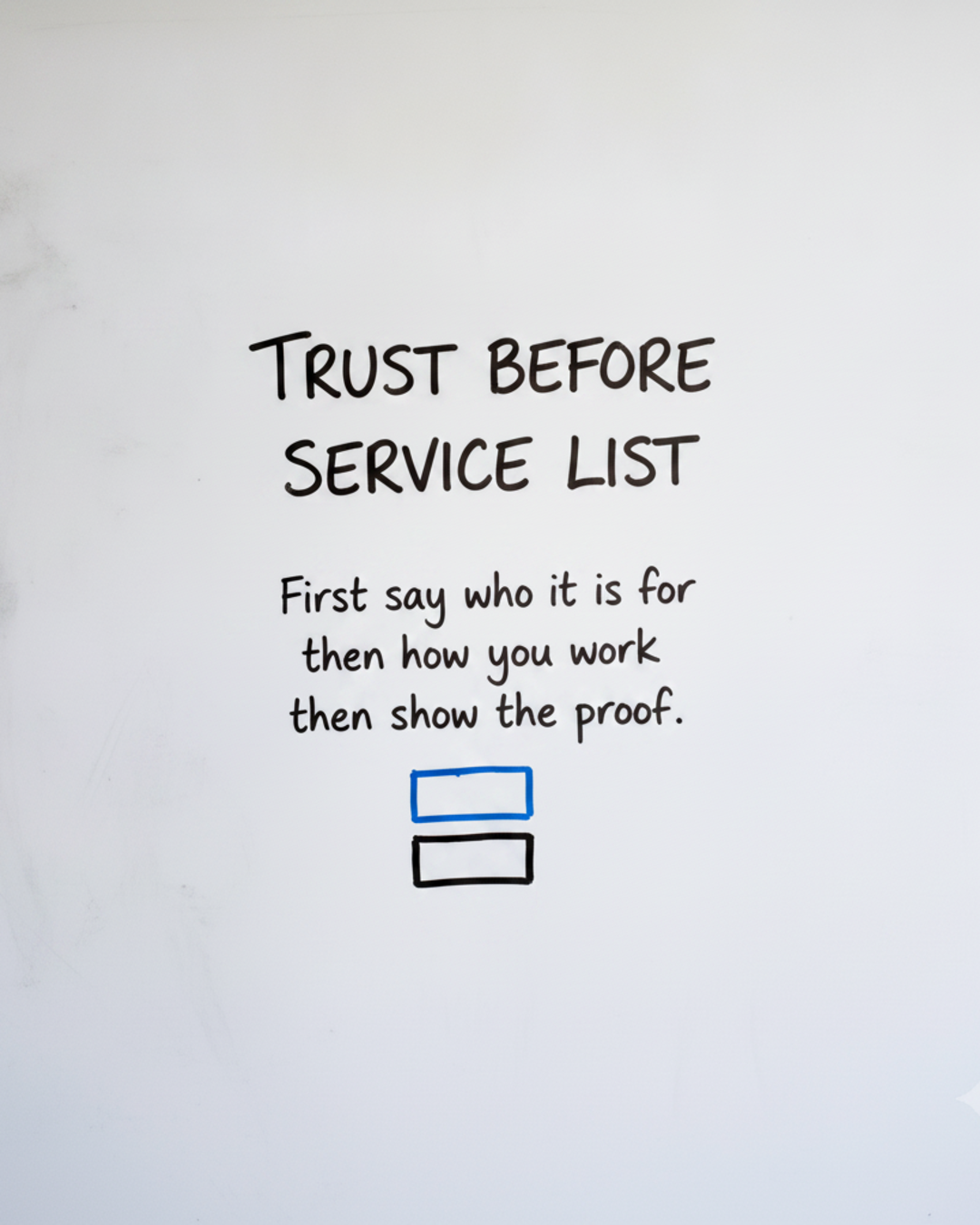
The fix is an order of operations. Before anything is listed, the page has to establish three things.
- Who it is for. Name the sector, the size band or the situation. Specific enough that the wrong reader recognises they are the wrong reader.
- How you work. Describe the relationship through the year. Onboarding, contact points, what happens when something changes mid year.
- The proof. Named results, client examples, evidence that a business in the same position has already been through the process.
The service list still belongs on the site. It just moves down the page, where it confirms a decision the reader has largely already made rather than being asked to make the argument on its own.
They arrive already sold

When the order changes, the enquiries change with it, usually before the traffic moves at all. The first thing owners tell us is that the calls feel different. People open with their situation instead of their budget, they reference something specific from the page, and they treat the conversation as a fit assessment rather than a quote request.
Niall at OD Accountants rebuilt his site around conversion rather than content and saw ten to fifteen enquiries in the first month with three new clients, alongside monthly visitors rising four times over. The volume mattered, but the meaningful shift was that the people arriving had already decided he was worth speaking to.
The site picks your clients
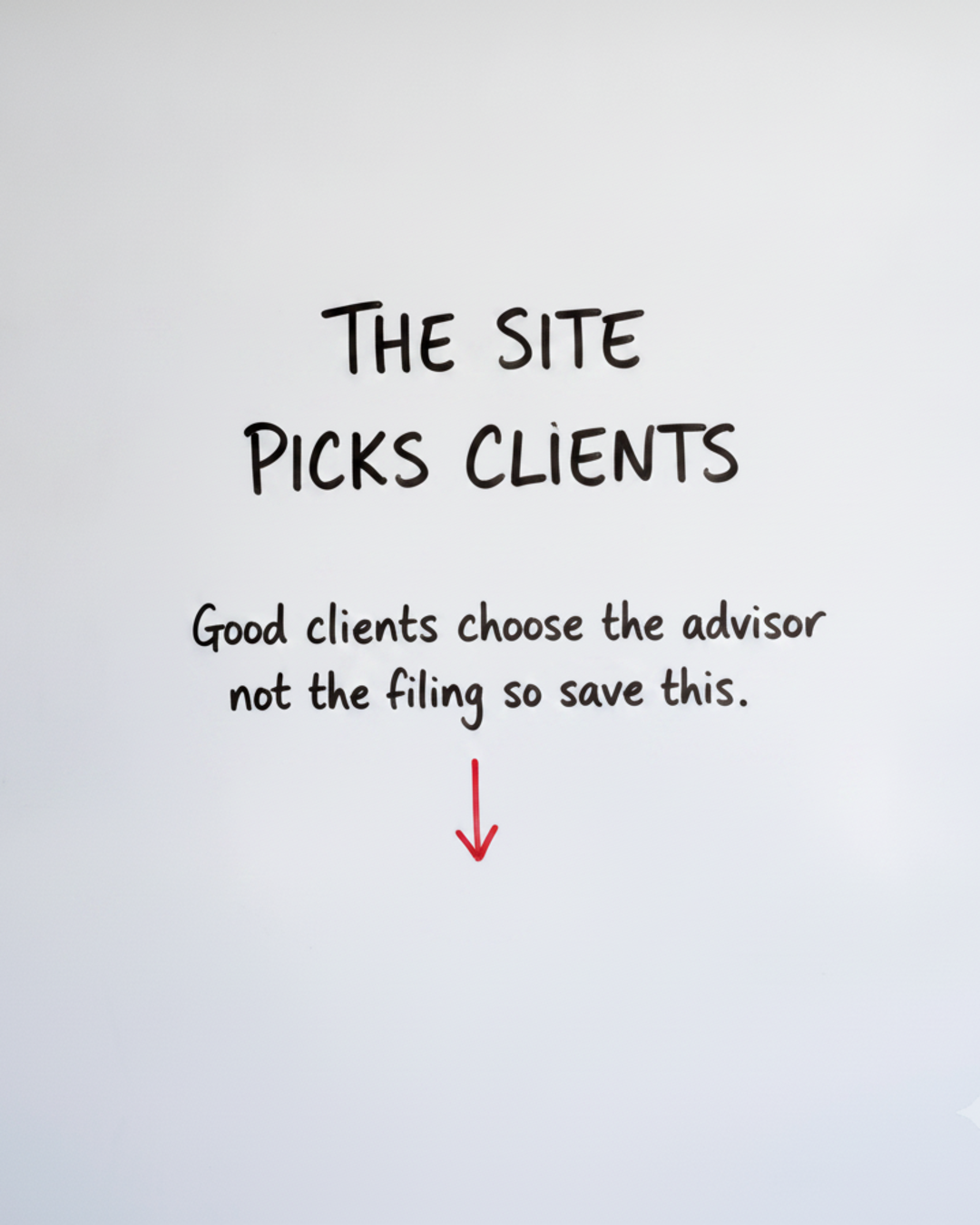
The conclusion we keep arriving at is straightforward. Your website is a selection mechanism, and it is already selecting. The only decision available to you is whether it selects deliberately.
Good clients choose an advisor rather than a filing service, and they make that choice on the evidence in front of them. If the page shows them who you serve, how the relationship runs and what has happened for firms in their position, they self select in. If it shows them a list of statutory obligations, they compare fees. Both outcomes are produced by the same traffic. The difference is the words.
Where to start
None of this means SEO is irrelevant. Visibility still has to exist before copy can do anything, and for some firms traffic genuinely is the constraint. The point is the sequence. Fixing the message first means every subsequent pound spent on acquisition buys better enquiries rather than more of the same ones.
The honest test takes ten minutes. Open your homepage, read it as a business owner with a complicated situation, and ask what it tells you that the next firm's page does not. If the answer is nothing, more traffic will not help.
If your firm looks like the one described here, the qualification quiz below will give you a straight answer on whether this is the right thing to work on, either way.