Why the wording of your offer decides who replies
Most firms respond to poor enquiries by building another service or writing off another channel. In our experience the service is usually fine and the words in front of it are doing the filtering. This is for practice owners who keep meeting the wrong kind of buyer.
When marketing is attracting the wrong clients, the instinct is almost always to build something new. A new service line, a new package, a new channel. The assumption underneath is that the current offer is not good enough for the buyers you want.
We see it differently. In most practices the service is already capable of serving a better client. What has not changed is how that service is described, who it names, and what situation it says it solves. Those words do the selecting long before anyone speaks to you.
So the first move is not to build. It is to change how the existing service is described and experienced, then watch who replies. The rest of this piece sets out why that works, what the evidence looks like, and a seven day test that gives you a straight read.
Fifty enquiries and no clients
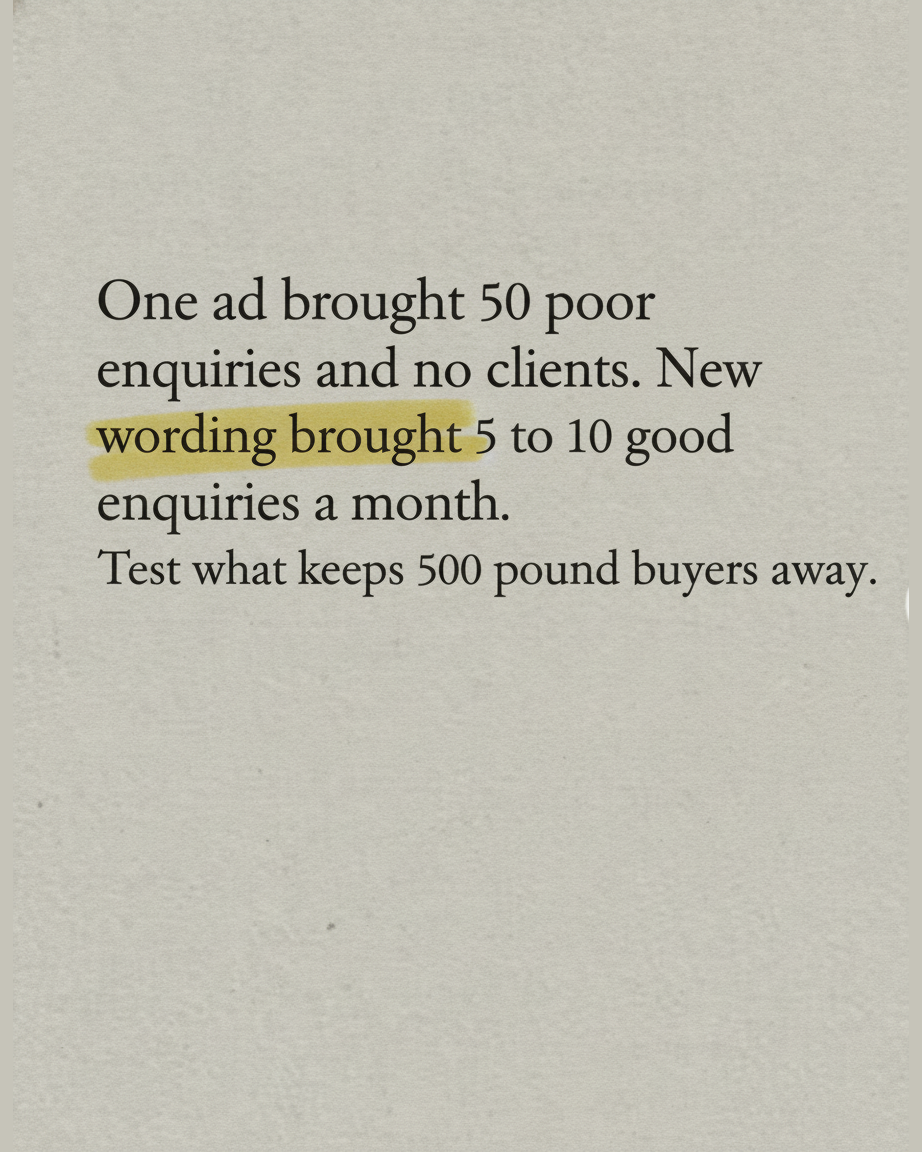
One advertisement we looked at produced around fifty enquiries and not a single client. On paper it worked. The cost per enquiry was fine, the volume was there, and the owner had something to show for the spend. In practice every conversation was with a business that was never going to sign.
After the wording changed, the same advertisement produced five to ten good enquiries a month. Fewer replies, better replies. That gap is the whole argument. Before you decide the market is wrong or the channel is tired, it is worth testing what your current words are keeping away.
The words should not matter
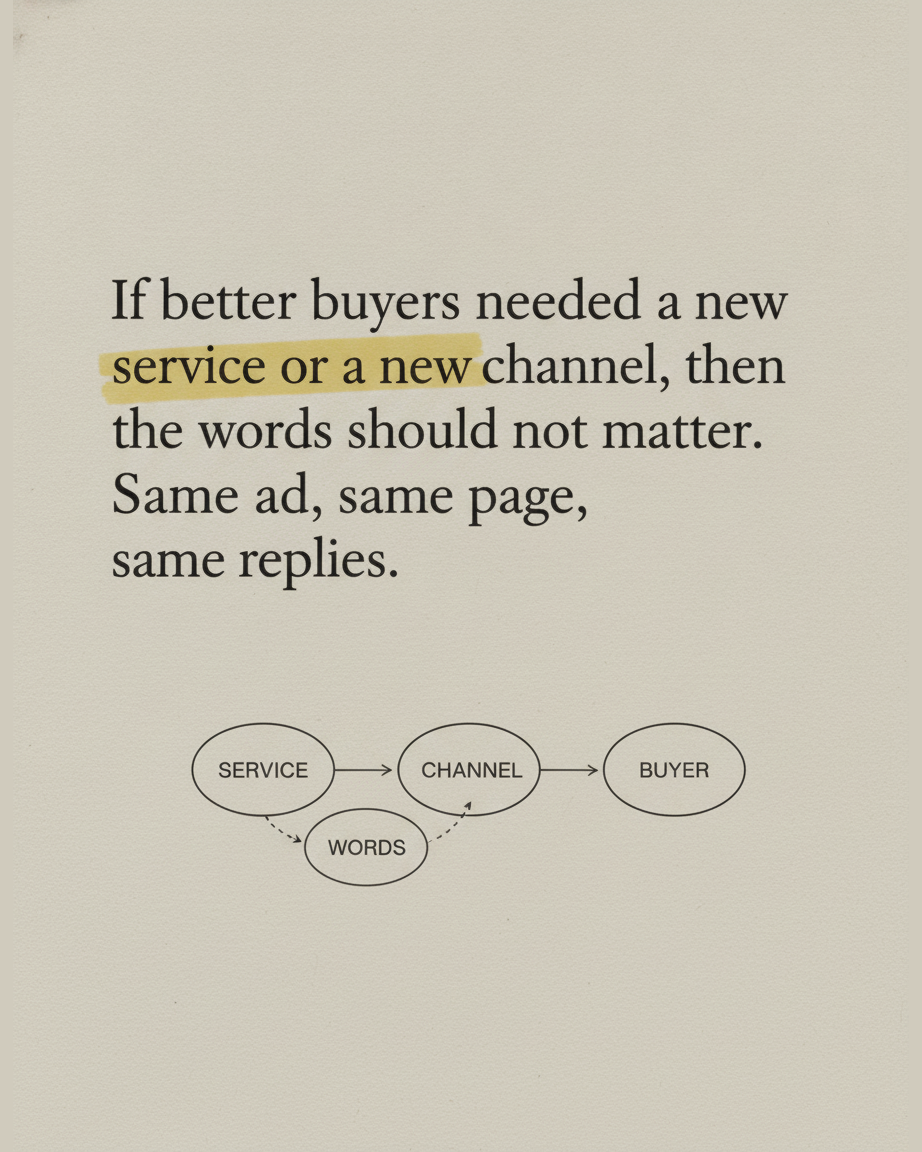
Take the common explanation seriously for a moment. If better buyers genuinely required a different service, or a different platform, then wording would be close to irrelevant. You could run the same advertisement to the same audience, change nothing but the sentences, and expect the same replies to arrive.
That is a testable claim rather than an opinion. It says the path runs from service to channel to buyer, with words sitting off to the side as decoration. If that were true, rewriting a page would move nothing at all. It is worth holding that prediction in mind, because it is the one the evidence breaks.
The wording of an offer selects the buyer. It works as a filter rather than a description, which means the enquiries you dislike were chosen by the sentence you wrote.
We changed the wording only
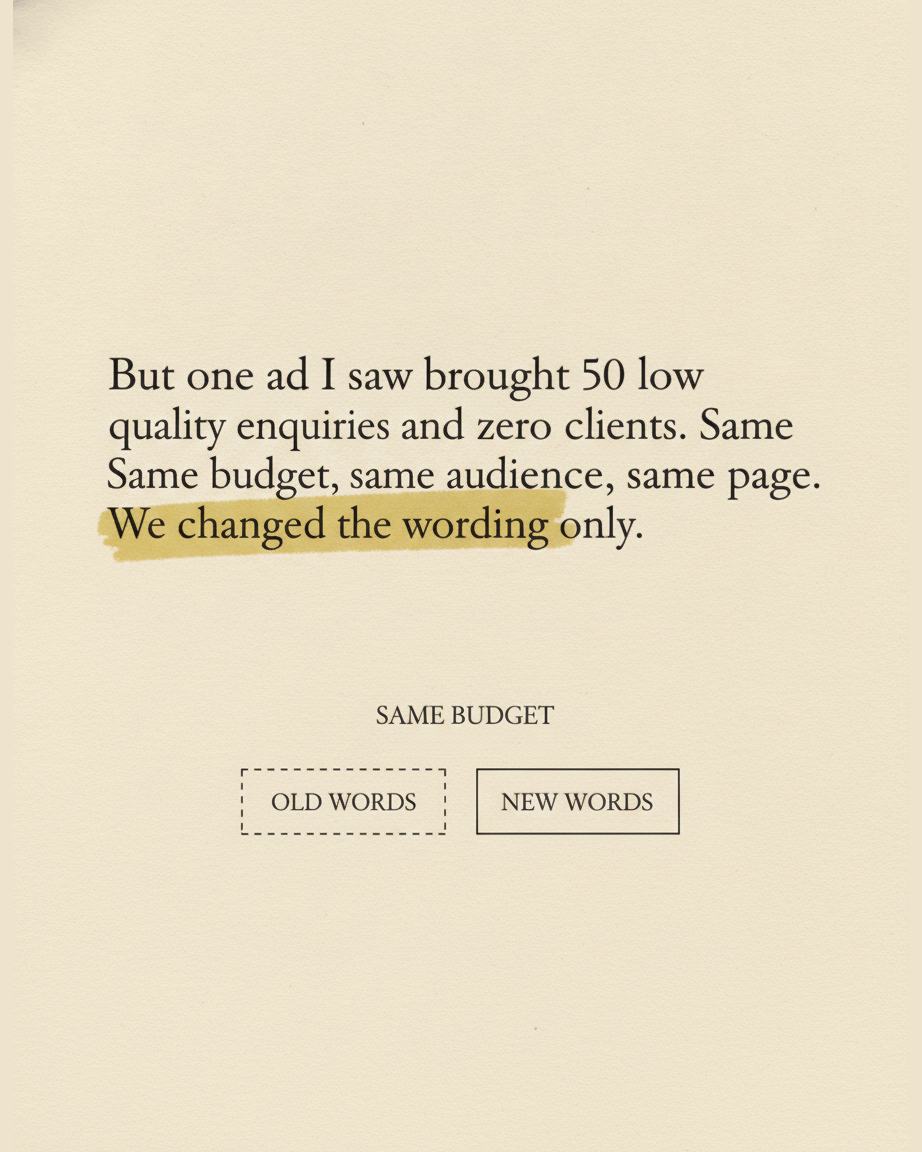
The advertisement that produced fifty low quality enquiries and zero clients kept its budget, its audience and its landing page. The targeting was untouched. The creative structure stayed the same. The only variable that moved was the language: who the offer named, what situation it described, and what it asked the reader to do.
That is a narrow change by design. If the result had held steady, the case for wording would have collapsed and the case for a new service would have strengthened. Keeping everything else fixed is what makes the outcome worth anything.
Then the right enquiries arrived
After the rewrite, the same advertisement settled at five to ten good enquiries a month. Nothing else on the account had moved. No new service was launched, no new platform was tested, no additional budget was released.
The interesting part is the drop in volume. Fewer people replied, and that was the point. A filter that works turns away businesses you would have spent an hour disappointing. Volume is easy to buy and easy to misread. What matters is whether the people arriving recognise themselves in what you said, because that is what turns a conversation into an engagement.
Wording selects the buyer
The principle that falls out of this is short. The wording of an offer selects the buyer. It behaves as a filter rather than a description, which means neutral language is not neutral in effect. A page that tries to speak to every business ends up recruiting whoever is cheapest to attract.
Read that way, a disappointing enquiry stops being bad luck. It is feedback. Somebody read your sentences, decided they were the intended reader, and acted on that. If you did not want them, the sentences chose them for you, and the sentences are the thing you can change this week.
Same work, different expectations
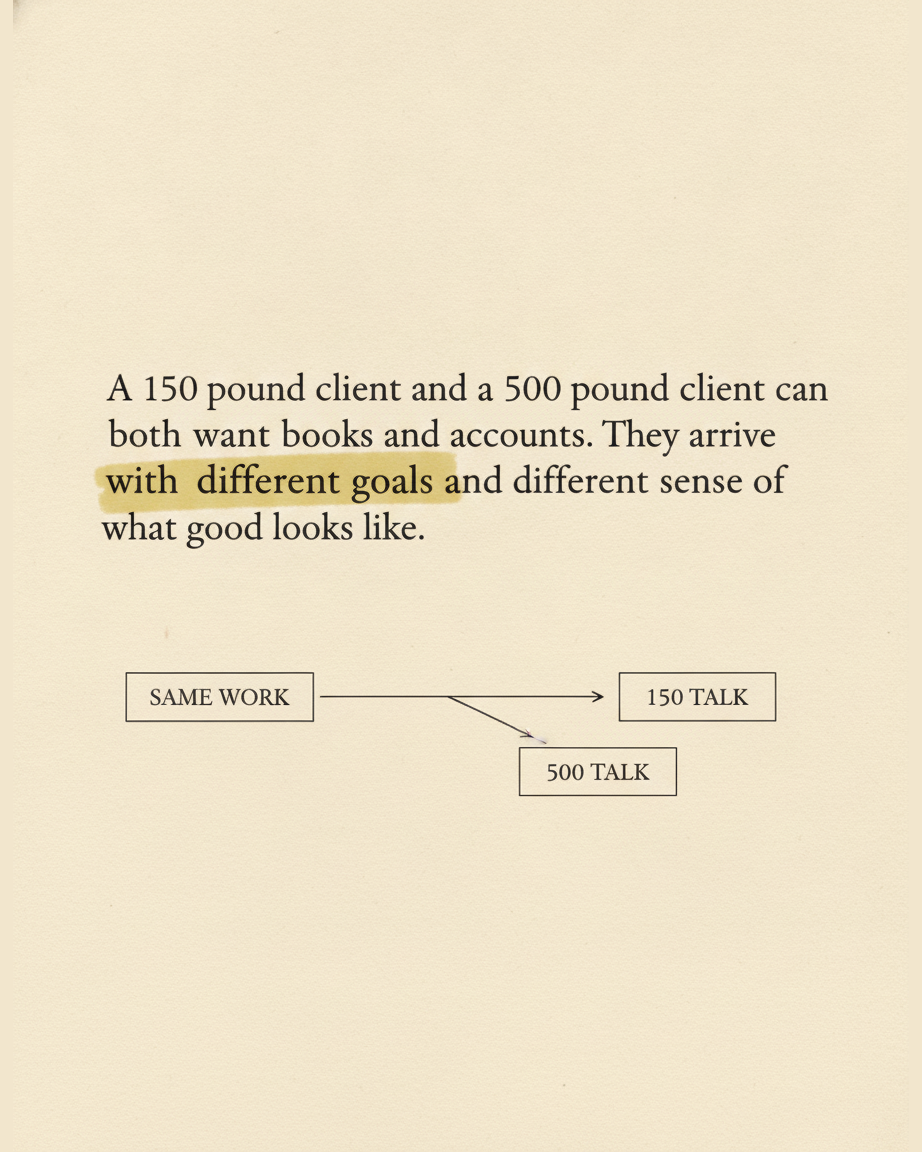
Two businesses can ask for the same thing and mean completely different things by it. Both want books and accounts. One arrives wanting the obligation cleared at the lowest possible cost. The other arrives wanting numbers they can make decisions with, a rhythm of contact, and someone who understands where the business is going.
The deliverable overlaps. The goals do not, and neither does the standard of good. This is why identical service descriptions attract mixed enquiries. A line written for the compliance buyer will still be technically true for the advisory buyer, and it will quietly tell them you are not for them.
One line is not enough
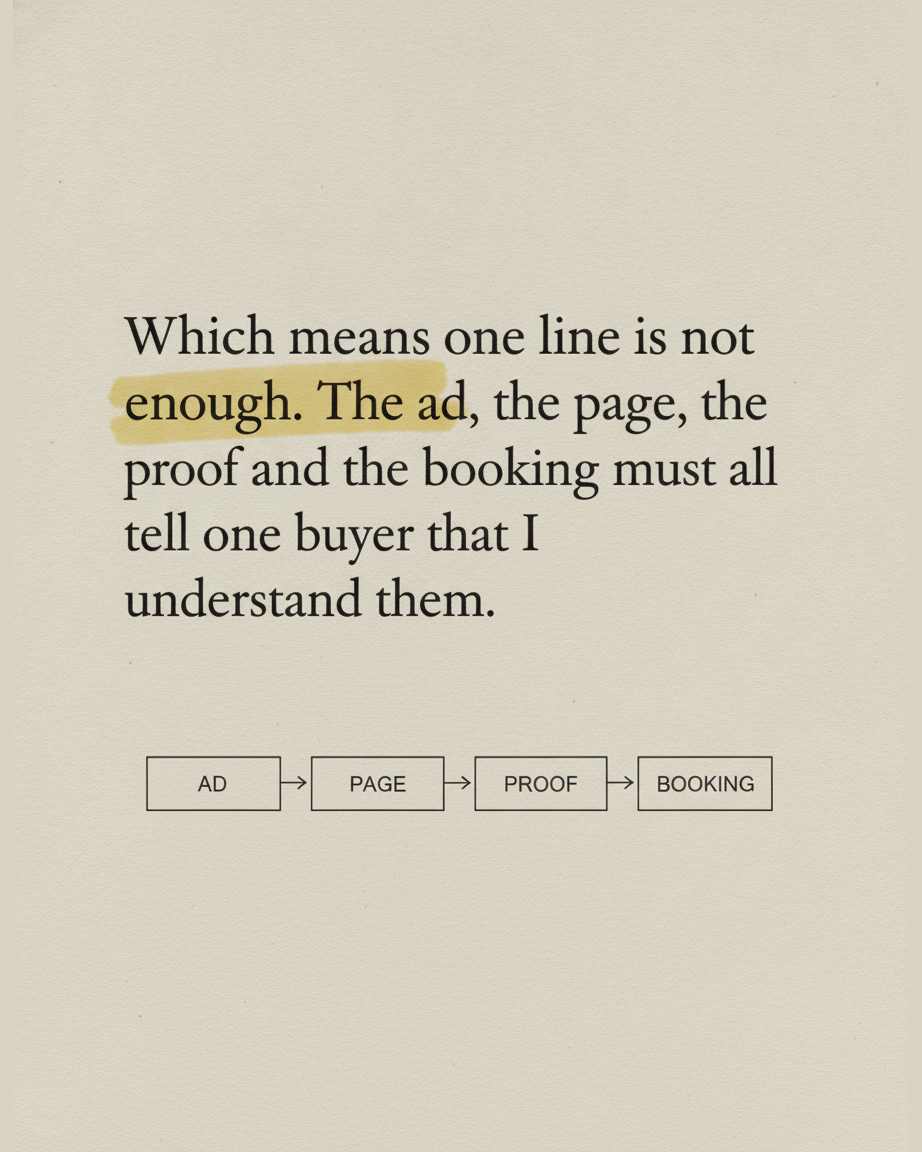
Because the buyer is reading the whole journey, a single rewritten headline will not hold. The advertisement can name the right business and the landing page can then talk to everyone. The page can be sharp and the proof underneath it can feature the wrong kind of client. The booking step can ask questions that only make sense for a different buyer.
Each of those moments either confirms the reader was right about you or quietly tells them they were wrong. The advertisement, the page, the evidence and the booking all have to tell one buyer that you understand their situation. Consistency across the sequence is what makes the filter work.
A free checklist worth nothing
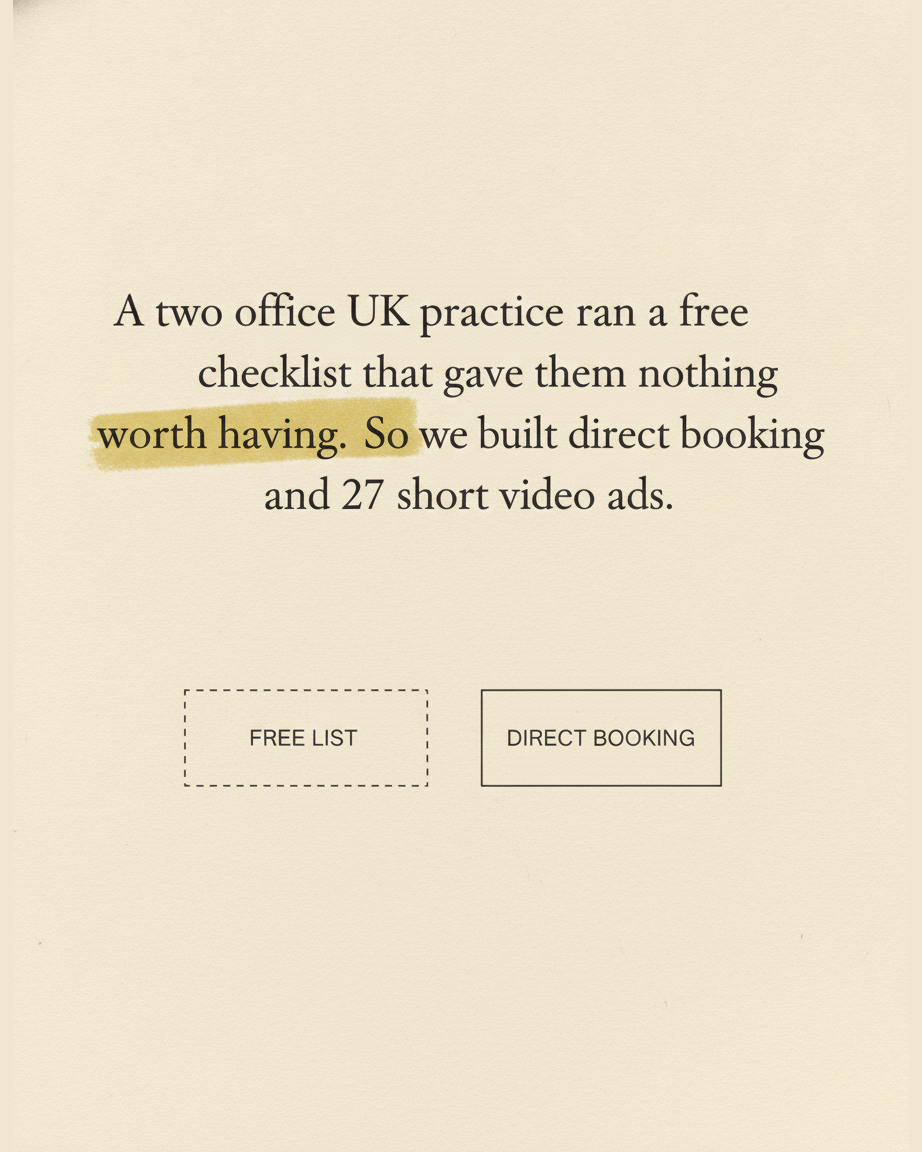
A two office UK practice had been running a free checklist as its main offer. It collected details and produced almost nothing worth having. The people who download a generic checklist are, by definition, at the stage of gathering information rather than choosing an adviser, so the list filled with contacts who were never close to a decision.
The change was structural as well as verbal. We replaced the checklist with direct booking, so the thing being offered was a conversation with a named kind of business in mind, and built twenty seven short video advertisements speaking in that same language.
Four new clients in three months
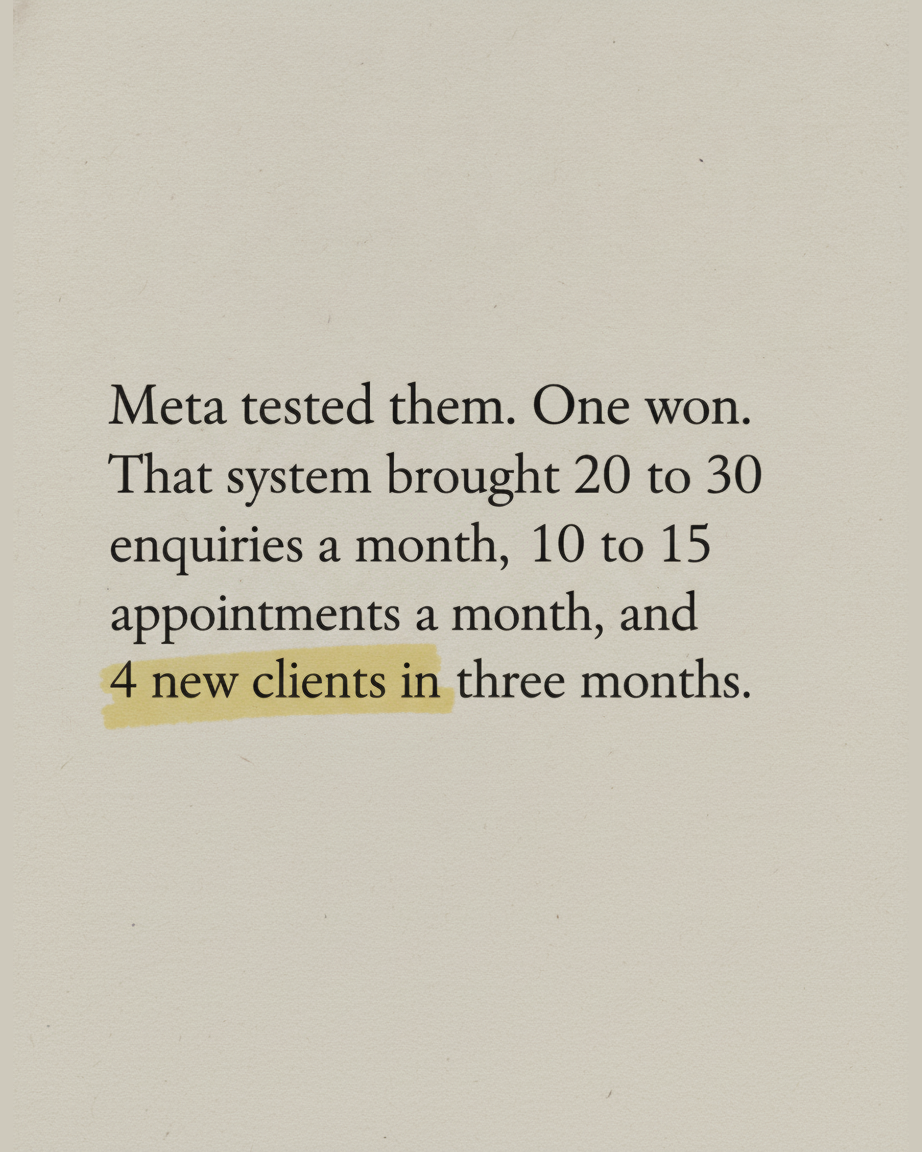
Meta tested the twenty seven advertisements against each other and one of them won clearly. That system went on to produce twenty to thirty enquiries a month, ten to fifteen appointments a month, and four new clients within three months.
Two things are worth pulling out. The winner was found by testing rather than by opinion, which is the only reliable way to learn which description your market recognises. And the number that matters sits at the end of the chain. Enquiries and appointments are useful readings, though a practice is only paid when the right business decides you were talking to them.
What to do on Monday
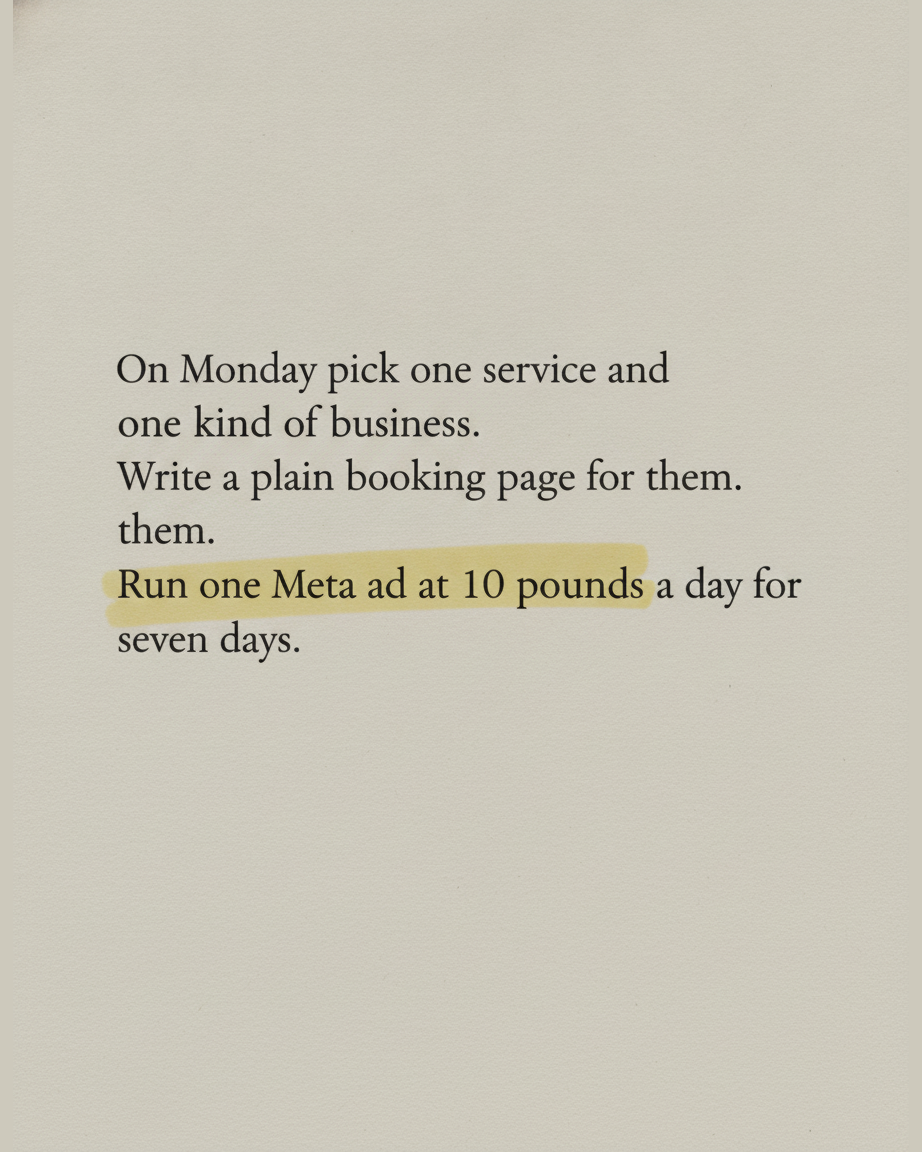
You can run this yourself without building anything new. On Monday, choose one service you already deliver and one specific kind of business. Not a sector in the abstract, a recognisable type of firm with a situation you have seen repeatedly.
Write one plain, direct booking page for them. State who it is for, the situation and goals it addresses, the evidence that makes you credible for that situation, and how to book. Then run one Meta advertisement using the same language, on a small daily budget, for seven days. The point of the low budget is that you are buying information rather than volume.
Count and mark every enquiry
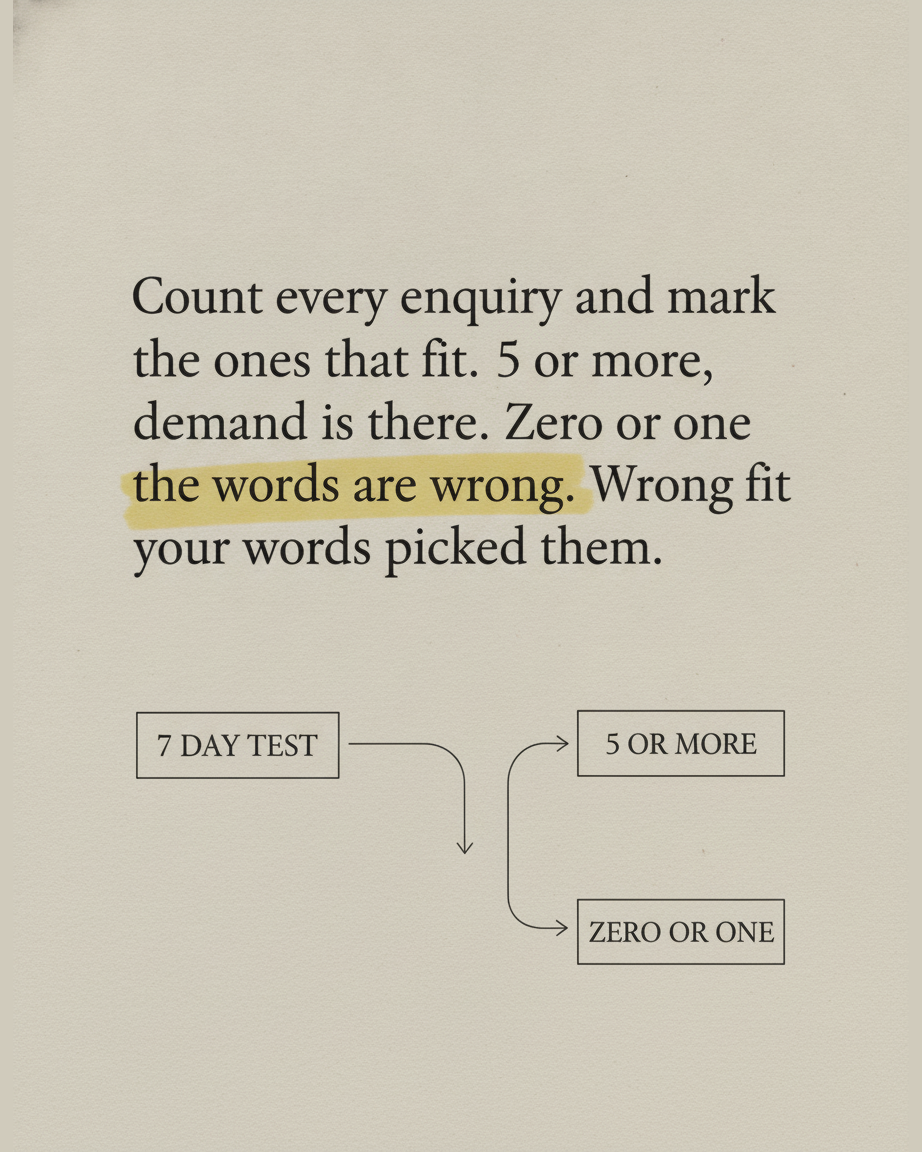
Record every enquiry the week produces and mark which ones match the buyer you named. The reading is then straightforward. Five or more matching enquiries means demand exists and your message is reaching the intended buyer. Zero or one enquiry in total means the words or the offer are wrong, rather than the market.
Enquiries that arrive but do not match the named buyer are the most useful result of all, because your wording selected them. Two to four matching enquiries is inconclusive, so change one element of the wording, keep everything else fixed, and run it again.
The cost of skipping this
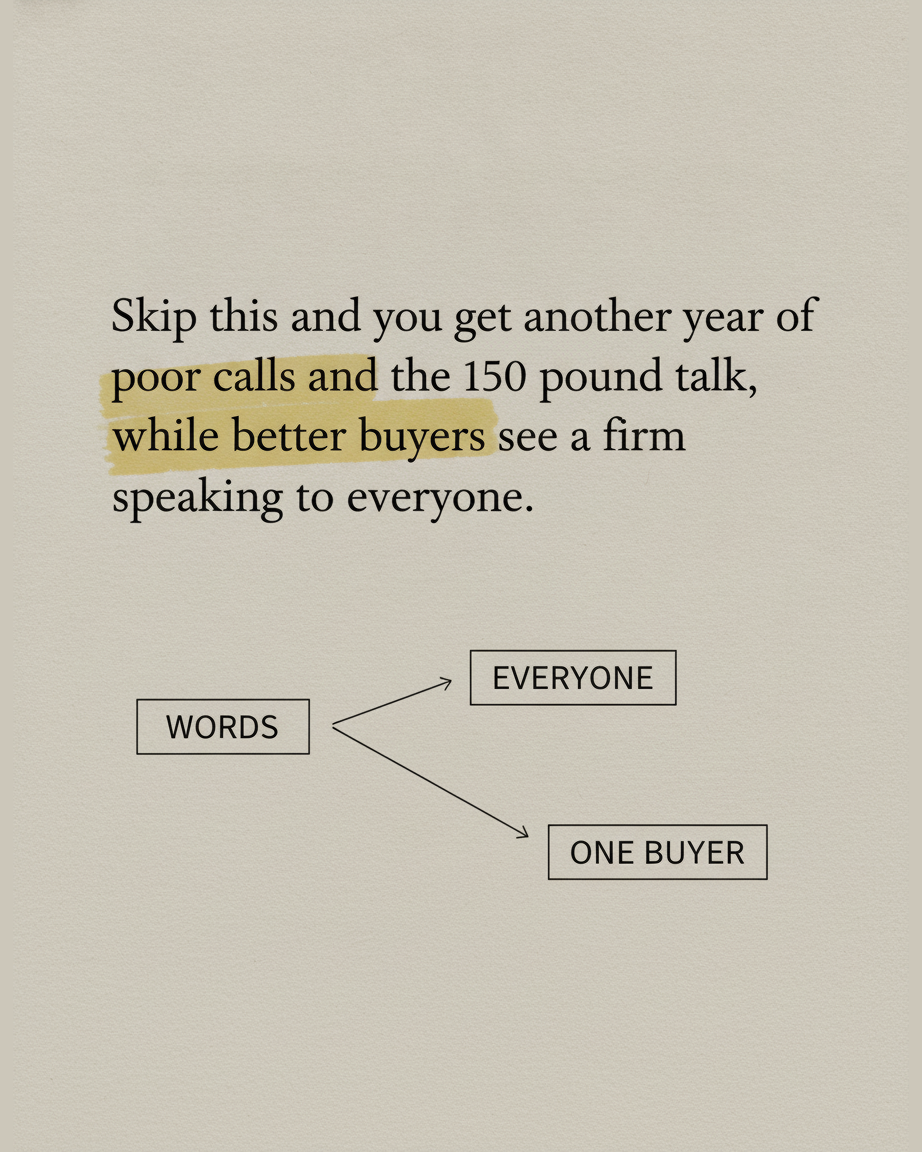
Skip the test and the cost is not dramatic, which is exactly why it persists. You get another year of poor calls and the lower fee conversation, repeated often enough that it starts to feel like the market speaking. Meanwhile the businesses you actually want see a firm addressing everyone, decide it is probably not for them, and go elsewhere without ever contacting you.
That is the quiet version of failure. Nothing breaks, the enquiries keep arriving, and the ceiling stays where it is. A week of deliberate wording is a small price for finding out whether the ceiling is real.
Before you build anything
The argument is narrow on purpose. Change how the existing service is described and experienced first, because the wording selects who replies and the rest of the acquisition system then confirms whether your firm is for them. Only after that reads clearly does it make sense to add a service or write off a channel.
There are cases where the offer genuinely is missing something, and the seven day test will tell you that too. What it removes is the guessing, which is where most practices lose a year.
Save this for Monday. If your enquiries look like the ones described here and you would rather not run the test alone, we are happy to talk it through and give you a straight read either way.