Counting competitors never proved your market was saturated
Most firms decide their area is full by looking at how many accountants are already in it. That is an opinion, and it can be replaced with evidence in a week. This is for practice owners who suspect they are wasting money online before they have properly tested anything.
The question comes up in almost every first conversation we have with a practice owner. There are already dozens of accountants within ten miles, so is there any point trying to grow online at all. It sounds like a market saturation problem, and it is usually something much smaller.
Our position is straightforward. A competitor count tells you how many firms exist. It tells you nothing about whether anyone in your area is currently looking for what you sell, and nothing about whether your words would reach them if they were.
There is a way to settle this that takes seven days and a small daily budget. One specific offer, one plain page, one advert, and enquiries counted honestly at the end. What follows is the reasoning behind that test, the evidence we have seen from it, and how to run it yourself on Monday.
What 35 leads in a week actually proves
Accounting is not a saturated market, and we can show why rather than argue about it. One general practice ran a single offer and recorded thirty five or more leads in under a week. That figure does not make the firm exceptional. It makes the saturation claim testable, because a genuinely full market would not have produced those replies.
The point of the number is what it invites you to do next. If one firm can find that much interest in seven days on a small daily budget, so can you, and the answer either way is worth having before another year of guessing.
What saturation would actually look like

Start with what the word is supposed to mean. If a market were truly saturated, then a clear offer, written for a specific buyer and placed in front of that buyer, would bring little or no response. Everybody who needs the service already has it. Their needs are met, so the message lands on people with nothing to act on.
That is a falsifiable claim, which is the useful part. It predicts silence. So when a firm puts out a clear offer and the replies arrive, the explanation has to change. Silence is evidence of saturation. Replies are evidence against it.
Saturation is a claim about demand, not about supply. If a clear offer put in front of the right buyers brings replies, the market was never full, and your firm simply was not being found.
Demand keeps turning up anyway
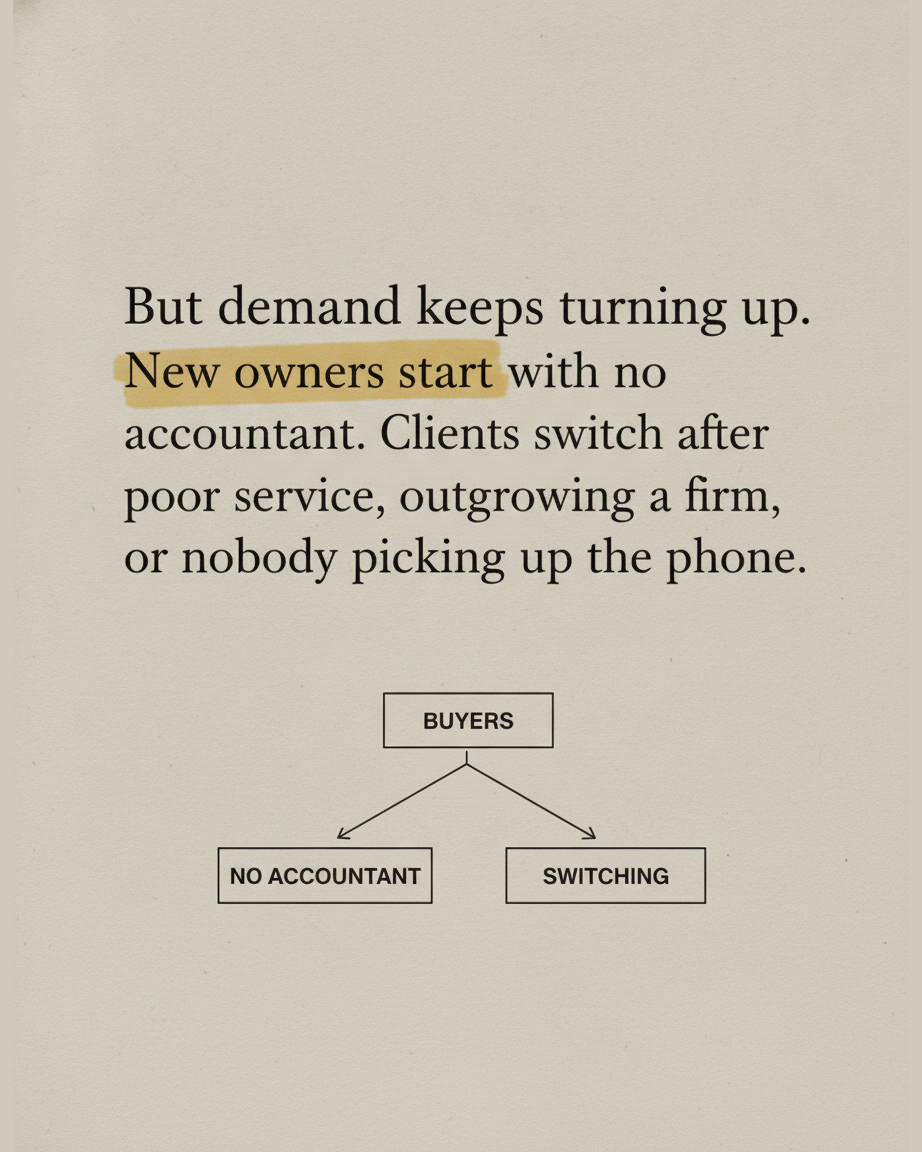
In practice, the silence never arrives, because the pool of buyers refills constantly. New owners incorporate every week and start with no accountant at all. Established businesses switch, and they switch for ordinary reasons: poor service, outgrowing the firm they started with, or nobody picking up the phone when something urgent came in.
Neither group appears on a competitor count. They are movements between firms and into the market, which is exactly the traffic a local practice can win. A town can be full of accountants and still contain a steady stream of people who are actively looking for a different one this month.
The real shortage is firms a stranger can find
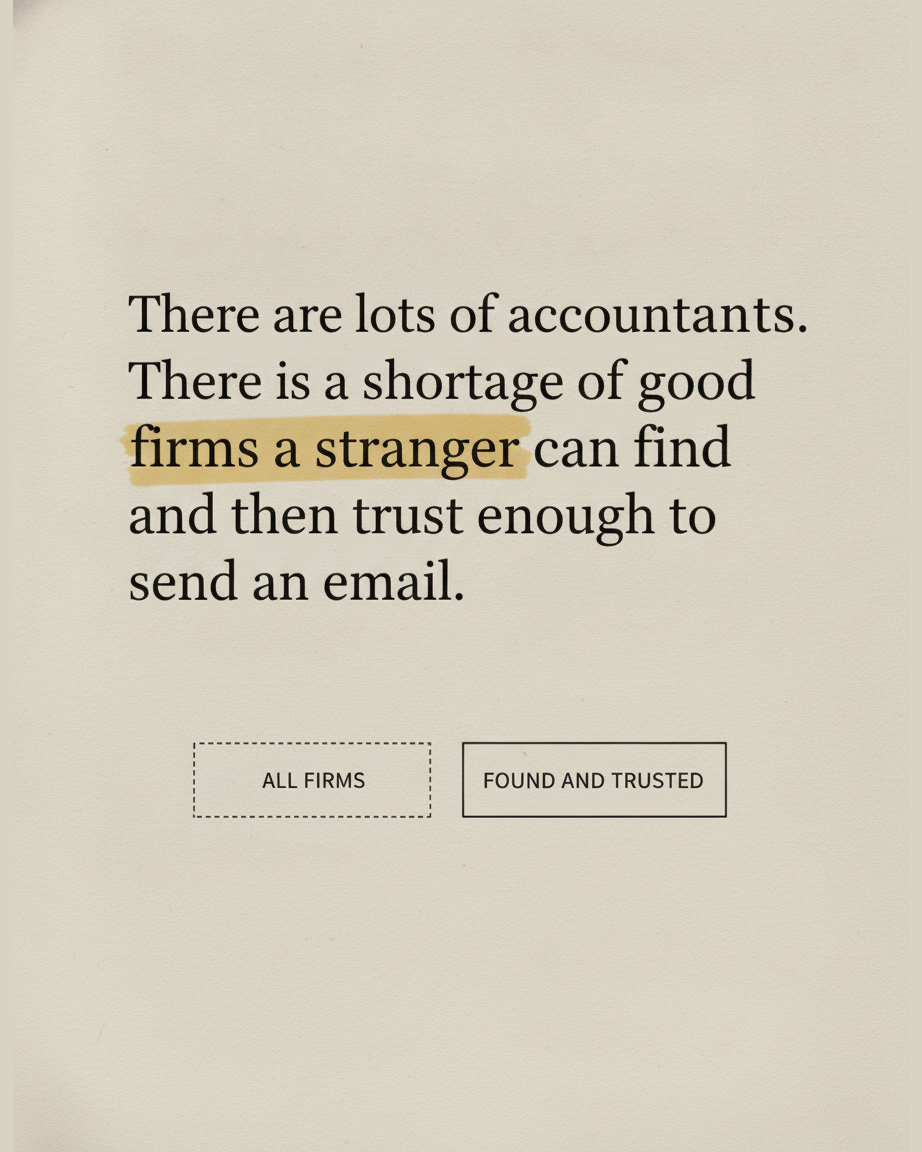
So the shortage is not of accountants. There are lots of accountants. The shortage is of firms that a stranger can find in the first place, and then read enough about to trust before sending an email.
That is a much narrower field than the competitor count suggests. Most local practices have a website that describes the firm rather than the buyer, no single clear offer, and no obvious way to enquire without committing to a meeting. When a business owner searches at ten o'clock at night with a deadline approaching, those firms are effectively invisible. Being findable and being credible are the two filters that shrink the list.
One deadline, one advert, Stoke on Trent
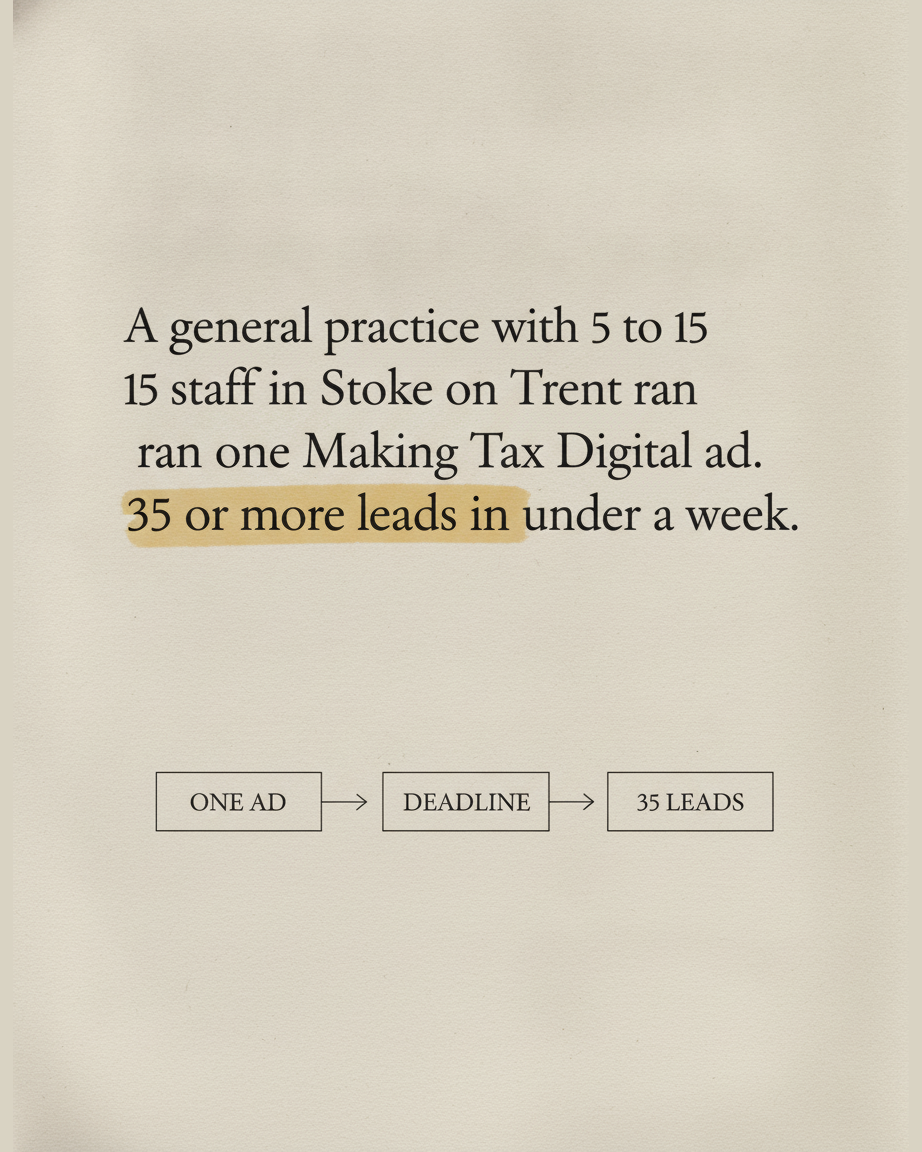
Here is what that looks like in a real practice. A general practice with five to fifteen staff in Stoke on Trent ran one advert built around Making Tax Digital, an obligation with a date attached to it. Thirty five or more leads came in under a week.
The mechanism matters more than the number. The offer was tied to something the buyer had to deal with anyway, so the advert did not have to create demand. It only had to reach people who already had the problem and give them a simple way to raise a hand. That is the whole trick, and it is repeatable.
Eighty one leads, and what they do not prove
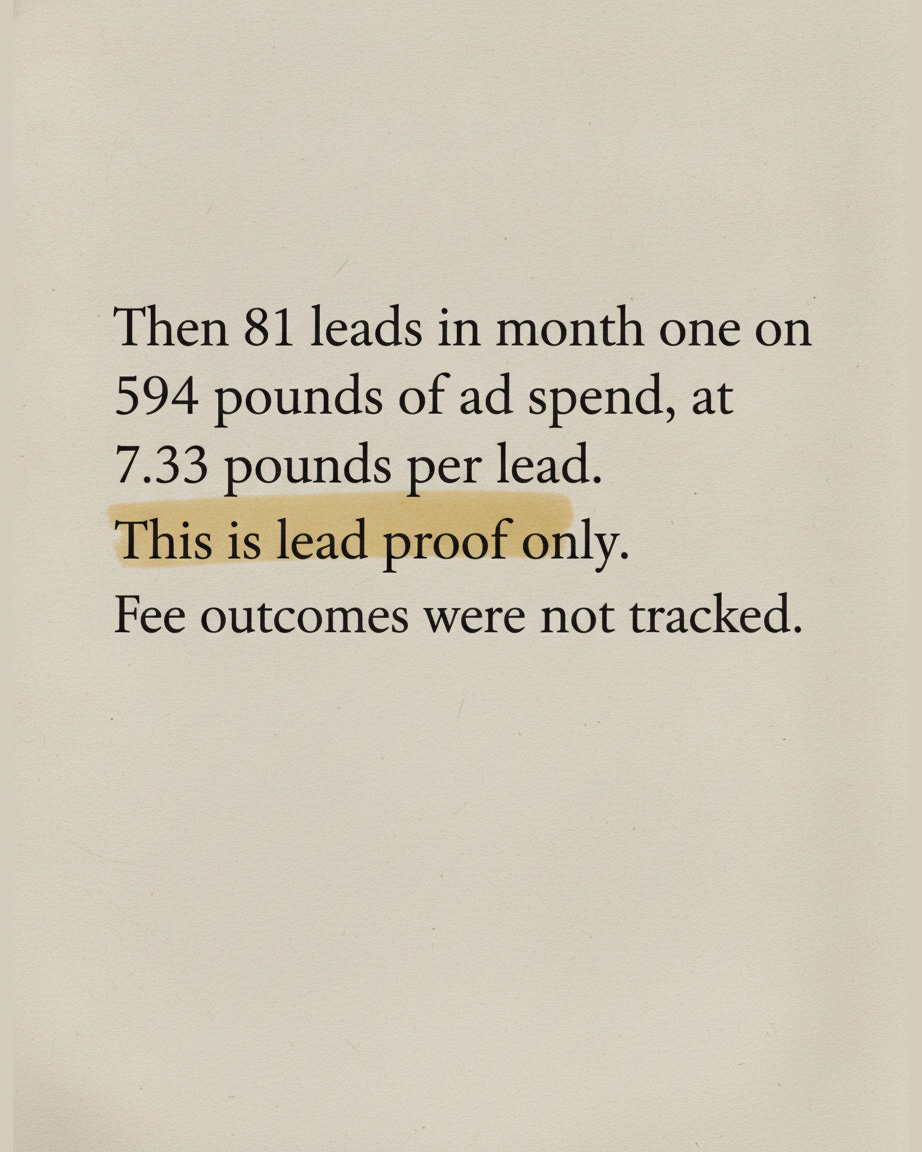
Over the first month the same firm recorded eighty one leads from 594 pounds of advertising spend, which works out at 7.33 pounds per lead. That is a healthy volume of interest for a single local practice running one offer.
We want to be careful about what it demonstrates. This is lead proof only. Fee outcomes were not tracked, so nobody can claim the campaign paid for itself from this data alone. What it settles is the narrow question we started with. Enough people in one ordinary town wanted to talk to an accountant that week to fill a diary. Saturation was not the constraint.
Barnstaple, where leads became clients
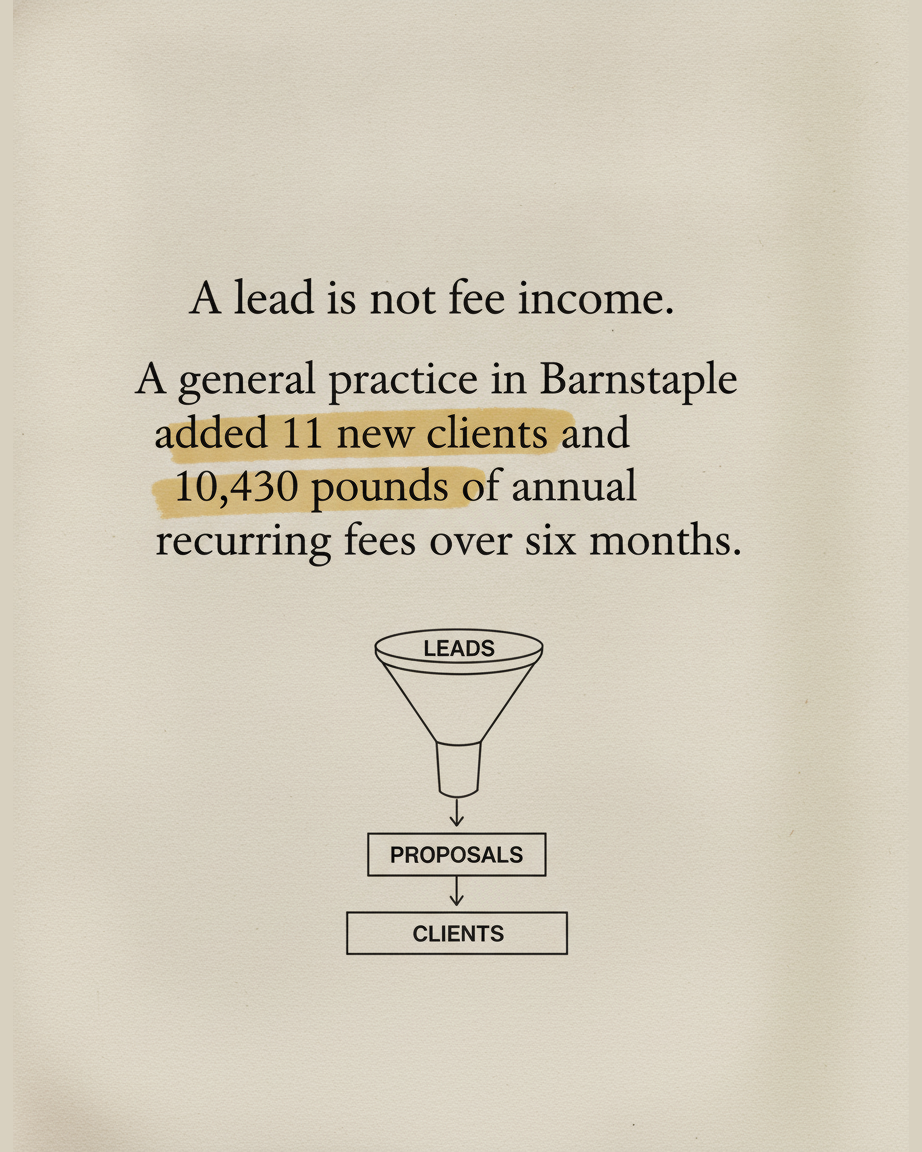
A lead is not fee income, and any honest account of this has to close that gap. A general practice in Barnstaple ran the same kind of offer and tracked it through to the accounts. Over six months the firm added eleven new clients and 10,430 pounds of annual recurring fees.
That is the number that actually matters to a practice owner, because recurring fees compound in a way that a one off job does not. It also shows the funnel working end to end: enquiries arriving, proposals going out, and a share of them signing. The interest was real, and it converted.
Where the return actually came from
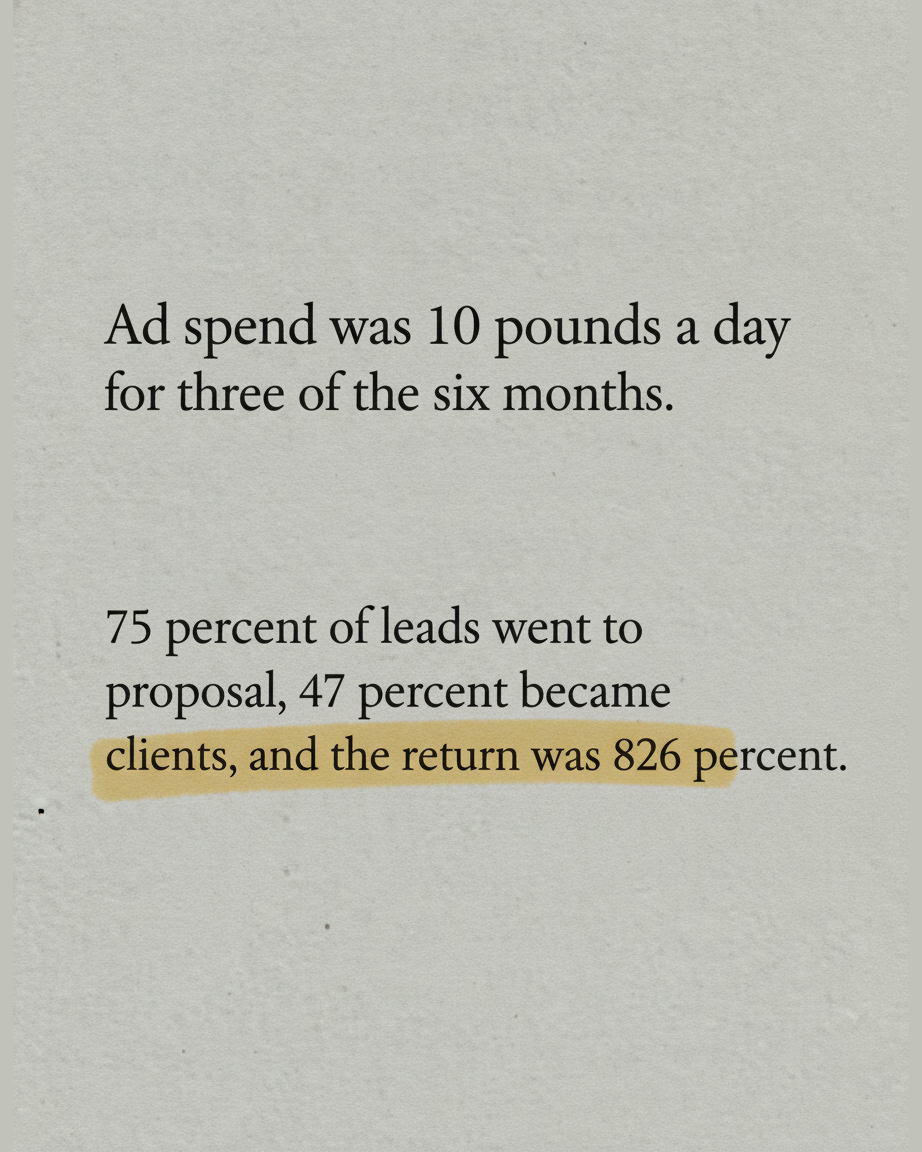
The spend behind those eleven clients was modest. Ten pounds a day for three of the six months, which is the sort of commitment a firm can stop at any point without it hurting.
The conversion figures explain the outcome better than the budget does. Seventy five percent of leads went to proposal, and forty seven percent of leads became clients, which produced a return of 826 percent. Those percentages come from how the firm handled enquiries once they arrived, not from the advert. Advertising created the opportunity. Following up quickly, with a proposal the buyer understood, is what turned it into fees.
Counting rival firms tells you nothing
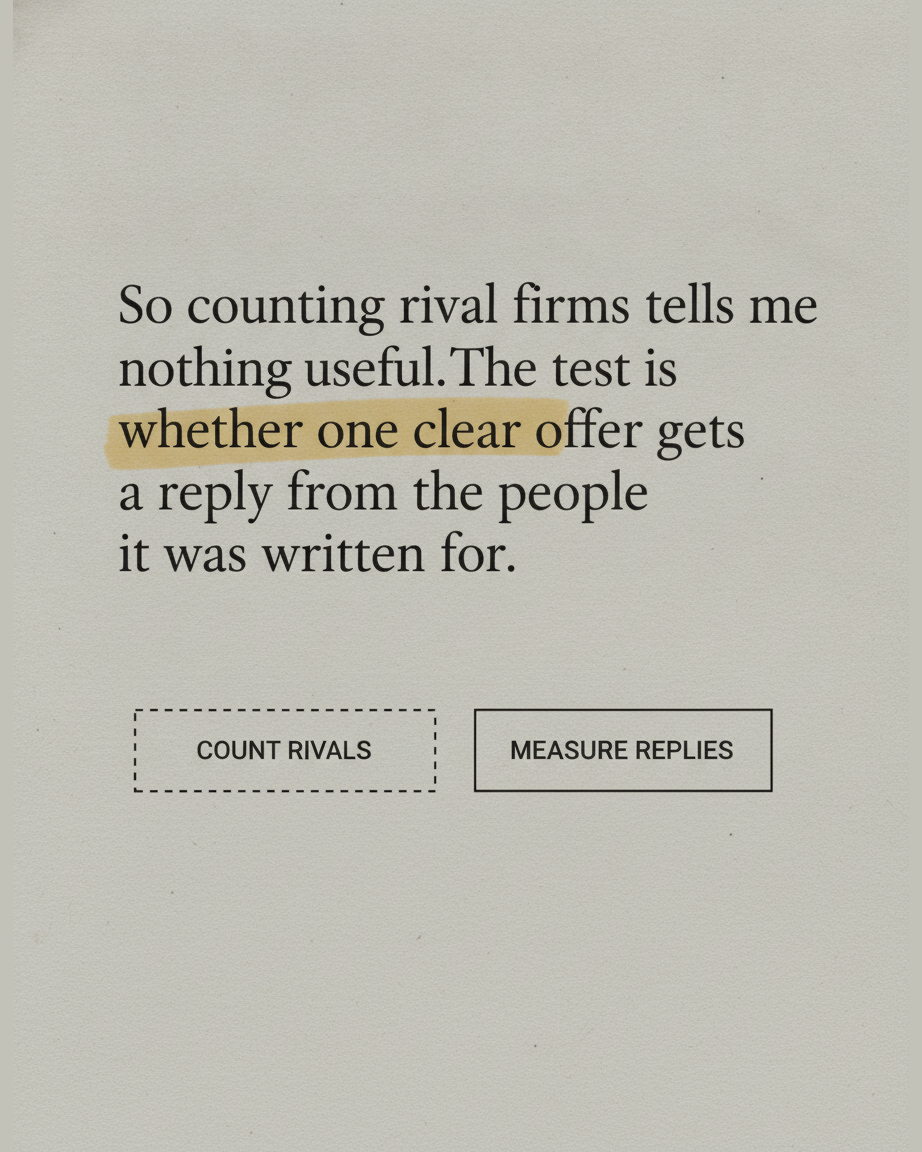
Put those cases next to the original worry and the worry stops holding up. Counting rival firms tells you nothing useful, because the count is a measure of supply and saturation is a claim about demand. Two towns with identical competitor numbers can behave completely differently once an offer is put in front of people.
The only test that carries information is whether one clear offer gets a reply from the people it was written for. That replaces an argument nobody can win with a measurement anybody can run. It also removes the comfort of the excuse, which is usually why firms avoid running it.
Monday: one service, one page, one advert
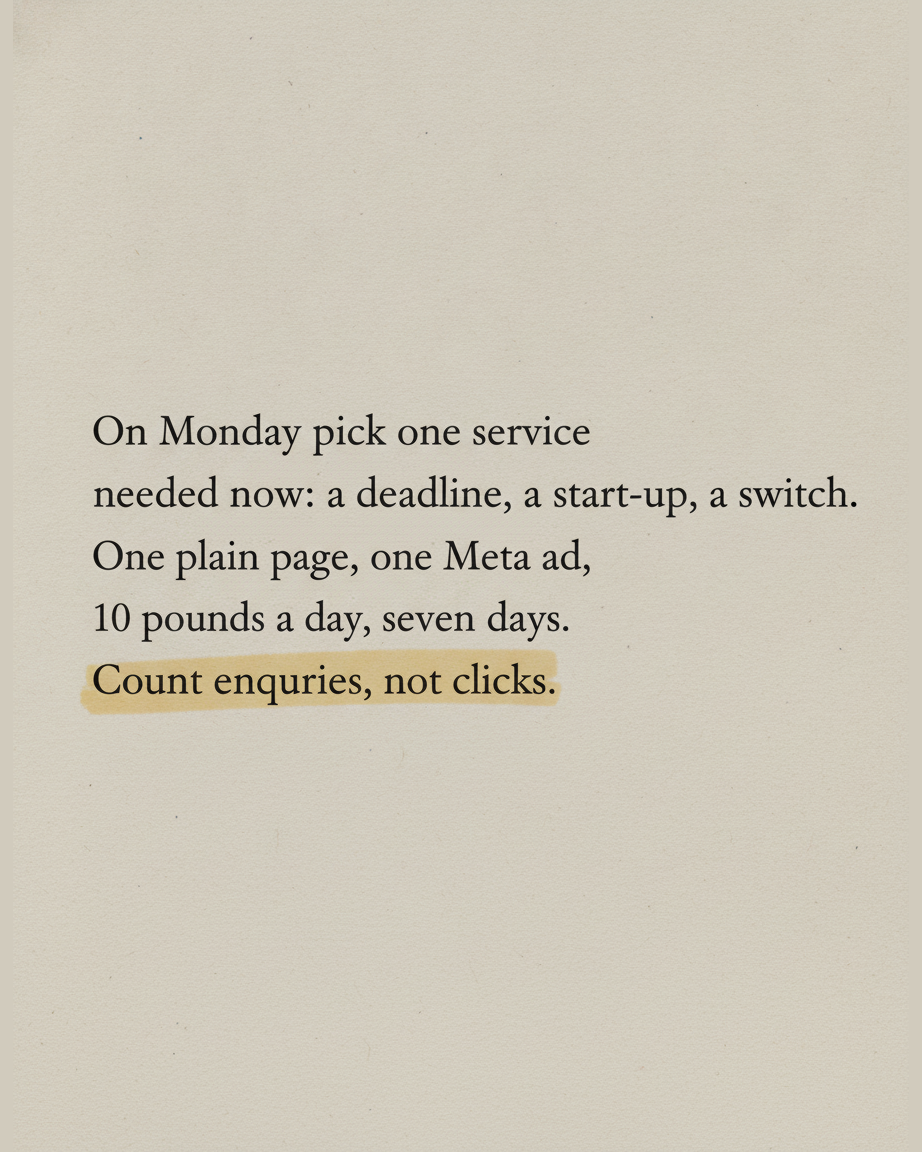
Here is the test itself. On Monday, choose one service that somebody needs right now because of a deadline, a start-up or a switch. Resist the urge to advertise the whole practice.
Publish one plain page that states who the service is for, what it is, that it costs nothing to enquire, and how to book directly. Then run one Meta advert repeating that same offer in the same words, at ten pounds a day for seven days.
At the end of the week, count enquiries rather than clicks. Clicks measure curiosity and cost you nothing to collect. Enquiries measure intent, and intent is the only thing under dispute.
How to read the seven day result
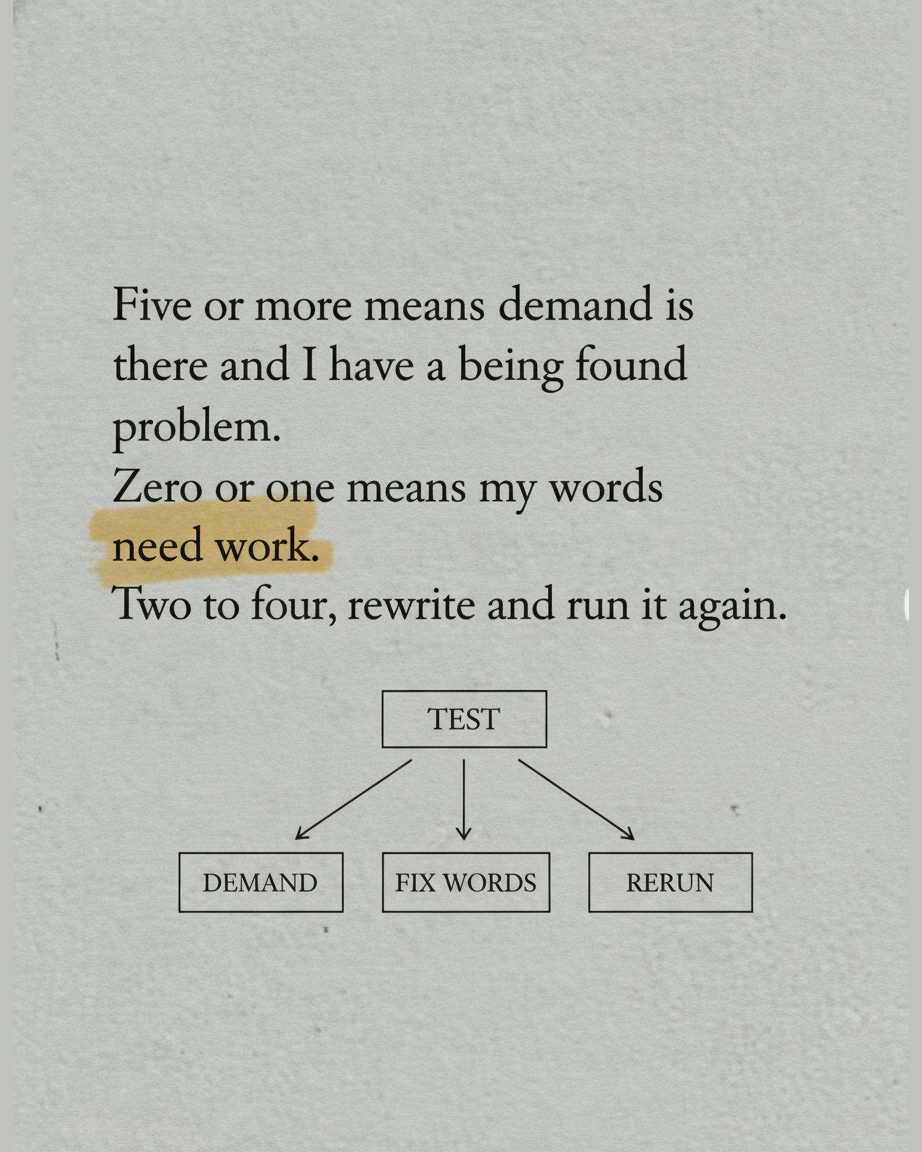
Decide what the numbers mean before you see them, because that is what keeps the test honest.
- Five or more enquiries. Demand exists in your area, and what you have is a being found problem rather than a market problem.
- Zero or one enquiry. The words or the offer need changing. That is a writing problem, and it is fixable in an afternoon.
- Two to four enquiries. Inconclusive. Rewrite the offer, make it more specific, and run the week again.
Notice what is missing from that list. There is no outcome where the correct response is to declare the market saturated and stop.
The cost of waiting another year
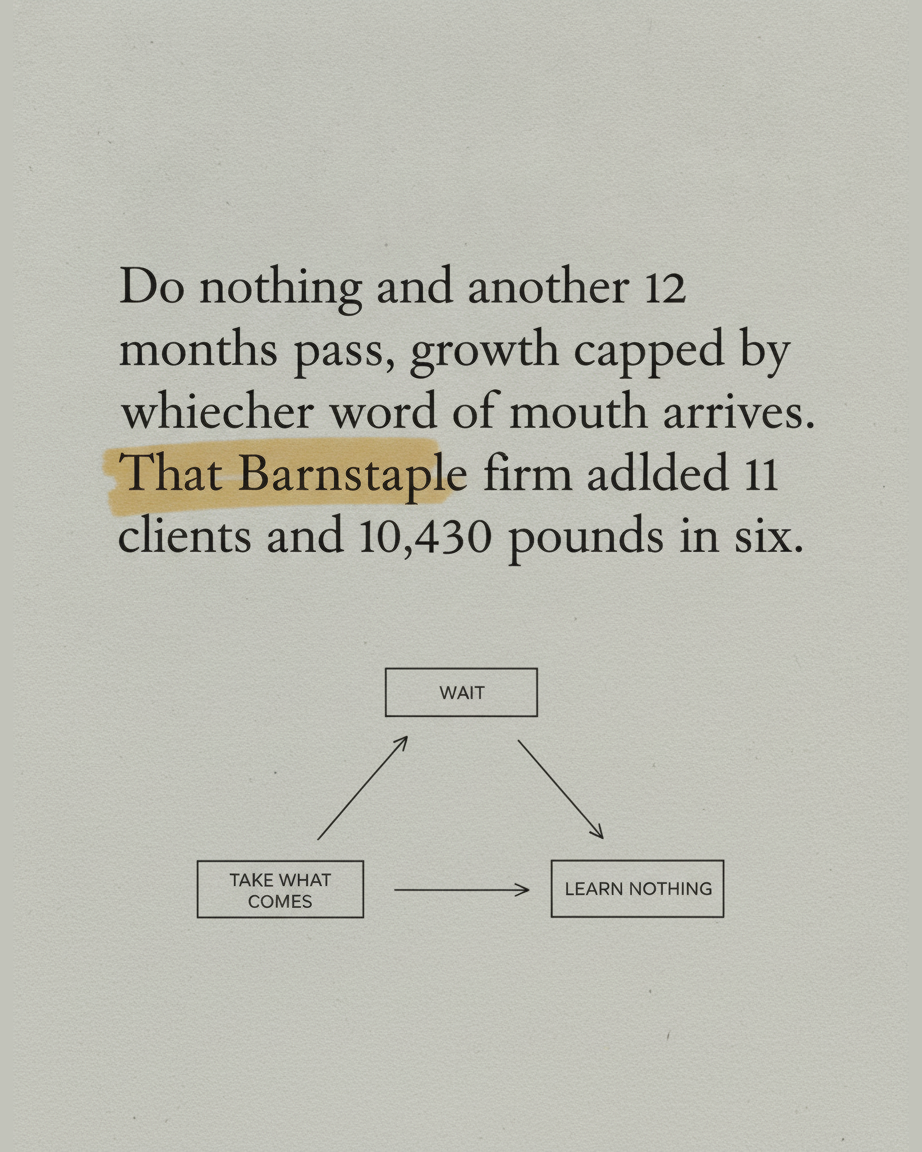
The alternative is to do nothing, which has a price that never appears on any invoice. Another twelve months pass, growth stays capped by whichever word of mouth happens to arrive, and the firm ends the year knowing exactly as much about its own market as it did at the start.
Set that against the Barnstaple practice, which added eleven clients and 10,430 pounds of recurring fees in six months on a small daily budget. We are not suggesting every firm sees that. We are suggesting that a week of evidence is cheaper than a year of assuming, and it is the only version that teaches you anything.
Settle it in seven days
Seven days and a small budget will tell you more than a year of opinion. That is the whole argument. The number of accountants in your town is a fact about supply, and it has never once answered the question of whether somebody nearby is looking for help this week.
There is genuine nuance here. A single week will not tell you what your close rate is, what those clients are worth, or whether your follow up holds up under volume. It will tell you whether demand exists, which is the thing most firms have never actually checked.
If your practice looks like the ones described here, and you would rather test than assume, the short qualification quiz below will give you a straight answer either way.