Prove the demand first, then buy the process it actually needs
Most firms rebuild handling, qualification and onboarding before they ever measure interest. A short, controlled test does the diagnosis for you. This is written for practice owners deciding whether to hire now or find out first.
Most partners we speak to want to prove demand before hiring, then talk themselves out of it. The instinct is to build first: recruit the front of house, write the onboarding checklist, agree who qualifies what, and only then spend on advertising. It feels prudent. In practice it means paying salaries against demand nobody has measured.
We work in the opposite order. Create a small, controlled amount of demand for one service, watch where the firm stalls, then spend on the single step that real volume shows is weak. Seven days is usually enough to see it clearly.
What follows is the test itself, two practices it has run in, and the thresholds that make the result readable rather than flattering.
Thirty five leads in one week
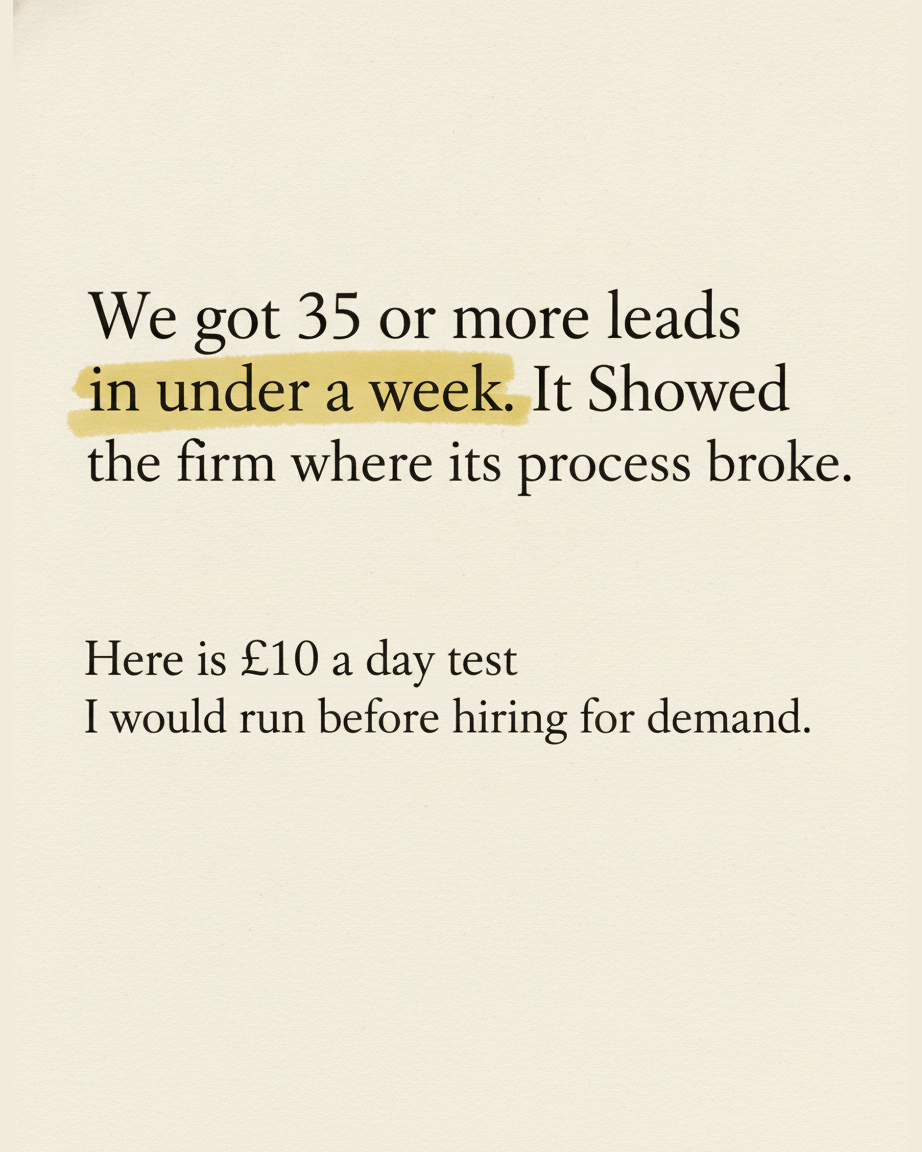
A general practice ran one advert for a single service and collected thirty five or more enquiries in under a week. The interesting part was not the number. It was what the number exposed. Enquiries arrived faster than anyone had agreed to answer them, so the gaps in handling, qualification and onboarding became visible within days rather than quarters.
That is the whole argument in short form. A controlled test at a small daily budget tells a firm more about its own process than another month of planning will, because it produces real people asking real questions at a real pace.
Paying for demand nobody measured
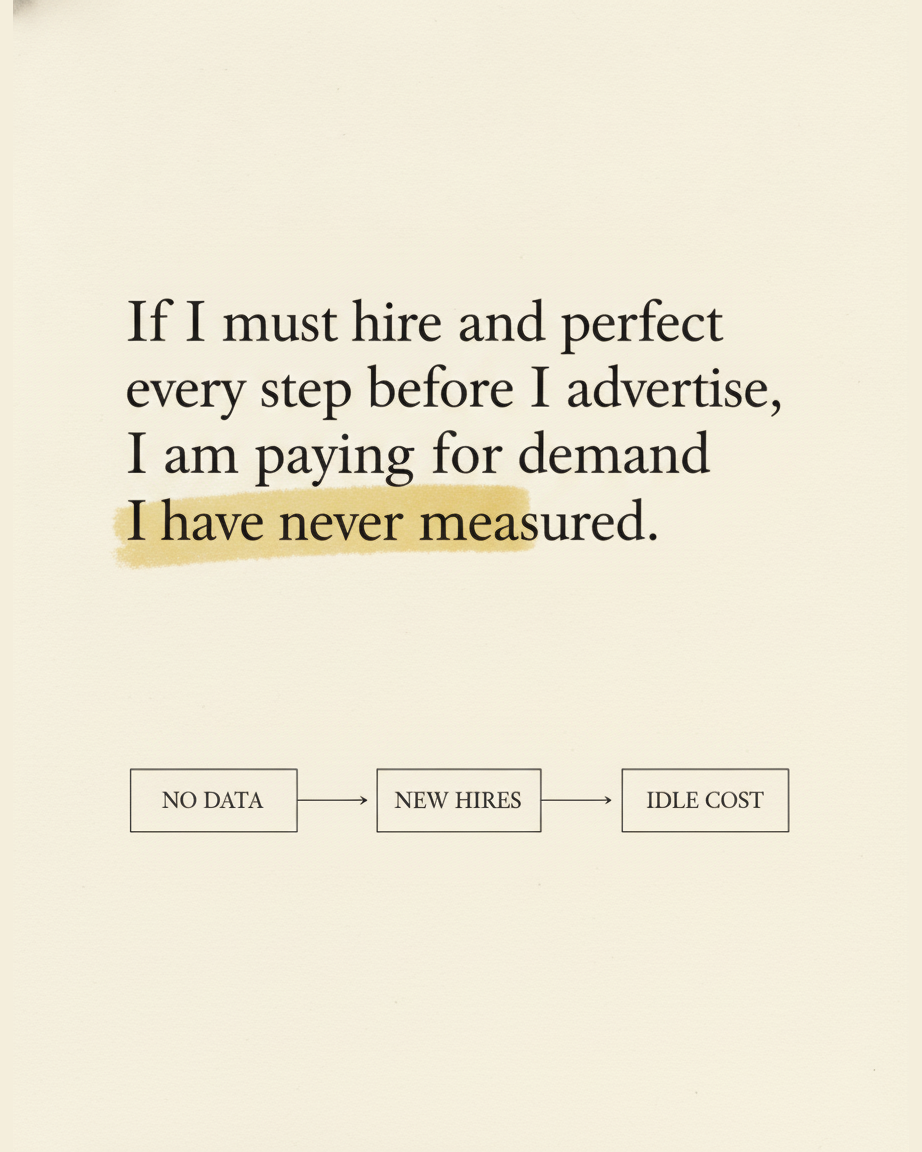
The build first approach has a hidden assumption inside it: that the demand is there, at a volume worth staffing for. Nobody has checked. So the firm recruits, writes procedures and buys tools on the strength of a feeling, and the cost starts on day one while the enquiries may not.
We see the same sequence repeatedly. No data leads to new hires, and new hires with nothing to handle become idle cost. The people are capable and the process is tidy. Neither has been tested against anything, which is the part that matters.
Volume shows a firm its quality problems. You cannot filter enquiries you do not have, so prove the demand first and buy only the handling that real volume proves you need.
Word of mouth hides the weak step
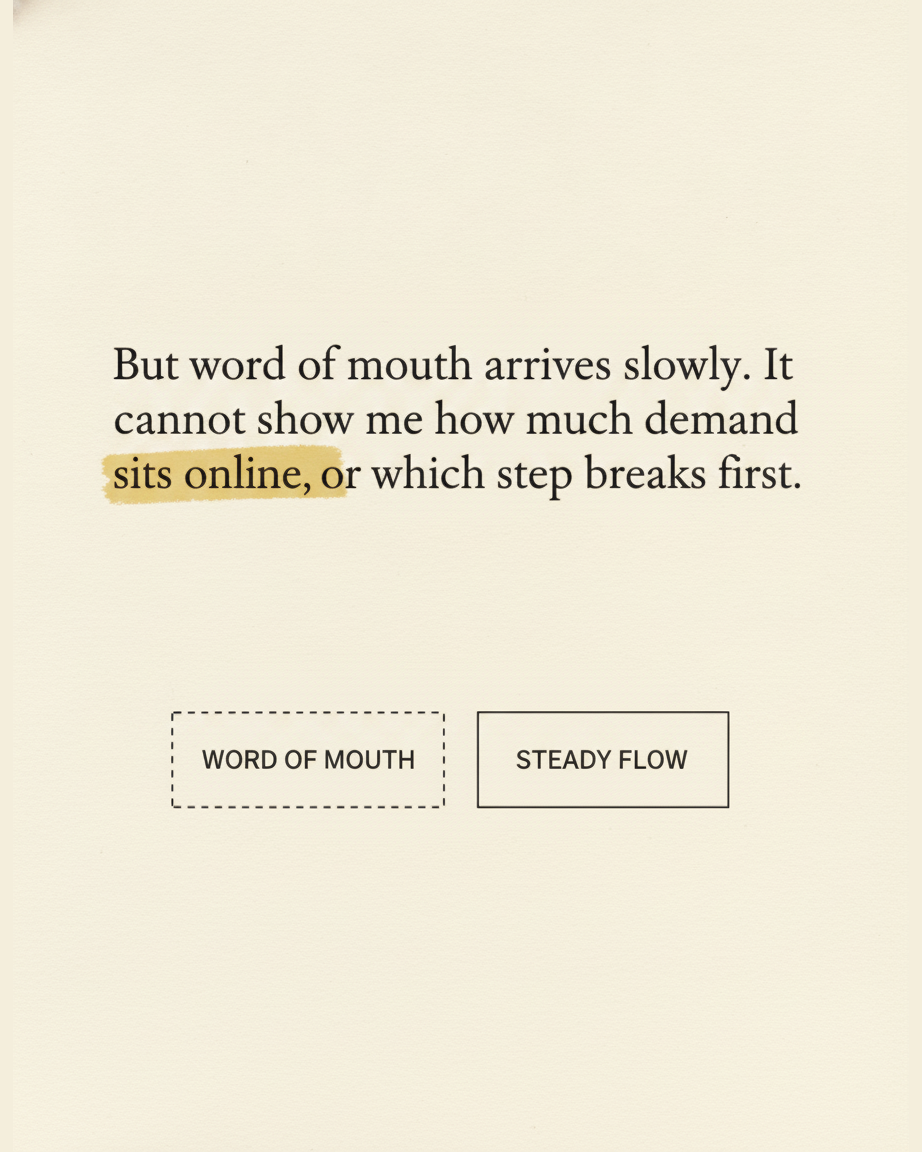
Referrals are a good source of clients and a poor instrument of measurement. They arrive slowly, in ones and twos, spread across weeks. A firm can answer that trickle with whoever happens to be free, which means the process never comes under enough pressure to show its faults.
It also tells you nothing about how much demand sits online for a given service in a given month. Word of mouth gives you a client. A steady flow gives you a reading. Only the second one shows which step breaks first when several enquiries land on the same afternoon.
Eighty one leads in month one
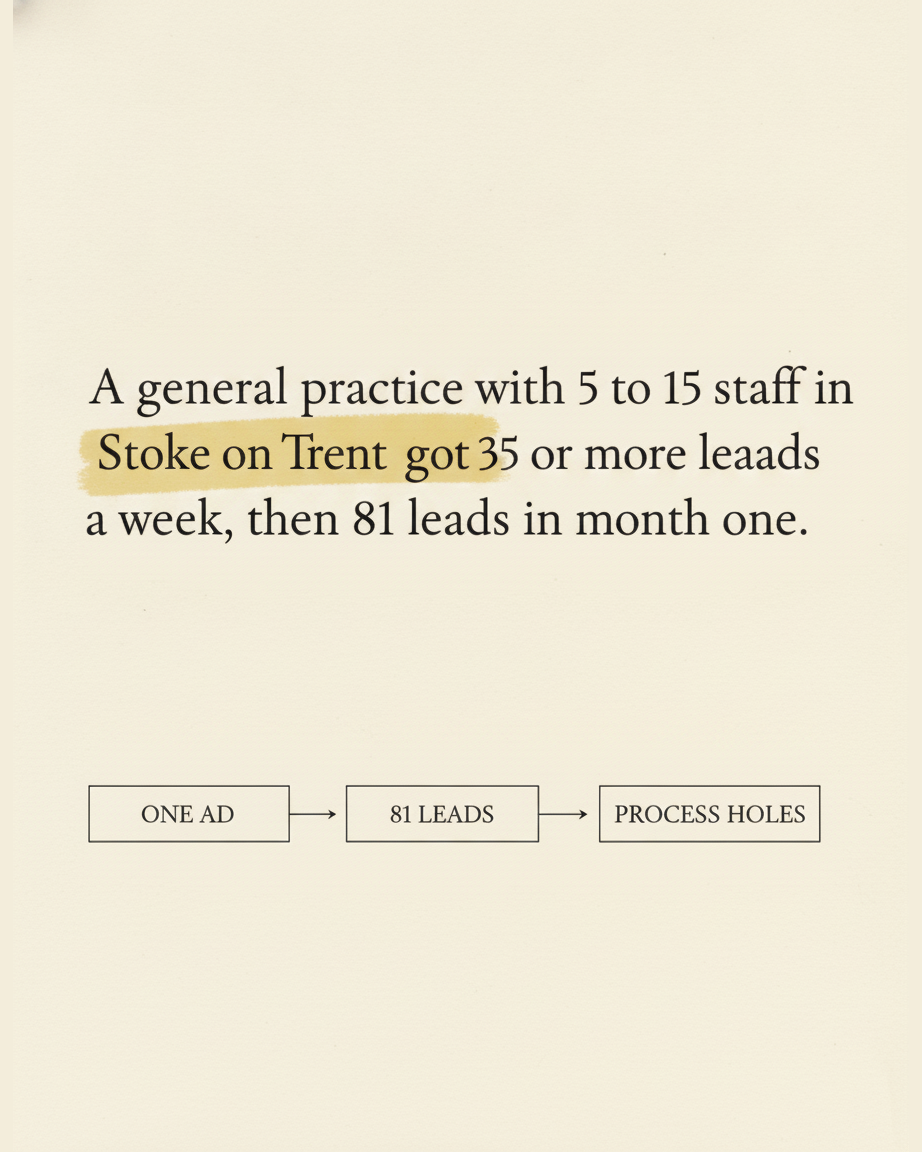
The practice in question is a general one, five to fifteen staff, based in Stoke on Trent. The first week produced thirty five or more enquiries. The first month produced eighty one.
Read that as a diagnosis rather than a trophy. One advert created enough volume to reveal process holes that had always been there and had never been stressed: enquiries sitting unanswered overnight, no agreed owner, no record of who had been contacted or booked. The firm did not have a demand problem. It had a visibility problem, and then a handling problem it could finally see.
What the cost per lead proved
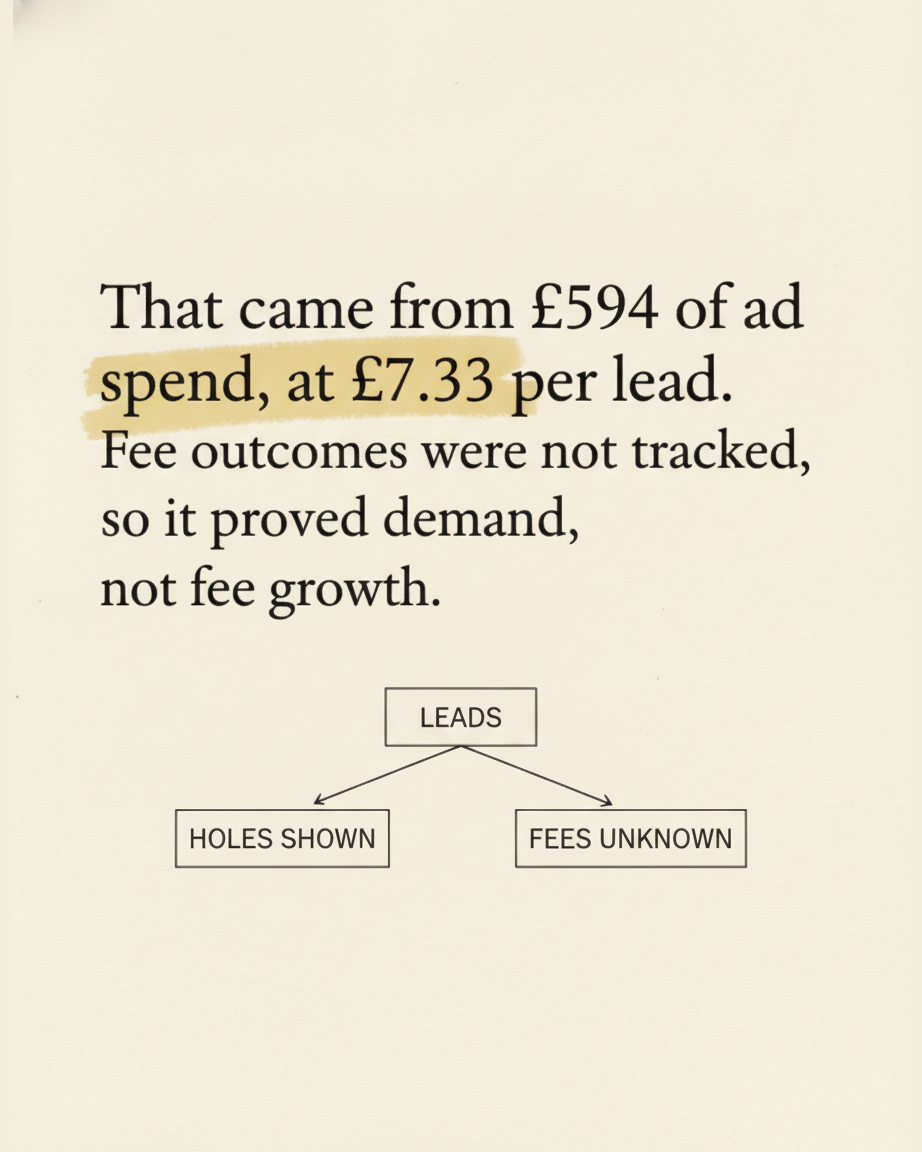
Those eighty one enquiries came from £594 of advertising spend, which works out at £7.33 per lead. We want to be careful about what that figure does and does not establish.
Fee outcomes were not tracked in that engagement. So the honest claim is that the test proved demand and exposed process holes. It did not prove fee growth, and we are not going to imply that it did. That distinction matters, because a firm making a hiring decision needs to know which half of the question has been answered. Demand, yes. Revenue per enquiry, still unknown.
Zero enquiries to eight new clients
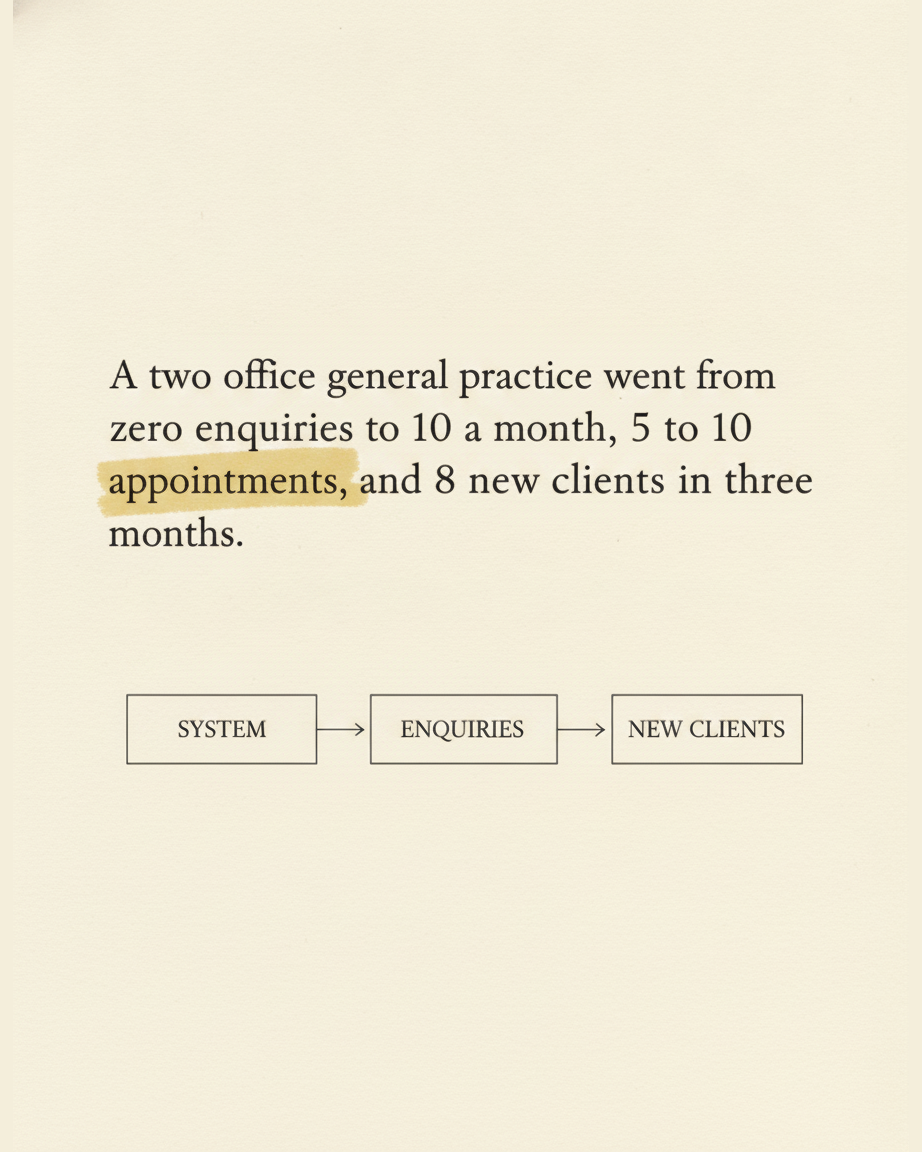
The second example starts lower down. A two office general practice was receiving no enquiries at all through its own channels. Everything came by referral, and the ceiling was whatever the local network happened to produce that quarter.
With a system in place it moved to around ten enquiries a month, five to ten appointments from those, and eight new clients across three months. The point is the order of events. Nobody was hired to cope with an imagined rush. Enquiries appeared first, appointments followed, and the firm learned what its own conversion actually looked like on the way through.
The filter came after the overload
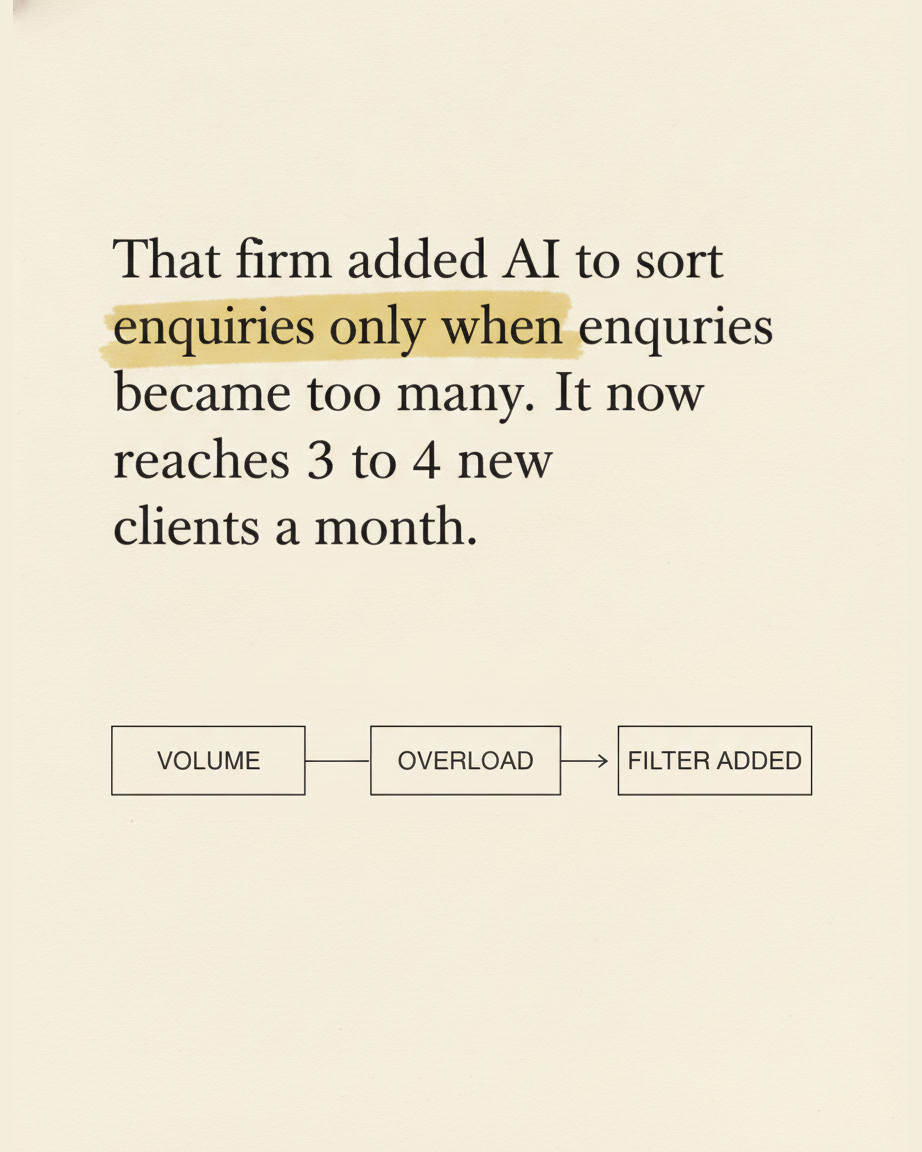
That same firm now uses software to sort and screen enquiries, and it reaches three to four new clients a month. The timing is the lesson. The filter was added when enquiries became too many for a person to triage properly, not before.
Had they bought the tooling first, they would have configured rules against guesses about which enquiries were worth a partner's time. Instead they had a few dozen real ones to look at, which made the qualification criteria obvious. Volume created the overload, and the overload specified the fix. That is a much cheaper sequence than the reverse.
Find the stall, fix one step
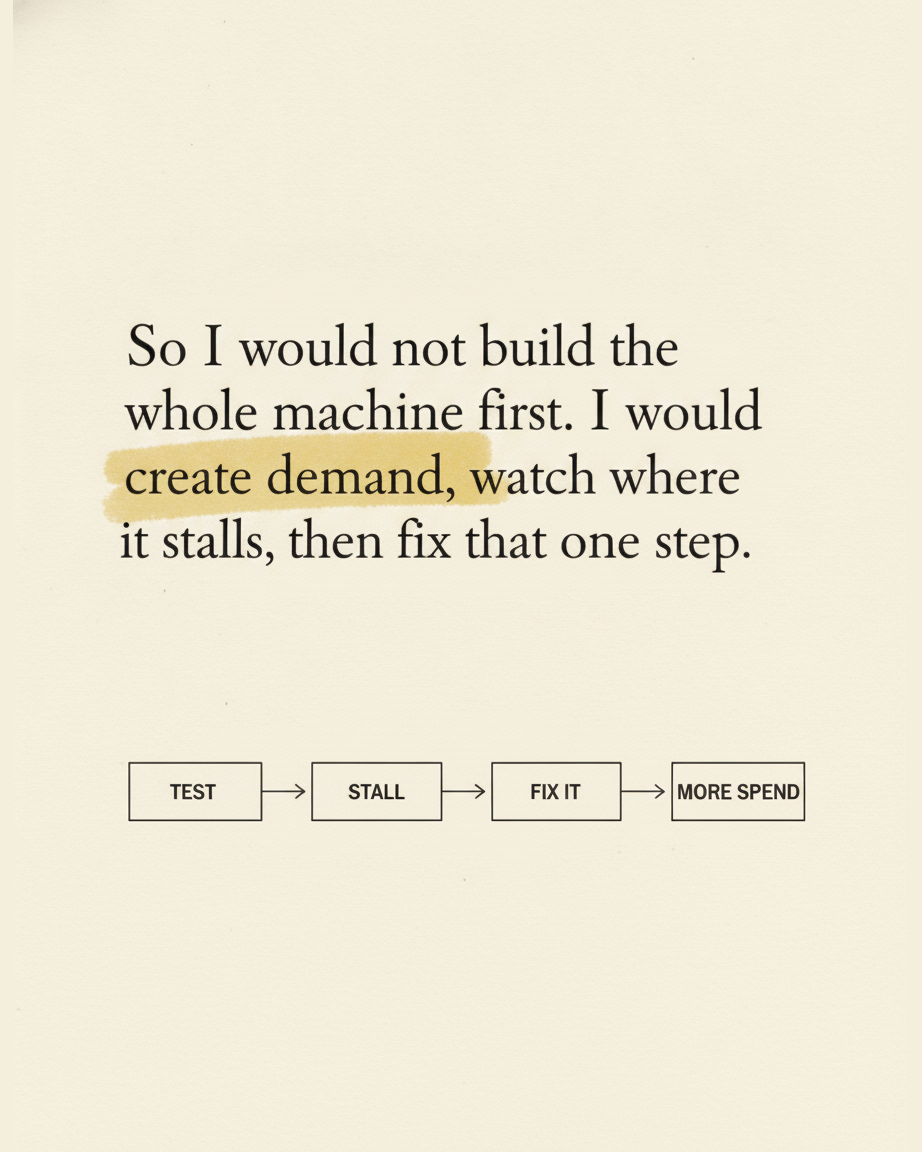
So we would not build the whole machine before switching it on. We would create a modest amount of demand, watch closely for the point where things stall, and repair that one step properly before adding more spend.
The stall is different in every practice. In one it is nobody answering the phone after four o'clock. In another it is an enquiry form asking for information people will not type. In a third it is the gap between a booked call and an engagement letter. You cannot guess which of those applies to your firm, and you do not have to. Test, stall, fix, then spend more.
One service, one page, one advert
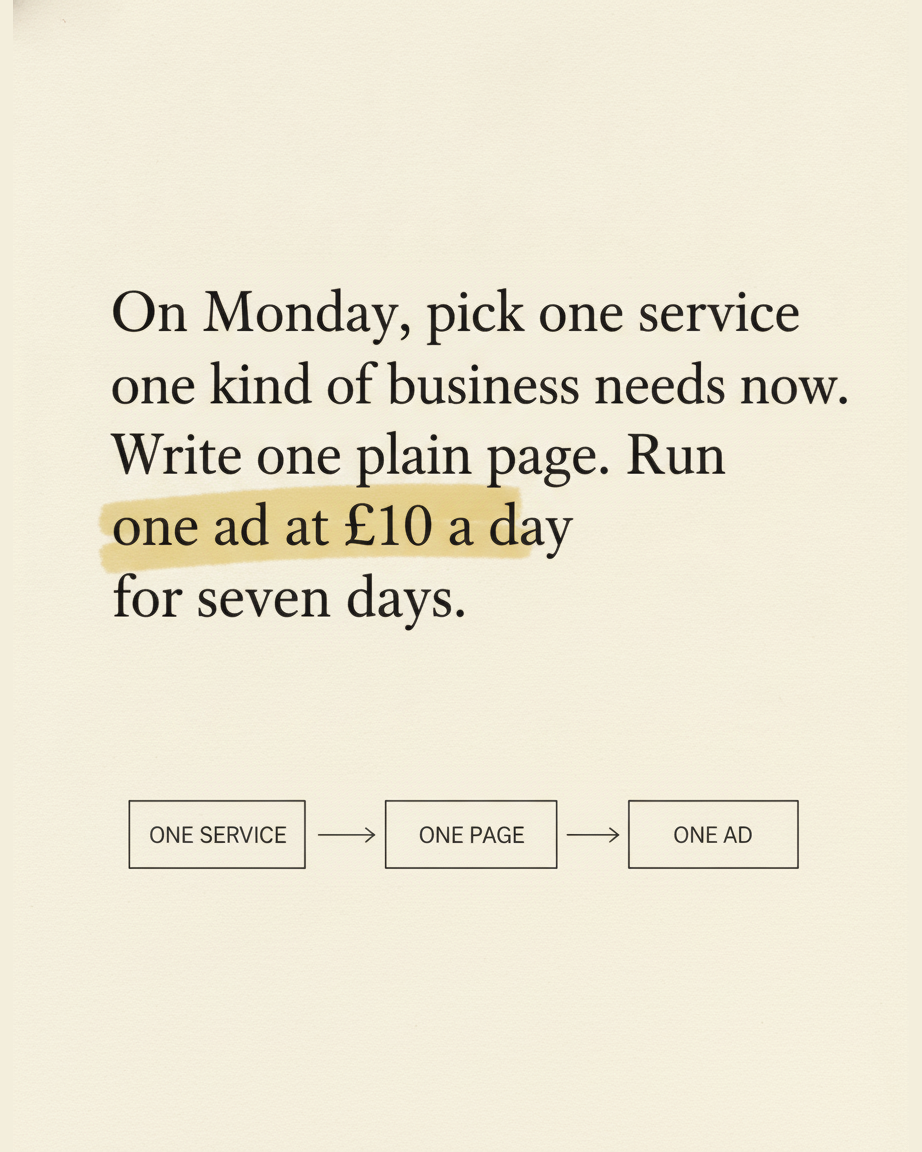
Here is the version we would run on a Monday. Choose one service that one specific kind of business needs right now, driven by a deadline, a start up or a switch of accountant. Vague general practice messaging produces vague results.
Then build one plain page. It states who the service is for, that an enquiry costs nothing, and how to book. No brochure, no history of the firm. Point one advert at that page and run it at £10 a day for seven days. The constraint is deliberate: one service, one page, one advert keeps the result interpretable.
Five enquiries or more means demand
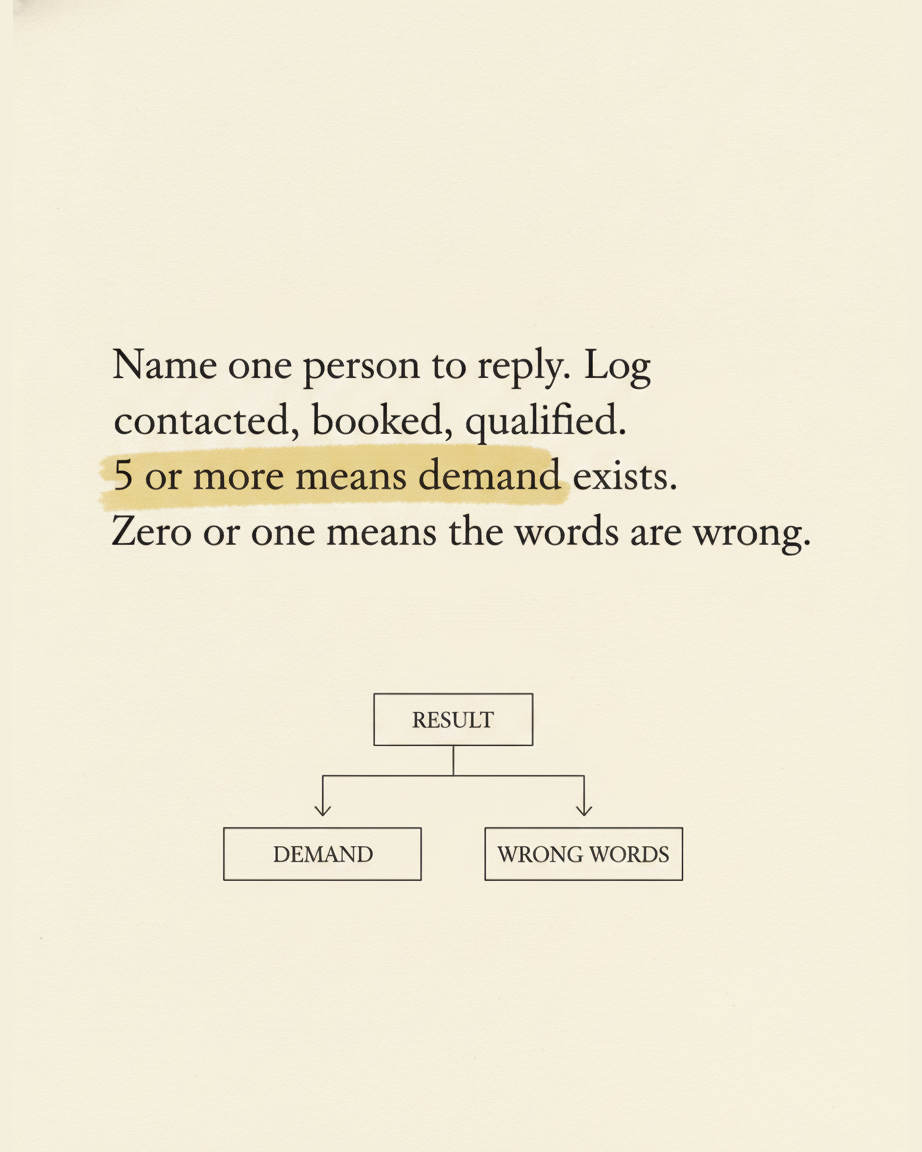
Name one person to check and respond to enquiries, by name, not by department. Then log three things for each one: whether it was contacted, whether it was booked, and whether it was qualified. That log is the real output of the week.
Five or more enquiries means demand exists and the firm has a visibility problem rather than a market problem. Zero or one means the words or the offer are wrong, and that is a far smaller thing to fix than the whole market having disappeared. Either reading tells you something you can act on next week.
Check it daily and pause when needed
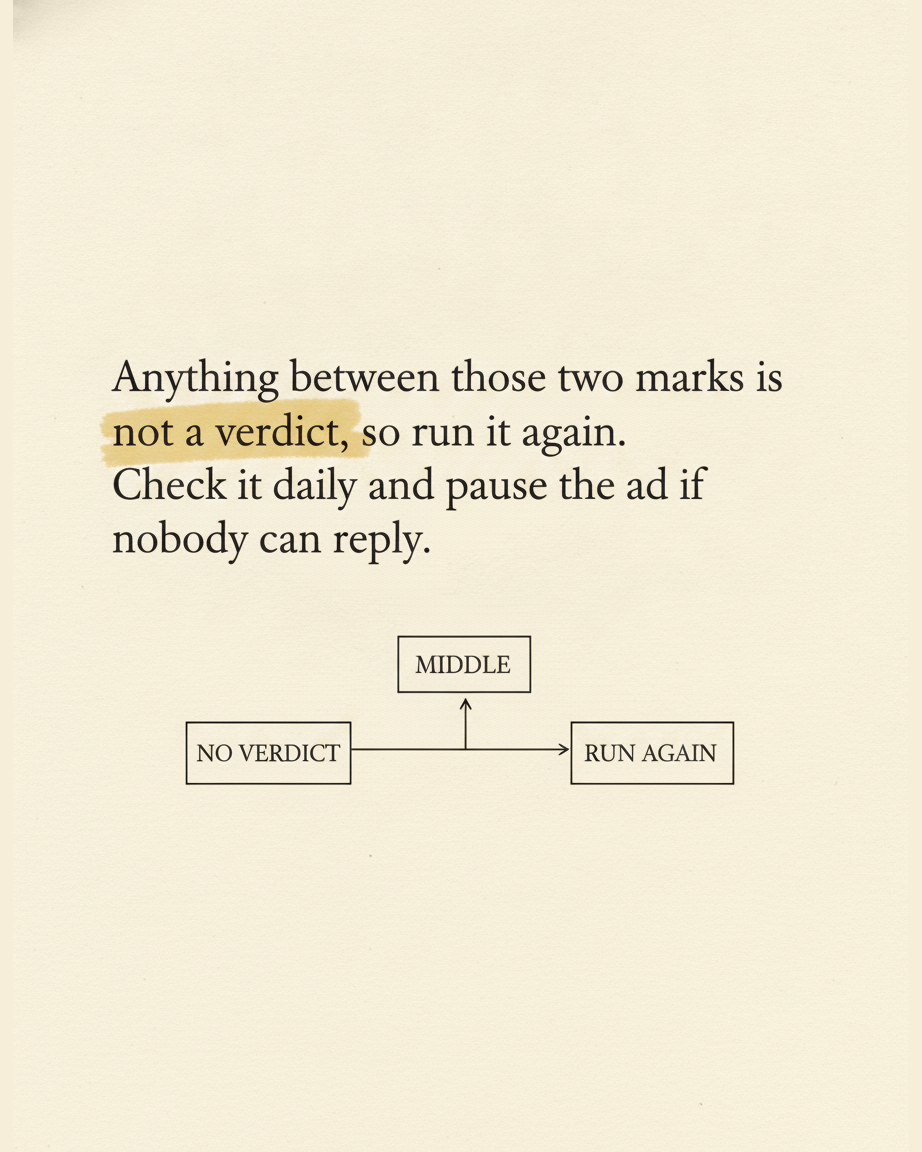
Anything between those two thresholds is inconclusive. Two, three or four enquiries is not a verdict, and treating it as one is how firms end up confidently wrong. Revise the offer or the wording and run the week again rather than claiming certainty you have not earned.
Check the campaign daily. If the named person is on leave, in court or buried in a filing deadline, pause the advert. An enquiry nobody answers is worse than an enquiry you never generated, because it teaches a local business that your firm does not reply. The discipline here is as important as the budget.
What guessing costs either way
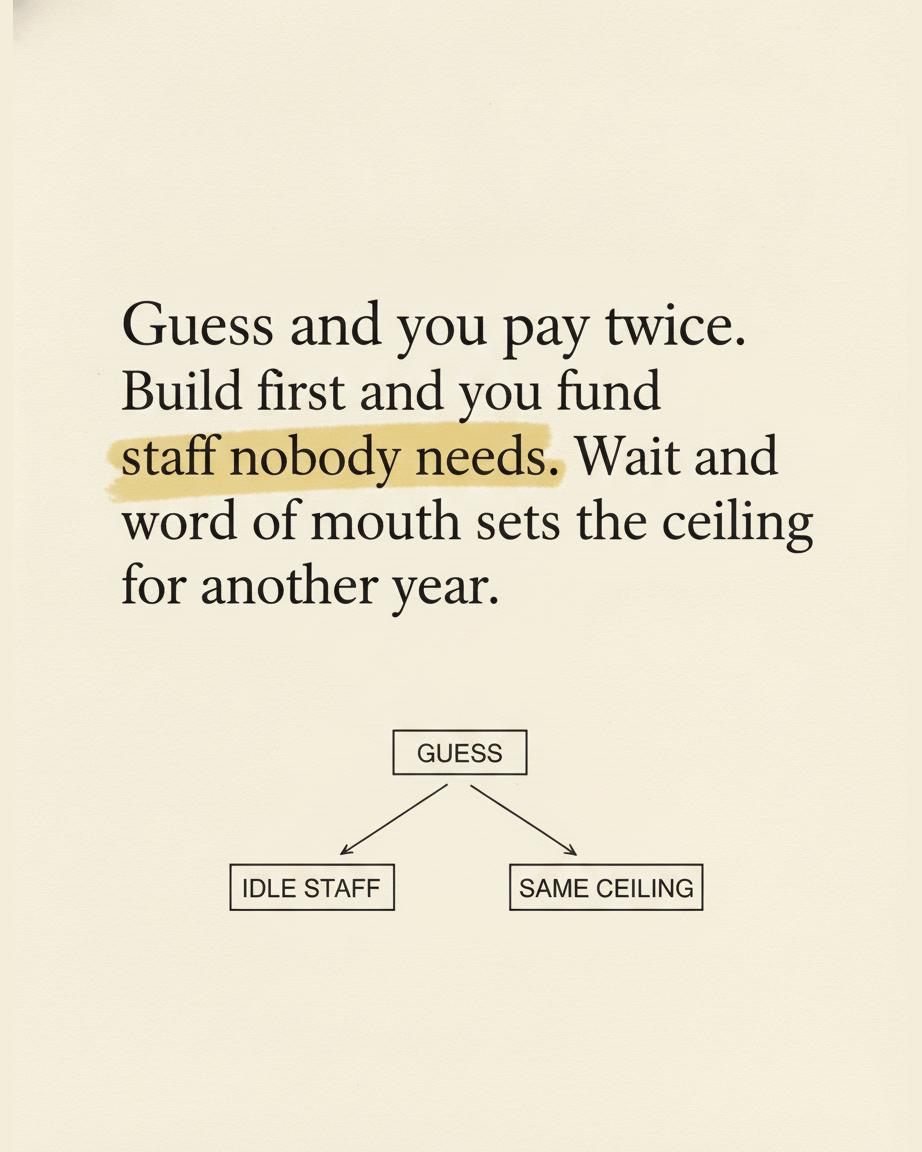
Guess, and you pay twice: once for the wrong build, and again for the rebuild once reality arrives. Build the full process first and you fund staff nobody needs yet, which is a cost with no corresponding enquiries against it.
Wait instead, and the outcome is quieter but not cheaper. Word of mouth sets the ceiling for another year, and the firm ends the year with the same capacity question it started with. A single controlled week removes the guess from the decision. That is the only thing we are claiming for it, and it is enough.
Where this leaves you
Volume shows a firm its quality problems. You cannot filter enquiries you do not have, so the sensible order is to prove demand, watch for the first point of strain, and then invest in the handling, qualification or onboarding that real volume has shown you need.
There are firms this does not suit. If your capacity is genuinely full, or the one service you would test is not something you want more of, a test week is the wrong use of attention. For everyone else, seven days and a named responder will settle an argument that has often been running for a year.
If your practice looks like the ones described here, we are happy to talk through what the first week would look like in your case.