Before you buy more names, prove one offer can bring enquiries in seven days
Most firms decide whether to renew with a lead vendor on instinct and last year's invoices. There is a cheaper way to find out. This is for practice owners who suspect they could generate their own enquiries but have never put it to a proper test.
Every renewal season, the same conversation comes round. The lead vendor invoice lands, the partners look at the client list, and somebody says the firm should really be generating its own work by now. Then nothing happens, because nobody wants to gamble a marketing budget on a hunch. So the firm signs again and the question gets carried into another year.
Our position is simple. You can test demand without buying leads, and you can do it in a week. Not the whole funnel, not lifetime value, just the one thing that actually decides the argument: will a specific kind of business, at a specific moment, reply to your firm on a page your firm controls.
What follows is the case for that test, two contrasting examples, and the exact version we would run on a Monday.
Thirty five leads in under a week
One general practice ran a single advert about Making Tax Digital and collected thirty five or more leads before the week was out. We lead with that figure because it is the thing most firms assume is impossible without a vendor sitting in the middle. It was one offer, one page, one advert, and a budget that would not trouble a partner's expenses claim.
The number is the hook, not the lesson. The lesson is the seven day test that produced it, which any firm can run before committing to another year of bought names.
If bought leads were the only way
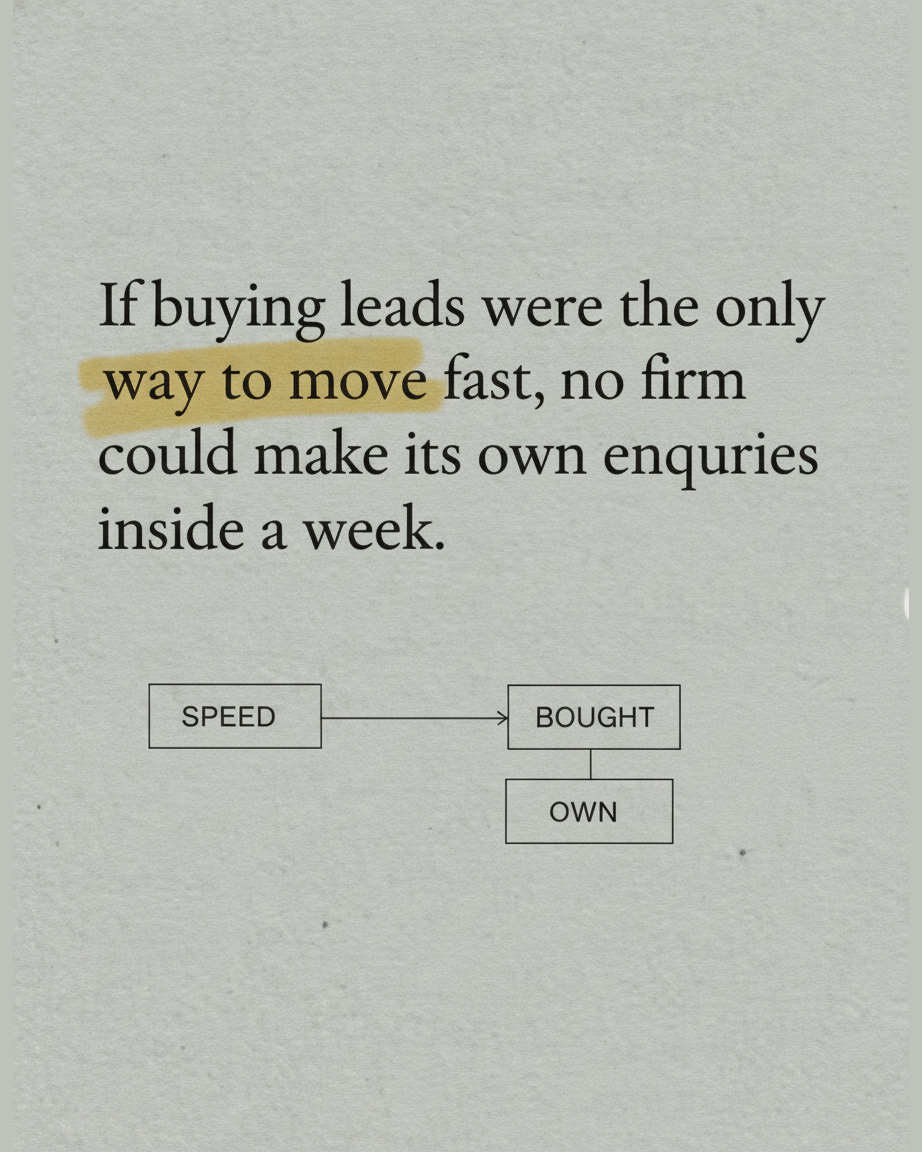
The usual defence of lead vendors is speed. You need work in the diary this quarter, and building your own pipeline sounds like a project for a calmer year. We understand the logic, and it is worth testing rather than accepting.
If buying were genuinely the only fast route, then no firm could produce its own enquiries inside a week. That is a claim you can check rather than argue about. Speed forks into two paths, bought and owned, and the second one is far less explored than most practice owners assume.
Seven days and a small budget will tell you more than a year of opinion. The test does not settle whether the client stays. It settles whether the pipeline can start without rented names.
One advert, one week, one practice
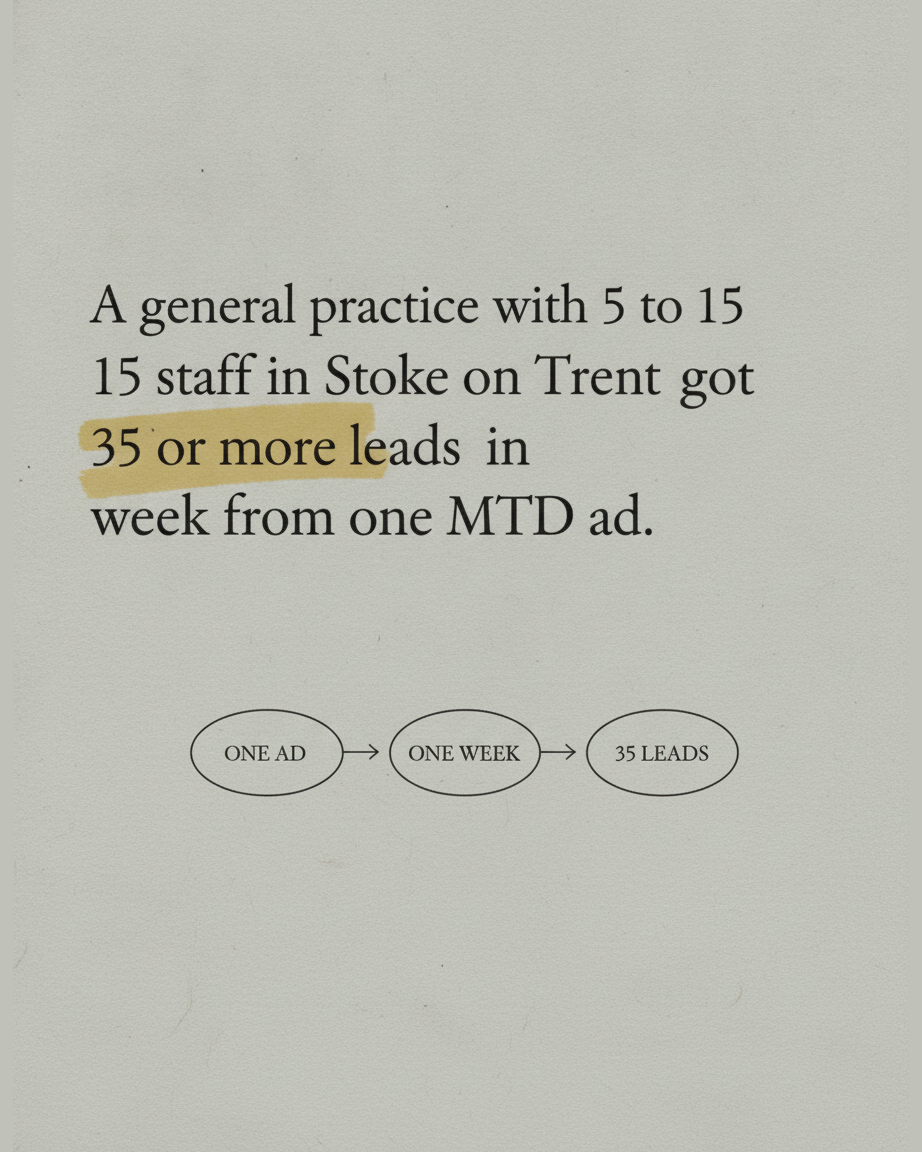
Here is the first data point. A general practice in Stoke on Trent with five to fifteen staff ran one advert on Making Tax Digital and recorded thirty five or more leads in under a week. No vendor, no shared inbox, no queue of competing firms behind the same form.
What made it work was not clever creative. It was a service a specific group of businesses needed at that moment, described plainly, with an obvious way to get in touch. The advert simply put that offer in front of people who had a reason to respond that week.
What the first month actually showed
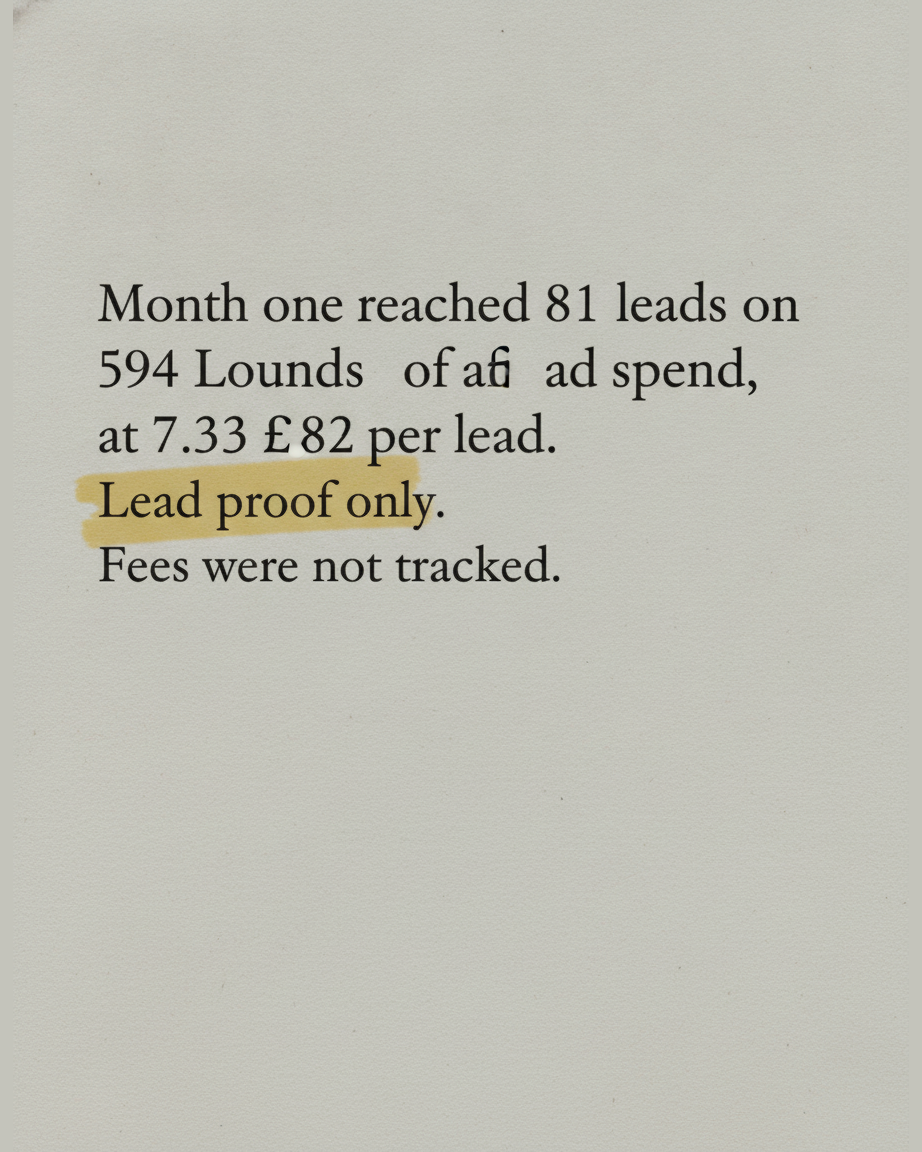
Across the full first month, the same practice reached eighty one leads from 594 pounds of advertising, which works out at 7.33 pounds per lead. We want to be careful about what that proves. It is lead proof and nothing more. Fees were not tracked, so we cannot tell you what converted, what stuck, or what the work was worth.
That honesty matters, because the temptation is to stretch a good week into a business case it cannot carry. The claim here is narrower and more useful: demand for that service existed, and it could be reached directly.
The same money, spent on rented names
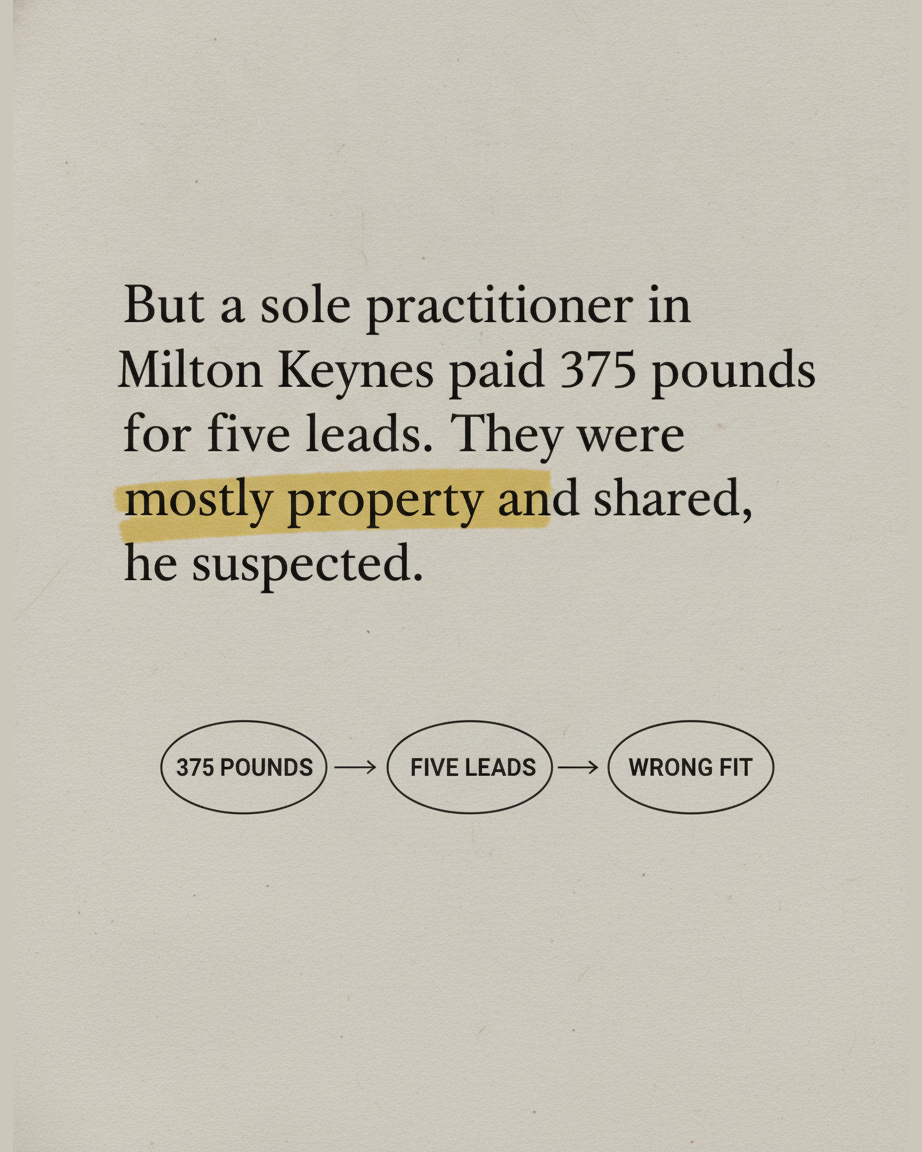
Now the counterweight. A sole practitioner in Milton Keynes paid 375 pounds and received five leads. He suspected they were mostly property enquiries, and that the same names had been sold to other firms alongside him.
We are not holding this up as proof that vendors never work. Plenty of firms get value from them. The point is the shape of the risk. When someone else owns the form, you inherit whatever fit they happened to capture, and you compete for attention with every other buyer on the list. The spend was similar. The control was not.
Rented names or direct demand
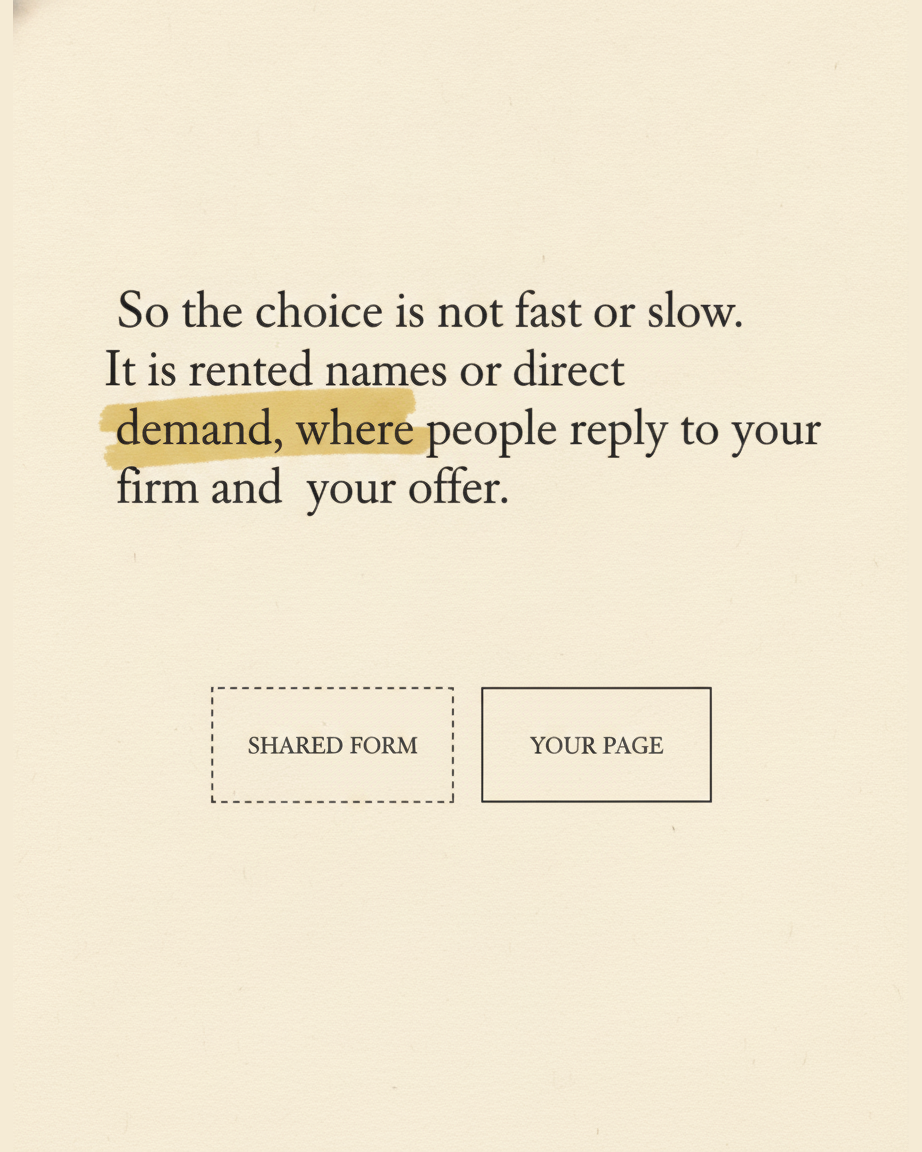
Put those two examples side by side and the real choice becomes clearer. It was never fast against slow. Both firms moved quickly and both spent money in the same week.
The difference is whether the enquiry belongs to you. Rented names arrive through a form someone else built, filled in by people who were answering somebody else's question. Direct demand means a person read your firm's offer, on your firm's page, and decided to reply to you. The second kind is harder to start and considerably easier to keep.
One service, one kind of buyer
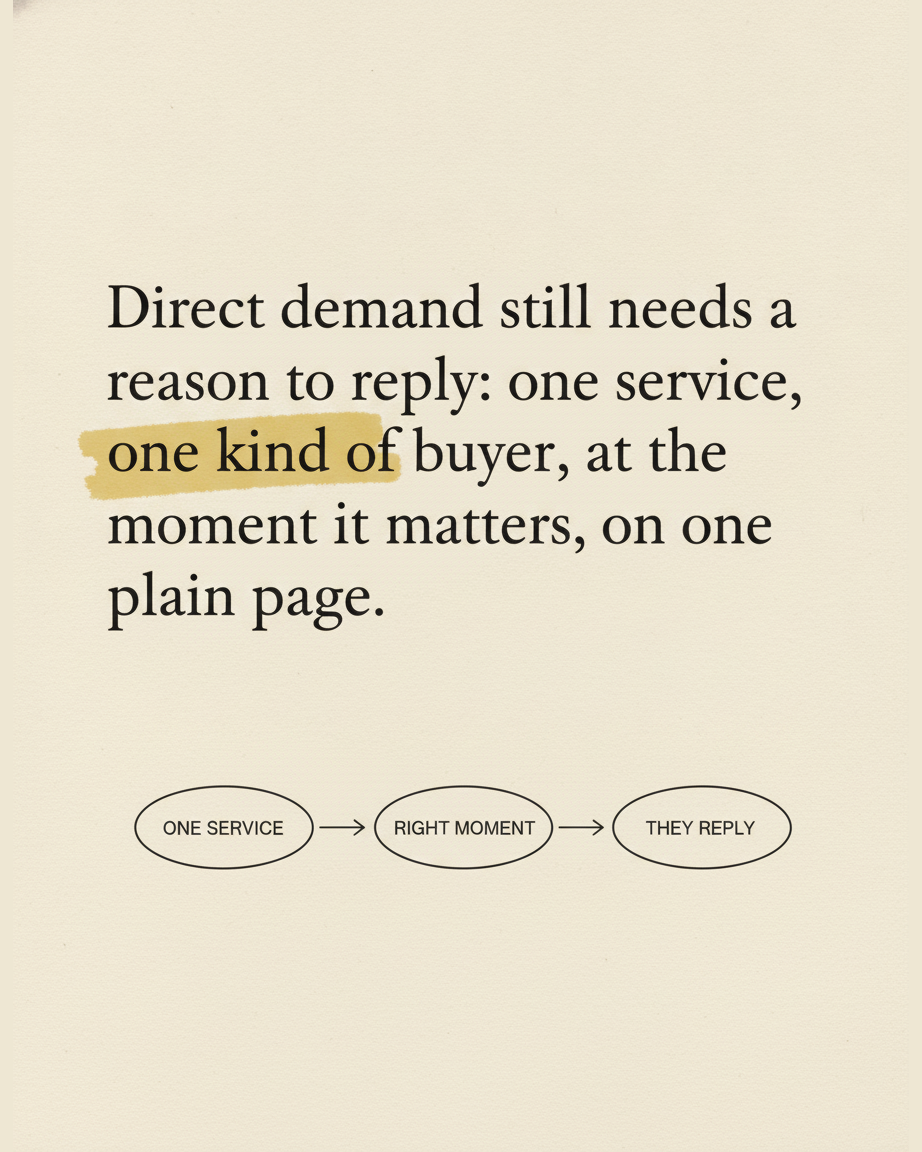
Owning the page is only half of it. Direct demand still needs a reason to reply, and this is where most firm websites quietly fail. A page listing every service to every business gives nobody a moment to act on.
The version that works names one service, one kind of buyer, and the moment it matters. A company facing a filing deadline. A start up in its first year. A business switching accountant after a poor handover. When the timing is right and the words match the situation, people reply. When the page hedges, they read it and leave.
What seven days can and cannot prove
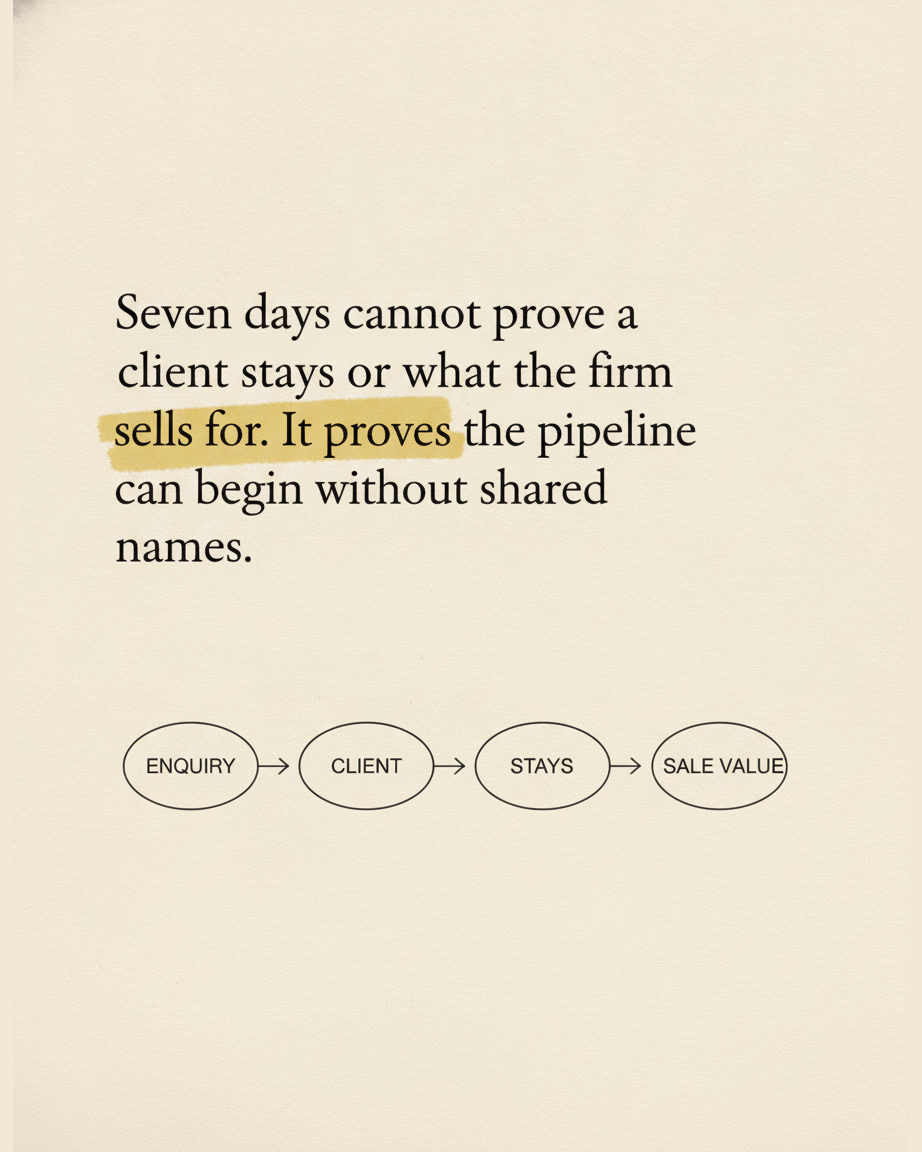
We should be plain about the limits before anyone runs this. Seven days will not tell you whether a client stays for five years, what the average fee turns out to be, or what the firm is worth to a buyer. Those answers take quarters, not weeks.
What the week does settle is the first link in the chain. Enquiry, client, retention, sale value. If the first link never forms without a vendor, everything after it is rented. If it does form, the firm has an asset it can build on at its own pace.
What to do on Monday morning
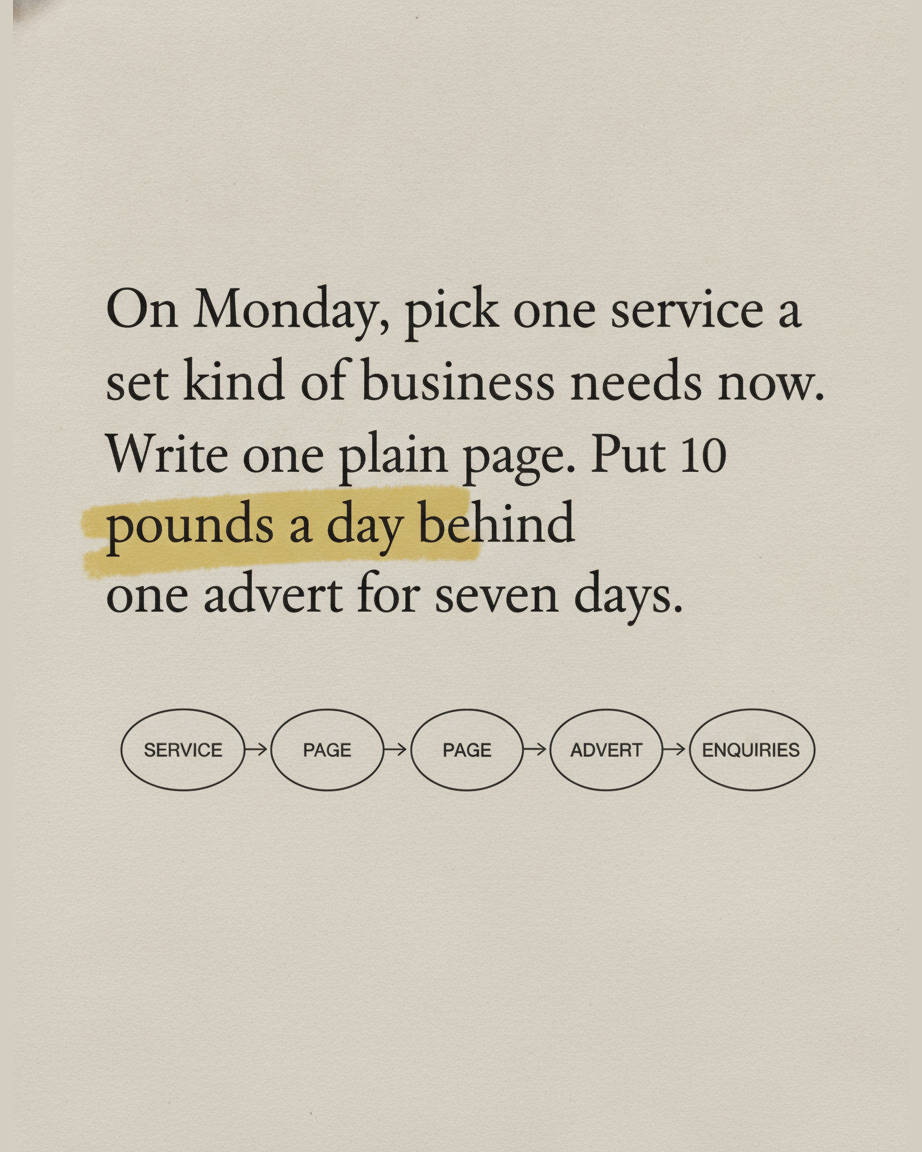
Here is the test in full. On Monday, pick one service that a defined kind of business needs right now, not in general terms but this month. Write one plain page for it, nothing elaborate, no redesign. Then put a small fixed daily budget behind a single advert pointing at that page and leave it running for seven days.
Ten pounds a day is enough. The discipline is in the constraints: one service, one page, one advert, one week. The moment you run three variations at once, you lose the ability to read the answer.
Reading the result honestly
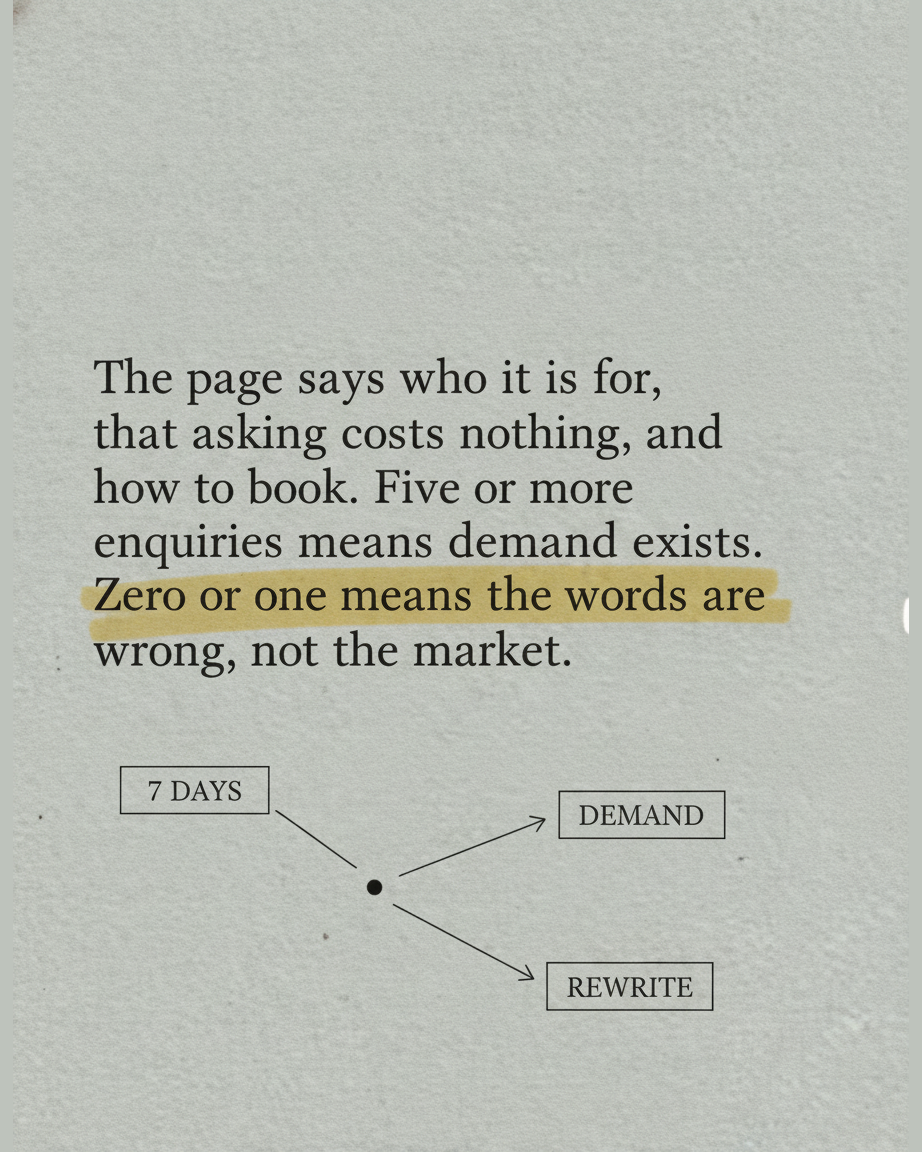
The page itself needs to do three things. Say who it is for, make clear that asking a question costs nothing, and show exactly how to book time. Nothing else earns its place.
Then count. Five or more enquiries in the week means demand exists and the firm's real problem is being found. Zero or one is also useful information, and it rarely means the market is empty. It usually means the offer was too broad or the words did not match the moment. Rewrite, run it again, and read the second number.
The cost of leaving it alone
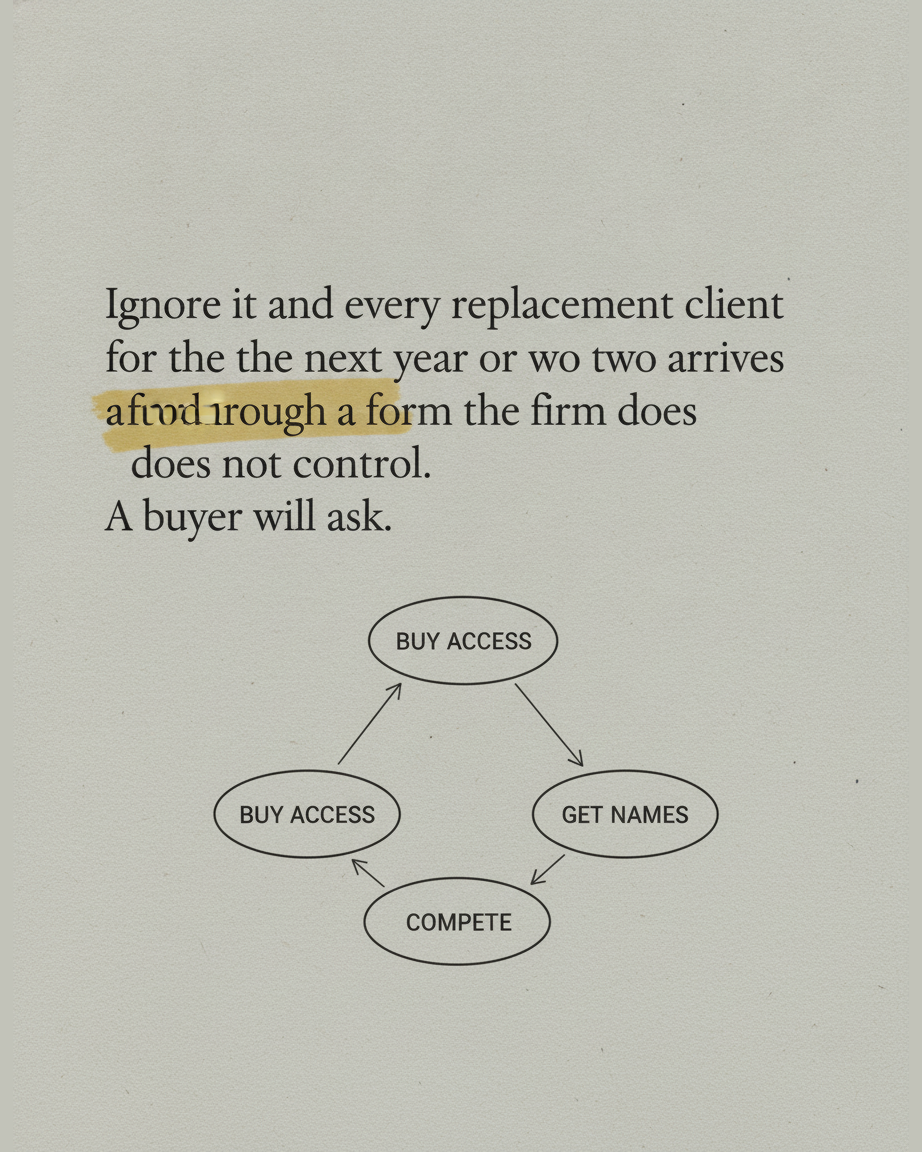
The alternative is not neutral. Leave the question unanswered and every replacement client for the next year or two arrives through a form the firm does not control. Buy access, receive names, compete for them, repeat. The loop keeps turning as long as the invoices get paid.
That has a consequence beyond monthly cost. When the time comes to sell, merge or bring in a partner, someone will ask where the new work comes from. A firm that can point to its own page and its own enquiries answers that question differently to one that can only point at a supplier.
Seven days beats a year of opinion
Firms can debate marketing for a very long time at no obvious cost. Partners hold views, someone mentions a competitor's website, the conversation gets tabled until after the January rush. A year later the position is identical and the vendor invoice has gone up.
A week of real spend ends that. You either have enquiries in the inbox or you have a page that needs rewriting, and both outcomes move the firm forward. Seven days and a small budget will tell you more than a year of opinion, which is the whole reason we recommend running it before the next renewal lands.
Where this leaves you
None of this says lead vendors are worthless. Some firms use them well, and a week of data will not tell you what a client is worth over five years. What it will tell you is whether your firm can start a pipeline on its own terms, which is the question sitting under every renewal decision.
So run the small version first. One service, one page, one advert, seven days, then count. The result is not an opinion anyone can argue with at the next partners' meeting.
If your firm is weighing up another year of bought names and would rather test the alternative properly, we are happy to talk through how we would set the week up for your practice.