Build choice before you filter, or the filter has nothing to work with
Most firms reach for a qualification step long before they have the enquiry volume to justify one. This piece sets out the order we use with accounting firms: create flow first, then put a filter between the enquiry and the owner.
A referral lands. It is the wrong size, the wrong sector and the wrong start date, and you take it anyway, because the diary for next quarter looks thinner than you would like. That decision is rarely about judgement. It is about enquiry volume, and what happens when a firm does not have enough of it.
The instinct, when the work coming in feels wrong, is to tighten the rules. Better qualifying questions, a stricter scoping call, a minimum fee. Those things all work, and they only work on top of something. Our position is that the order matters more than the mechanism: create enough enquiries to produce genuine choice, then place qualification between the enquiry and the owner. Do it the other way round and you spend a year filtering a pipeline that was never full enough to filter.
From zero to ten enquiries a month
One firm we worked with added a genuinely smart filter to its enquiry process. An AI step that read the enquiry, asked follow up questions and stopped the owner seeing anything that fell outside the firm's stated criteria. It worked well. What made it work was the sequencing. It went in only after monthly enquiries had moved from zero to ten, at which point there was something to sort and a real cost to the owner's time in sorting it.
Had the same step gone in at the start, it would have quietly blocked the handful of conversations the firm did have. The order below is the one that protects the pipeline while you improve what comes through it.
Tighter rules give you fewer talks
If stricter rules grew firms, the answer would be simple. Every practice with a quiet diary would write a tougher qualification script and watch the quality of its work improve. That is not what we tend to see. Applied to a thin pipeline, a filter does exactly what it is designed to do. It removes conversations. You end up with fewer talks rather than better ones, and the shortfall lands on the same owner who was already worried about next quarter.
So the useful question is narrower than it first appears. Not whether a filter helps, but what a filter is actually capable of doing.
A filter cannot create demand. It can only sort demand that already exists, which is why volume has to come first and qualification has to come second.
A filter can only sort what exists
A filter cannot create demand. It can sort demand that exists, route it, rank it and protect your calendar from it. Those are all worthwhile jobs. None of them add a single enquiry to the top of the pipe.
This matters because the symptom a firm feels, poor fit work arriving, looks like a sorting problem and is usually a supply problem wearing a disguise. With too few enquiries, the filter changes nothing about your position. You are still waiting on whatever the next referral happens to be, and still saying yes to it because there is no second option in view. One firm we worked with learned this in the most direct way possible, by doing it backwards.
Attention without enquiries is not choice
The firm in question was a two office general practice. It was not invisible. There was activity on LinkedIn, a blog that was updated, and rankings in Google that brought people to the site. By most of the measures a marketing report tends to lead with, things looked reasonable.
The enquiry count was zero a month. All of that attention produced no conversations the owner could choose between, which meant that in practice it produced nothing at all. Attention is only useful when there is a route from reading to asking, and when the firm is clear about what it is asking people to ask about. Without that, the owner has visibility and no options.
What changed when the route existed
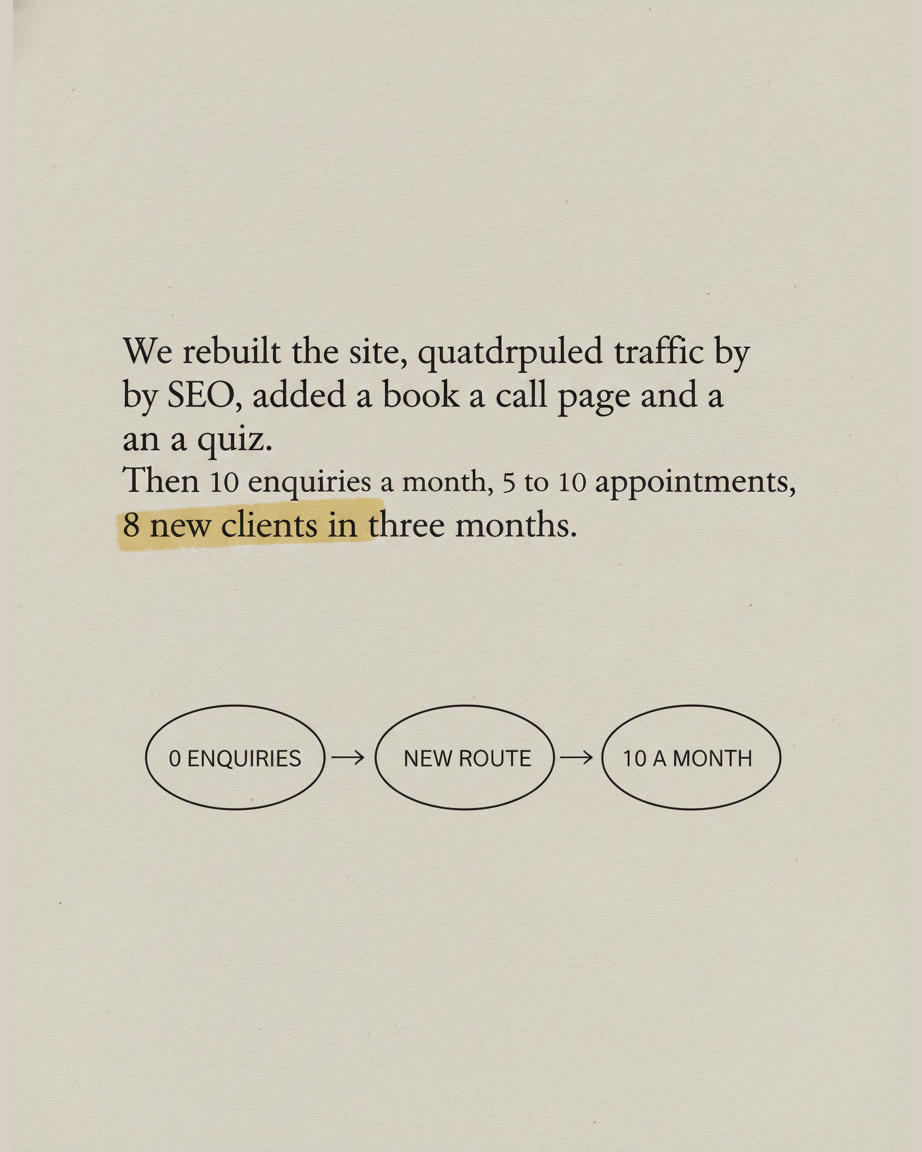
The work was unglamorous. We rebuilt the site so that each service said who it was for, quadrupled traffic through SEO, added a book a call page that was easy to find from every page, and put a short quiz in front of the enquiry so people could describe their situation before speaking to anyone.
Enquiries moved to ten a month. Five to ten of those became appointments, and eight became new clients inside three months. The numbers matter less than the shift behind them. The owner went from accepting whatever arrived to deciding which of ten conversations were worth an hour. That is what choice looks like in practice, and it arrived before any strict rules were written down.
Flow first, friction after
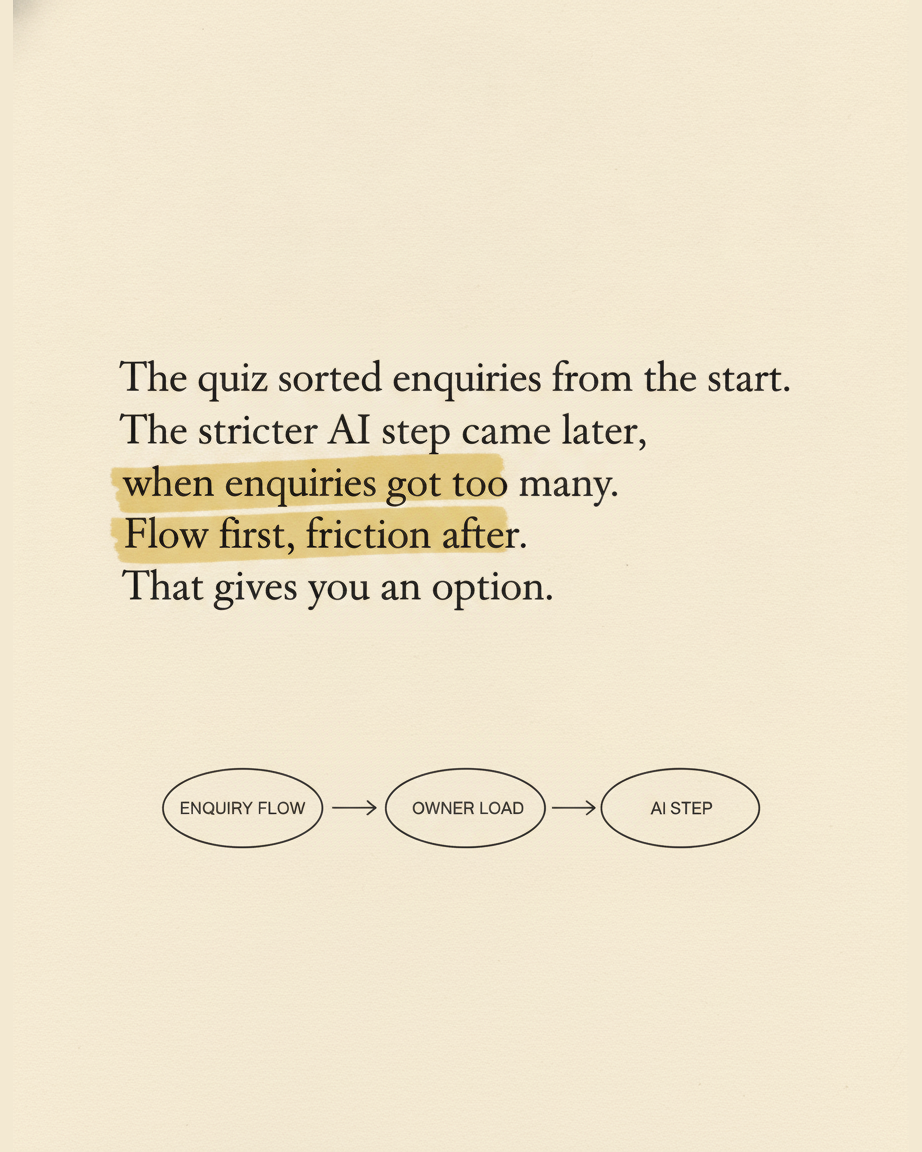
There was sorting from day one, and it was light. The quiz asked a few questions and grouped enquiries so the team knew what they were looking at. It cost the enquirer almost nothing and it turned nobody away.
The stricter AI step came later, once ten enquiries a month started to eat the owner's week and the real constraint moved from supply to attention. That is the rule we work to: flow first, friction after. Friction is a response to volume, added when the cost of handling everything personally becomes higher than the cost of occasionally screening out someone who might have been fine. Added before volume, it is simply a smaller door on an empty room.
Why a poor referral feels necessary
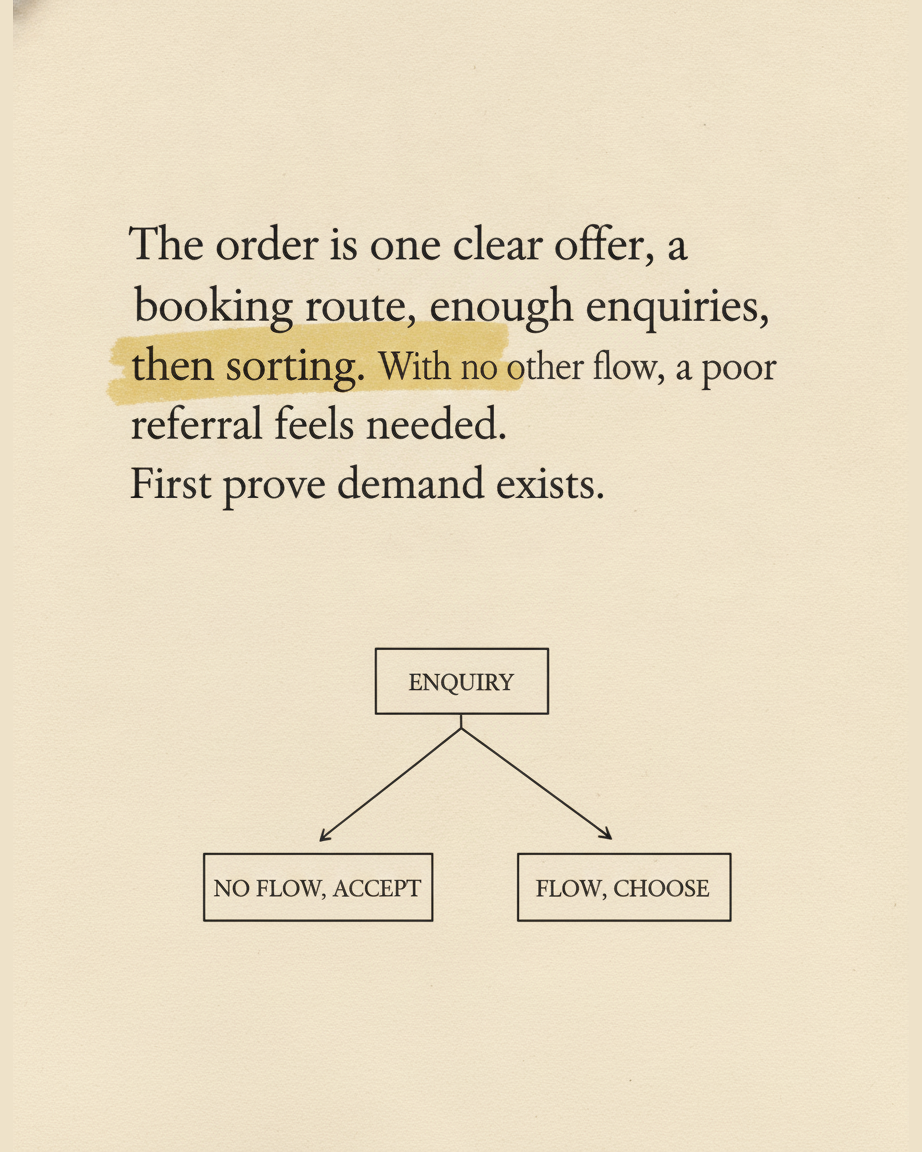
Set out plainly, the order is one clear offer, a booking route, enough enquiries, then sorting. Each stage depends on the one before it, which is why skipping to the end tends to stall.
The middle of that sequence is where the referral problem actually lives. When nothing else is coming in, a poor fit referral is not a judgement call. It is the only thing on the table, and turning it down means betting the quarter on something you cannot see yet. Firms are rarely careless about this. They are choosing rationally with one option. Change the number of options and the same owner makes a different decision without any new discipline. So the first job is to prove that demand exists.
A seven day test you can run
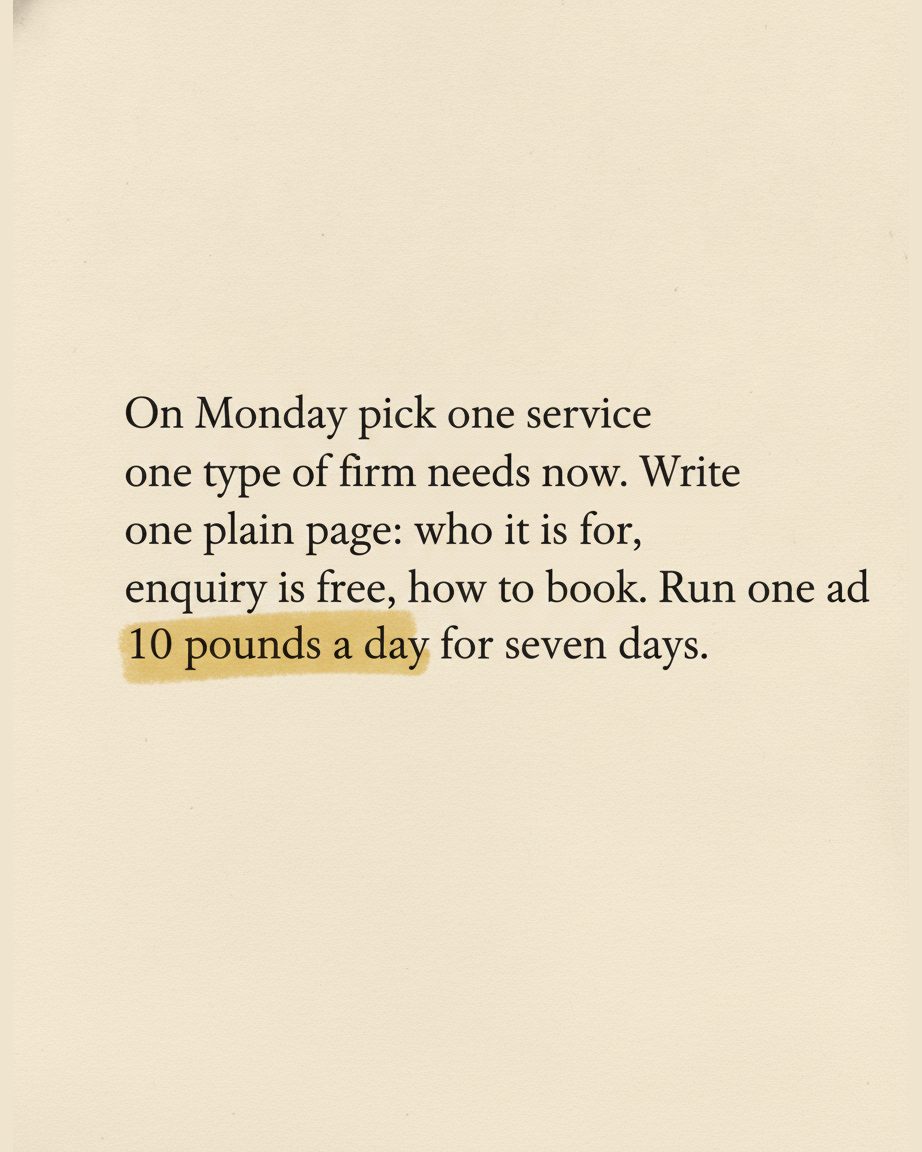
On Monday, pick one service that one specific kind of business needs right now. A looming deadline, a start up setting things up properly, a company switching accountants. Timing is what makes the test readable, because urgent needs respond quickly and vague ones do not.
Write one plain page. Who it is for, that it costs nothing to enquire, and how to book. No firm history, no values section, nothing that delays the decision. Then run a single ad to that page at ten pounds a day for seven days. The point is not the spend. The point is to put a clear offer in front of people who are not already in your orbit, and see whether anyone raises a hand.
Reading the result honestly
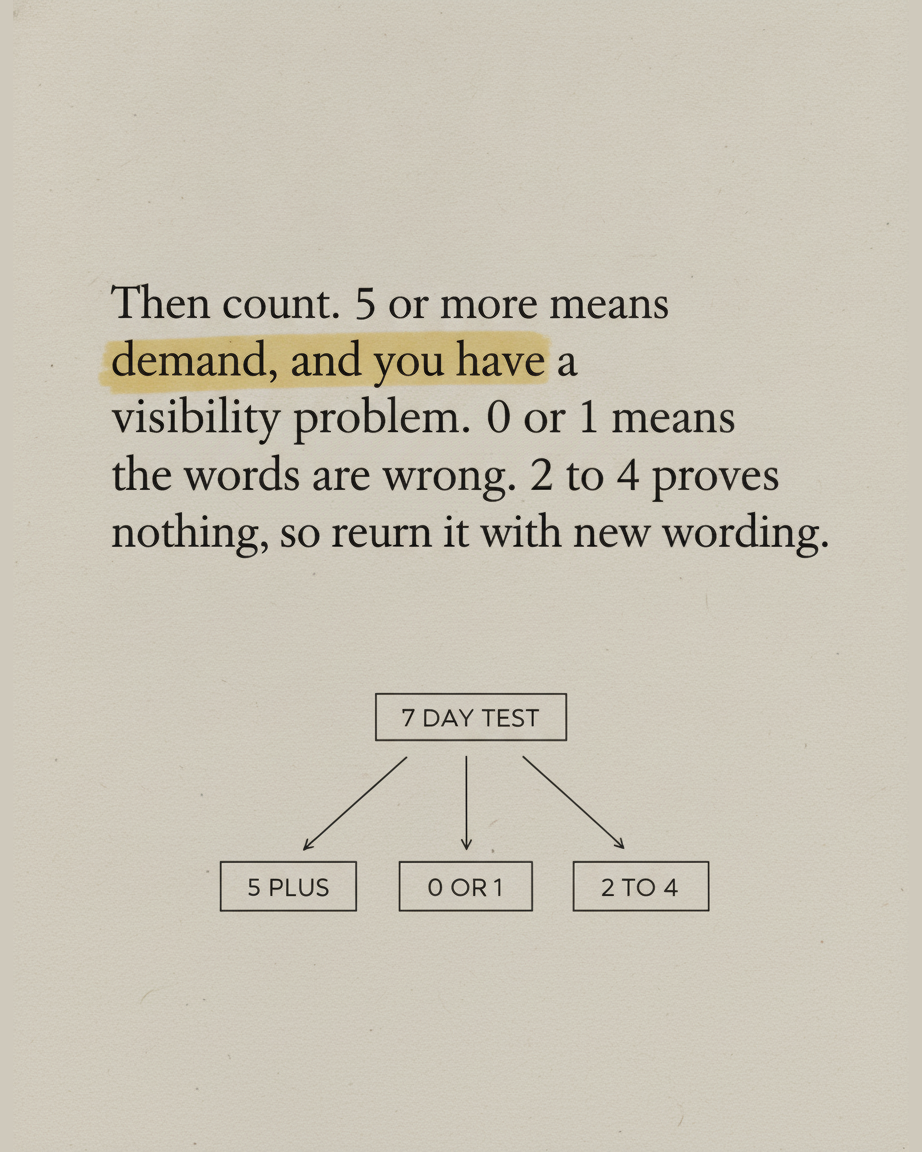
Then count the enquiries, and read the number before you start explaining it away.
- Five or more. Demand exists. What you have is a visibility problem, and it is the good kind, because you now know what to build on.
- Zero or one. The words or the offer are wrong. That is a writing and positioning problem, not evidence that the market is dead.
- Two to four. Inconclusive. Keep your existing acceptance rules exactly as they are and rerun the same test with different wording.
The discipline is in the middle band. Most firms either declare victory or give up on four enquiries, when the honest answer is that seven days has not told you enough yet.
The cost of the wrong order
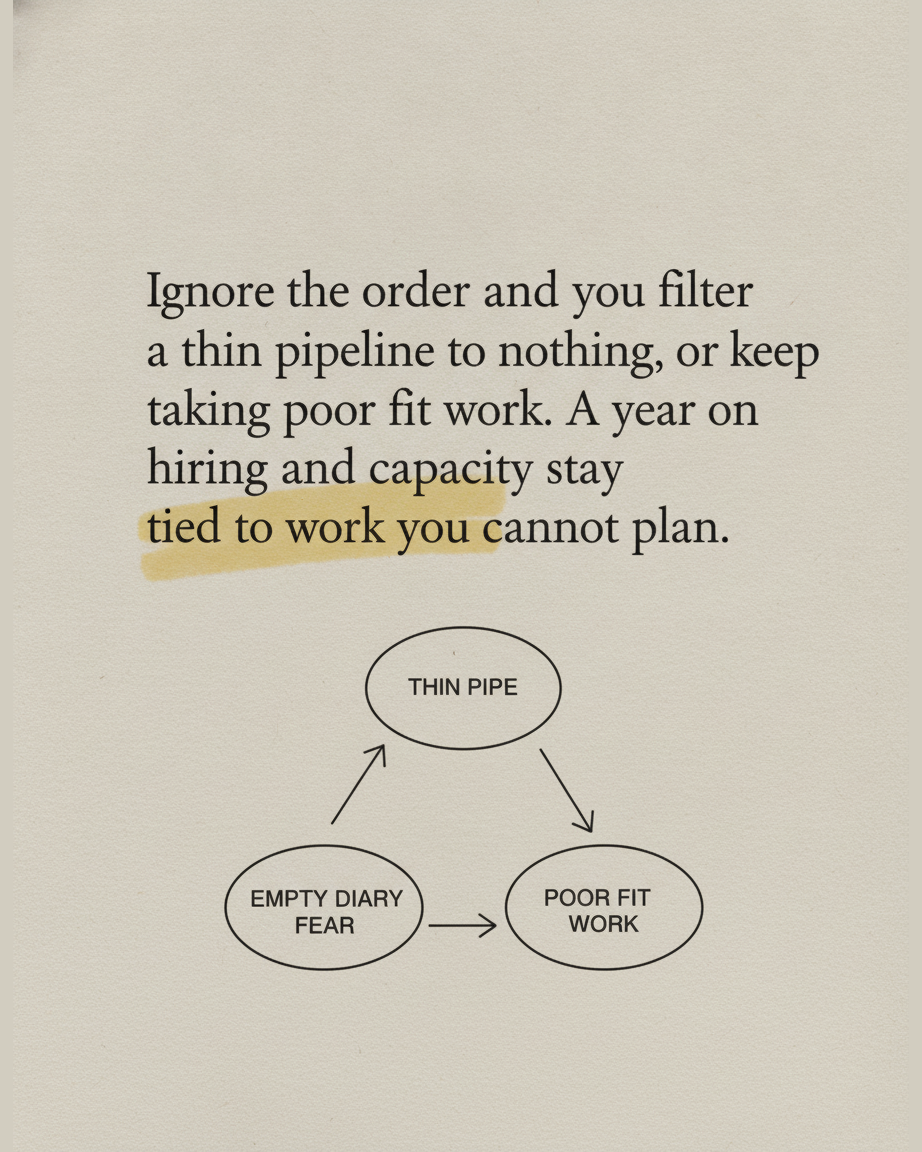
Ignore the sequence and there are two ways it goes. Either you filter a thin pipeline down to nothing and the quiet quarter arrives anyway, or you keep the filter loose and keep taking poor fit work while telling yourself the rules will apply next time.
Both routes look survivable month to month. The compounding is what hurts. A year on, hiring decisions, capacity planning and pricing are all still tied to work you cannot forecast, because the supply of work is set by other people's referral habits rather than anything the firm controls. The thin pipe creates the fear of an empty diary, the fear justifies the poor fit work, and the poor fit work absorbs the capacity that might have fixed the pipe.
Volume reveals the quality problem
There is a quieter benefit to volume that gets missed. Ten enquiries a month do not only give you the ability to say no. They show you the pattern. You start to see which sectors keep appearing, which questions come up every time, which enquiries convert quickly and which ones consume three calls and then vanish. That information does not exist at one enquiry a month, because one of anything is an anecdote.
So volume is what makes your quality problems visible and specific enough to act on. And the plain version of the whole argument is this: you cannot filter what you do not have.
Keep this for the quiet week

The moment this matters is specific and it will arrive. A referral lands that you know is wrong, the diary for next quarter looks lighter than you would like, and the two facts arrive in the same afternoon. That is when the order gets abandoned, because saying no with nothing behind it feels reckless.
Worth keeping to hand for that week. The decision in front of you is not really about the referral. It is about how many other conversations you have running, and the seven day test above is the cheapest way to find out whether more of them are available to you.
Where to start
Qualification is a good idea in the wrong position. Put it after enquiry flow and it protects the owner's time and sharpens the client base. Put it before, and it removes the few conversations the firm was relying on. The order is one clear offer, a booking route, enough enquiries to create real choice, then sorting.
There is nuance here. Some firms genuinely do have volume and a sorting problem, and for them the filter is the right next move. The seven day test is how you tell which firm you are, and it costs a week and very little attention. If your practice looks like the one described above, with visibility and no enquiries, that test is the sensible place to begin, and we are happy to look at the results with you.