Why a full client book still does not prove your firm can create demand
Most firm owners can show a healthy ledger of recurring fees. Far fewer can show a documented route that brings strangers to the brand when the founder is not in the room. This is for owners who want to know which one they have.
When we sit down with the owner of an accounting practice, the first thing we are usually shown is the client list. It is a fair thing to be proud of. It is also the wrong answer to the question a buyer, a bank or a successor is actually asking, which is whether the firm has firm owned demand without the founder attached to it.
Our position is simple. Fees held today and the ability to win fees tomorrow are two separate assets, and only one of them survives you stepping back. The good news is that the second one is testable, cheaply and quickly. You do not need a year of debate about positioning. You need seven days, one page and one small ad budget.
What a week of leads actually proves
A client book records what has already happened. It is a history of relationships, referrals and timing, most of which ran through one person. It does not tell you whether the firm can start a conversation with someone who has never heard of it.
A week of enquiries generated by the firm itself tells you something different. It shows that there is a market, that the offer is legible to a stranger, and that the route from stranger to booked call exists on paper rather than in the founder's head. That is the asset we are interested in, and the seven day demand test is the cheapest way we know to find out whether you have it.
The question a buyer always asks

If the size of the book settled the matter, nobody would ever ask the follow up question. They always do. Within a few minutes of seeing the fee schedule, the conversation turns to where the work comes from, and that question is not idle curiosity.
It is a risk question. A large book with no visible acquisition route is a stock of fees with no replacement mechanism. Clients leave, businesses close, retirements happen. The buyer is working out whether the firm can refill the gaps or whether the ledger only shrinks from the day of sale onwards.
A client book proves the work arrived. It says nothing about whether the firm can bring strangers to its own brand once the founder stops answering the phone.
When you step back, both stop
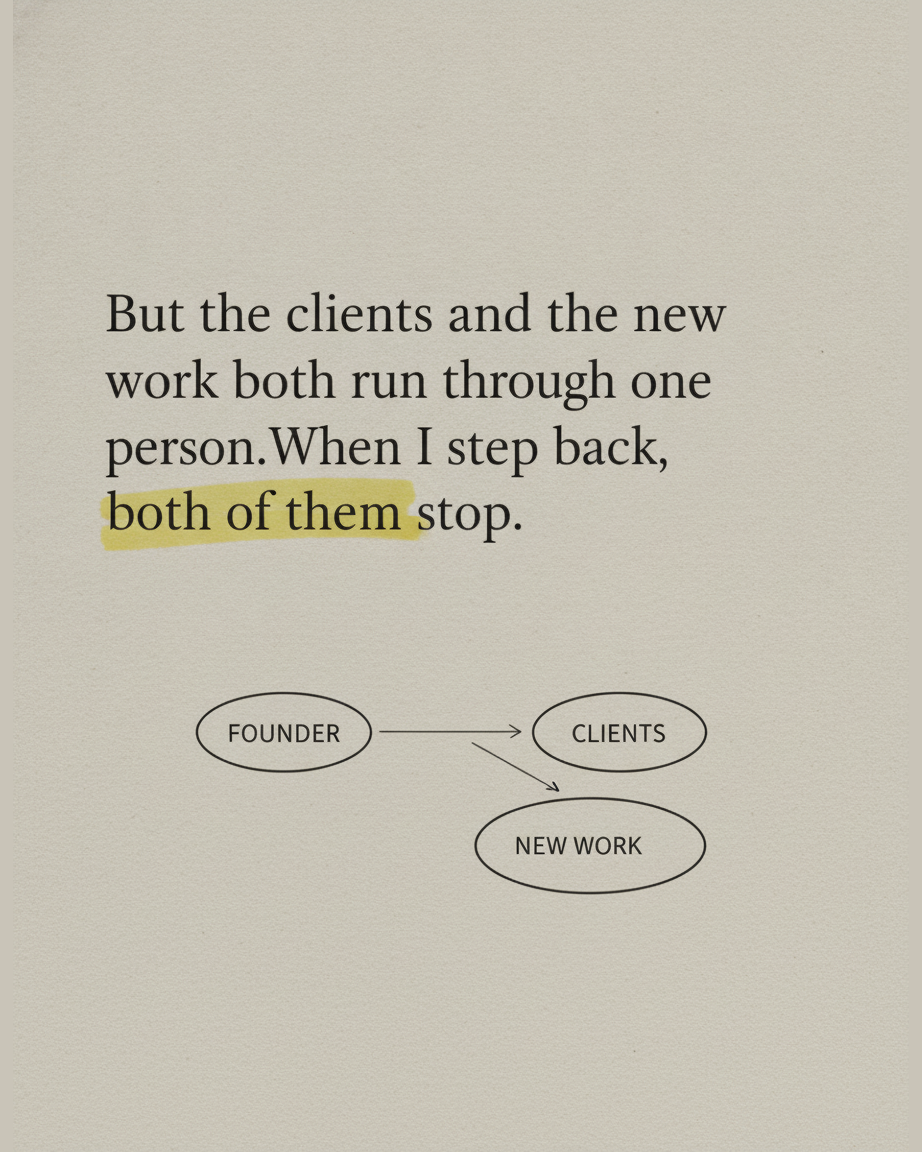
Here is the structural problem we see most often. The client relationships run through the founder, and so does every new enquiry. Two separate functions, one person, no redundancy anywhere in the design.
The consequence is easy to test without risking anything. Imagine two months away from the practice. The compliance work would probably continue, because staff and deadlines carry it. New work would not. There is no page, no campaign, no reporting line and no owner for it, because the founder has always been the system. That is the single point of failure a buyer prices in, and it is also the thing that keeps an owner from ever properly stepping back.
Current fees, and the next ones

So the assessment splits in two. The fees the firm holds now, which are visible in the accounts, and the firm's ability to win the next ones, which usually is not visible at all.
Owners tend to over invest in the first column because it is the one that is easy to evidence. The second column is where the value premium sits, and it is also the column that decides whether the owner has built a business or a well paid job. The useful part is that it can be documented. Spend, enquiries, appointments, clients won and recurring fees are all countable, and once counted they stop being an opinion.
When strangers book through the firm
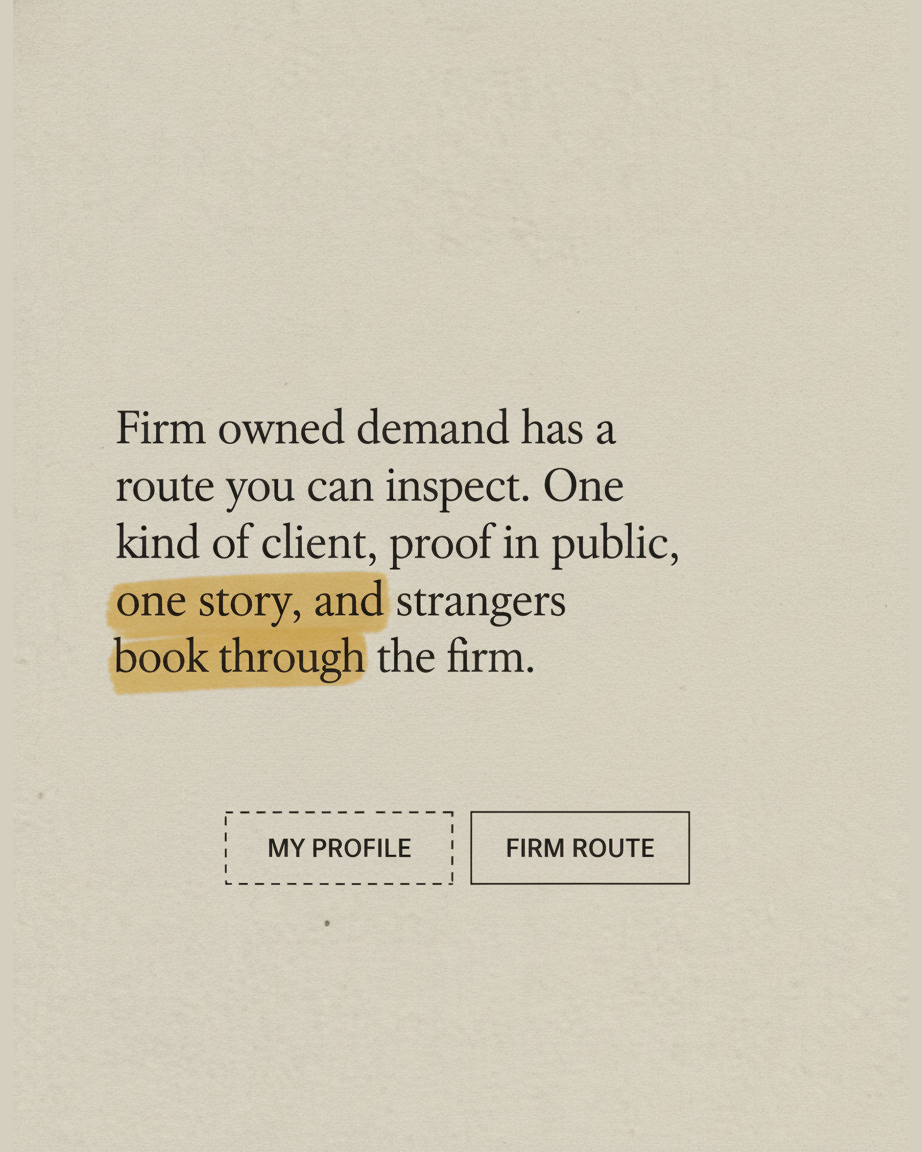
Firm owned demand is not a mood or a brand feeling. It has a route you can inspect, and the route has parts. One clearly named kind of client. Proof that sits in public where that client can find it. One consistent story about what the firm does and who it does it for. A booking step that belongs to the firm rather than to a personal inbox.
The test of whether you have built it is whether a stranger can move through all four without the founder intervening. If every enquiry still lands in a direct message to one person, the route runs through the founder's profile and the firm owns nothing.
One ad, one week, thirty five leads
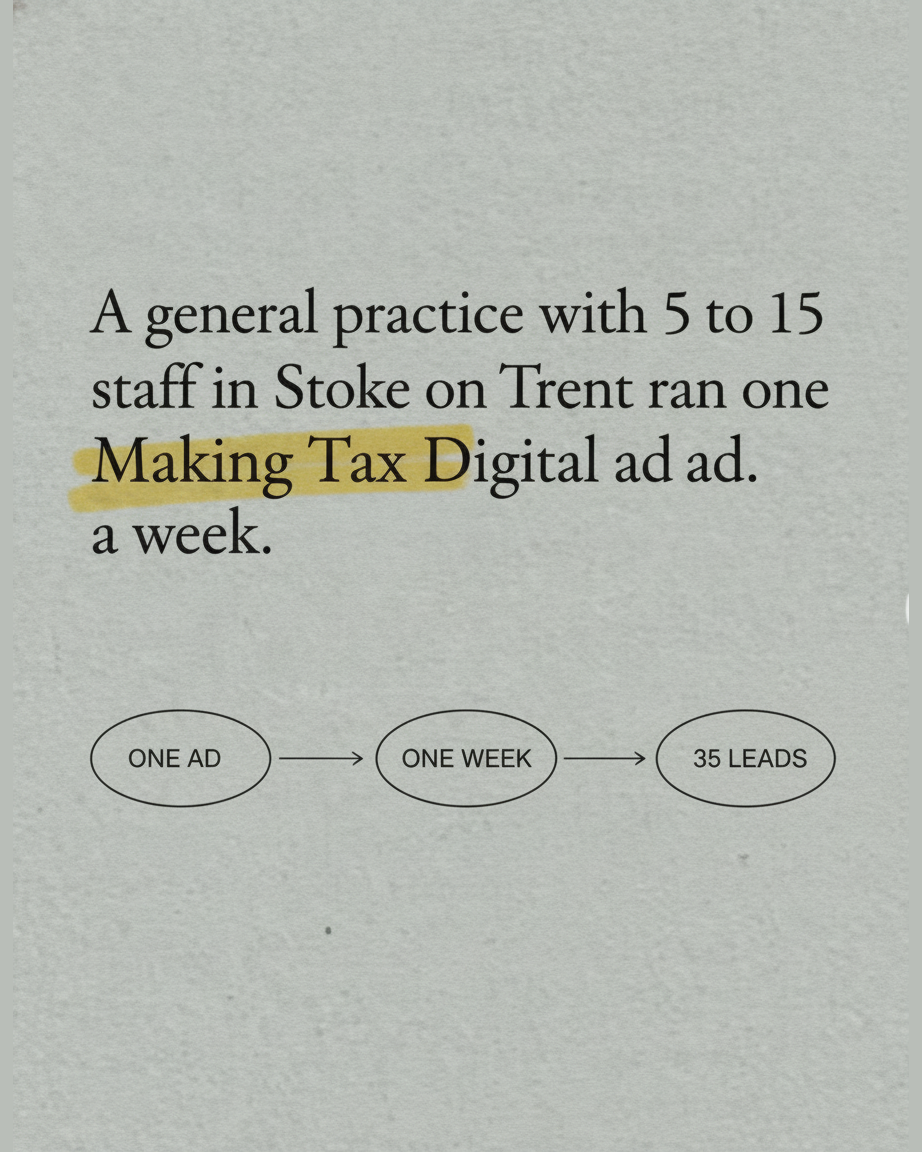
What this looks like in practice is less dramatic than owners expect. A general practice with five to fifteen staff in Stoke on Trent ran a single ad built around Making Tax Digital. It produced thirty five or more leads in under a week.
Nothing clever happened. The service was one that a specific type of business needed at a specific moment, and the firm said so plainly in a place where that business was already looking. The lesson we take from it is that demand for accounting help rarely has to be created. It usually already exists and simply has nobody speaking to it in language it recognises.
What the cost per lead showed
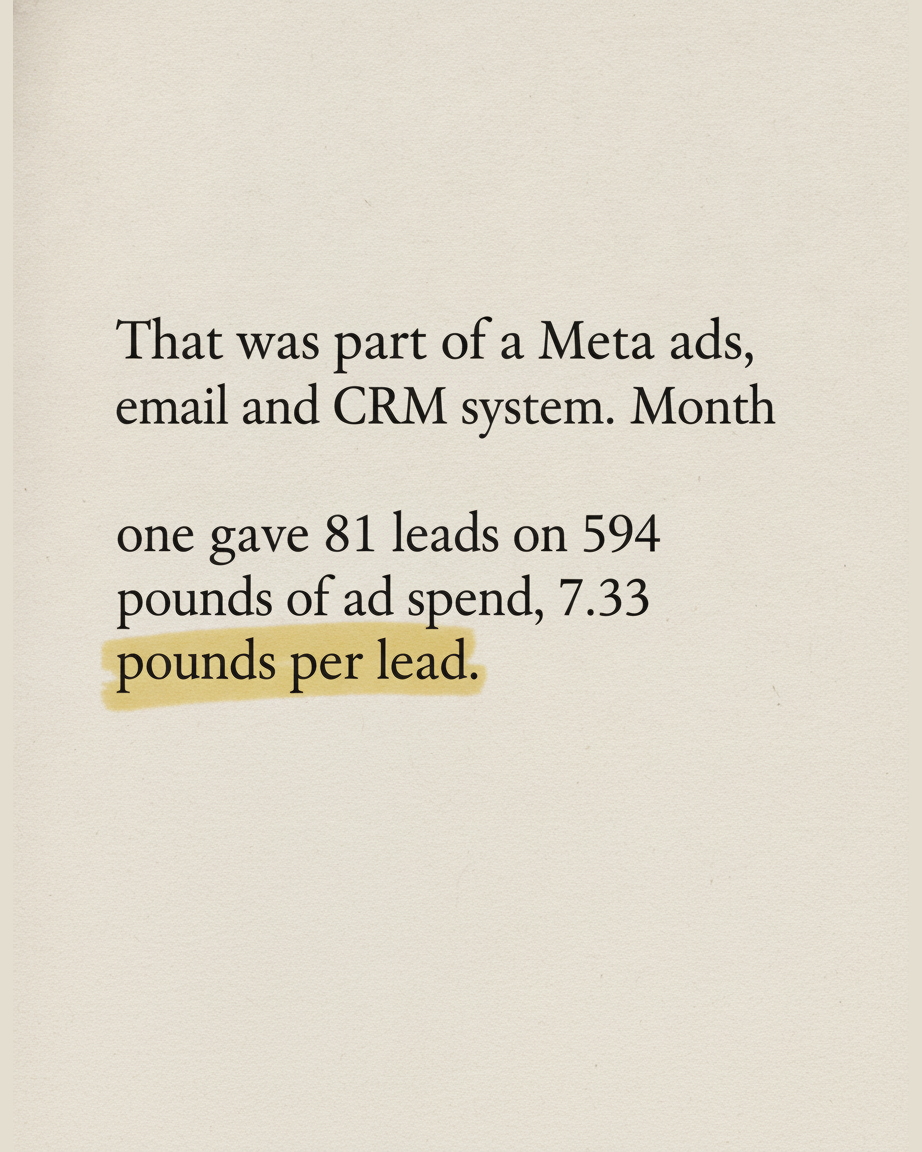
That week sat inside a wider setup of Meta ads, email follow up and a CRM to catch what came in. Across the first month the same firm recorded eighty one leads from five hundred and ninety four pounds of ad spend, which works out at seven pounds thirty three per lead.
We should be honest about the limit of that figure. Fee outcomes were not tracked, so it evidences interest rather than revenue. That distinction matters, because a cheap lead that never converts is a vanity number. What the month does establish is that the firm could reach strangers at a predictable cost, repeatedly, without the founder generating each conversation personally.
Eleven clients and recurring fees logged
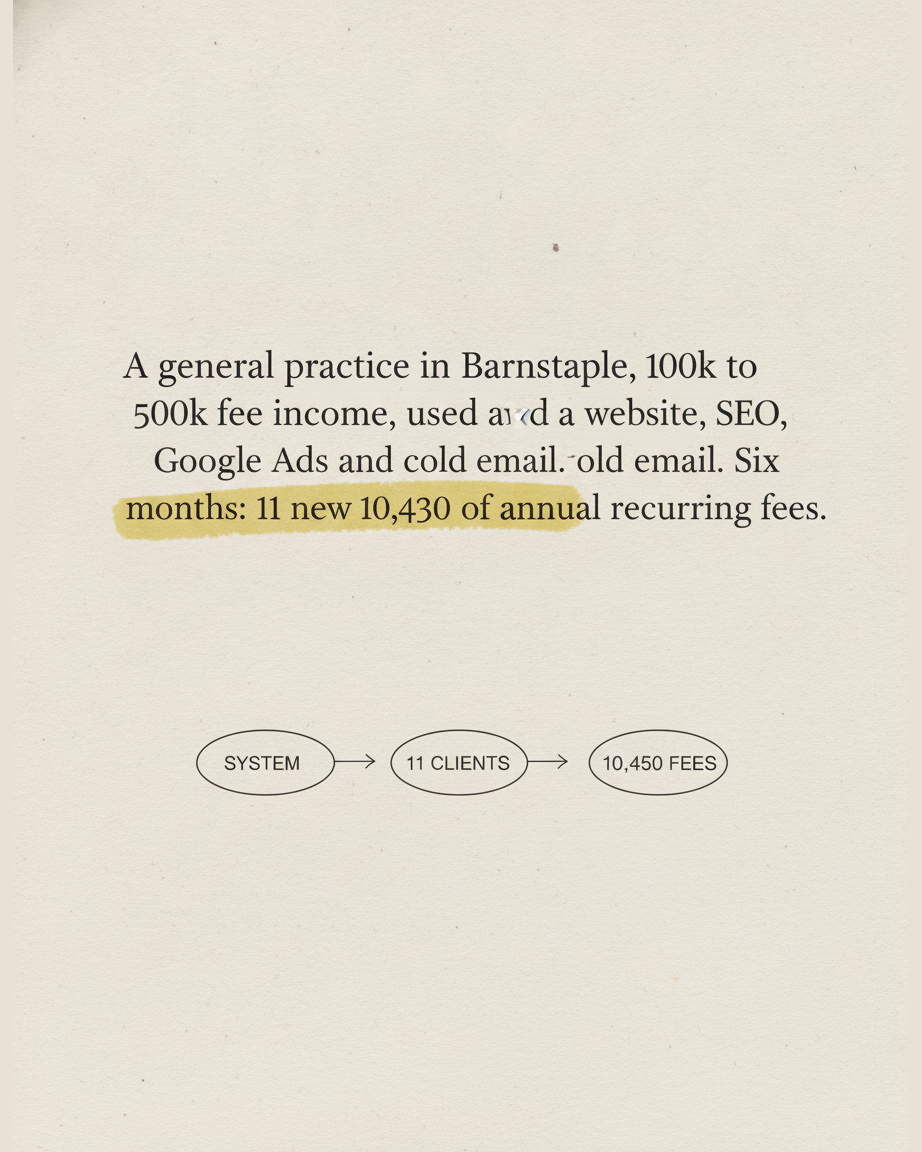
The version of this with fees attached looks like a general practice in Barnstaple with fee income somewhere between one hundred thousand and five hundred thousand. The firm used a website, search optimisation, Google Ads and cold email together rather than relying on one channel.
Over six months it recorded eleven new clients and ten thousand four hundred and thirty pounds of annual recurring fees. That is the figure worth copying, because it travels all the way down the chain from spend to signed engagement. It is also the kind of record that answers the buyer's question on paper, which an impressive week of leads on its own never does.
A signal becomes proof on repeat
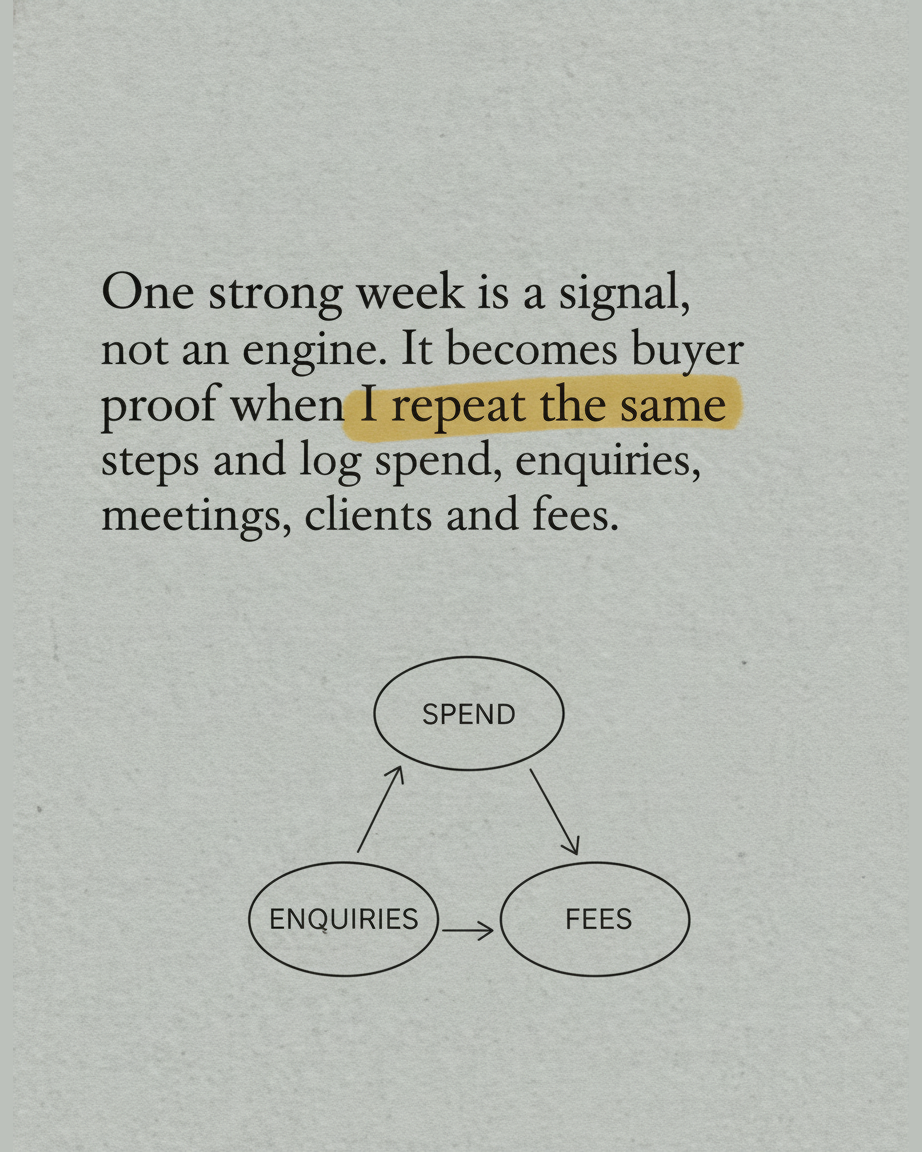
One strong week is a signal. It is not yet an engine, and we would not present it as one. Plenty of firms have had a good month from an ad and then found they could not explain how, which means they could not do it again.
The thing that converts a signal into something a third party will believe is repetition with a record attached. Run the same steps a second time and log spend, enquiries, meetings, clients won and recurring fees as you go. Two comparable cycles tell you whether you found a route or a lucky week, and the log is the document a buyer will actually read.
Seven days beats a year of opinion
Most firms we speak to have been discussing their marketing for longer than they have been measuring it. There is a partner who thinks the website needs rebuilding, another who thinks paid advertising cheapens the brand, and a third who believes referrals will always be enough.
None of those positions can be settled by argument, because they are all predictions about buyer behaviour. Seven days and a small budget will tell you more than a year of opinion, and it costs less than a single partner afternoon spent debating it. The point of the test is not to be right. It is to replace a long standing assumption with a number.
Monday, one page and one ad
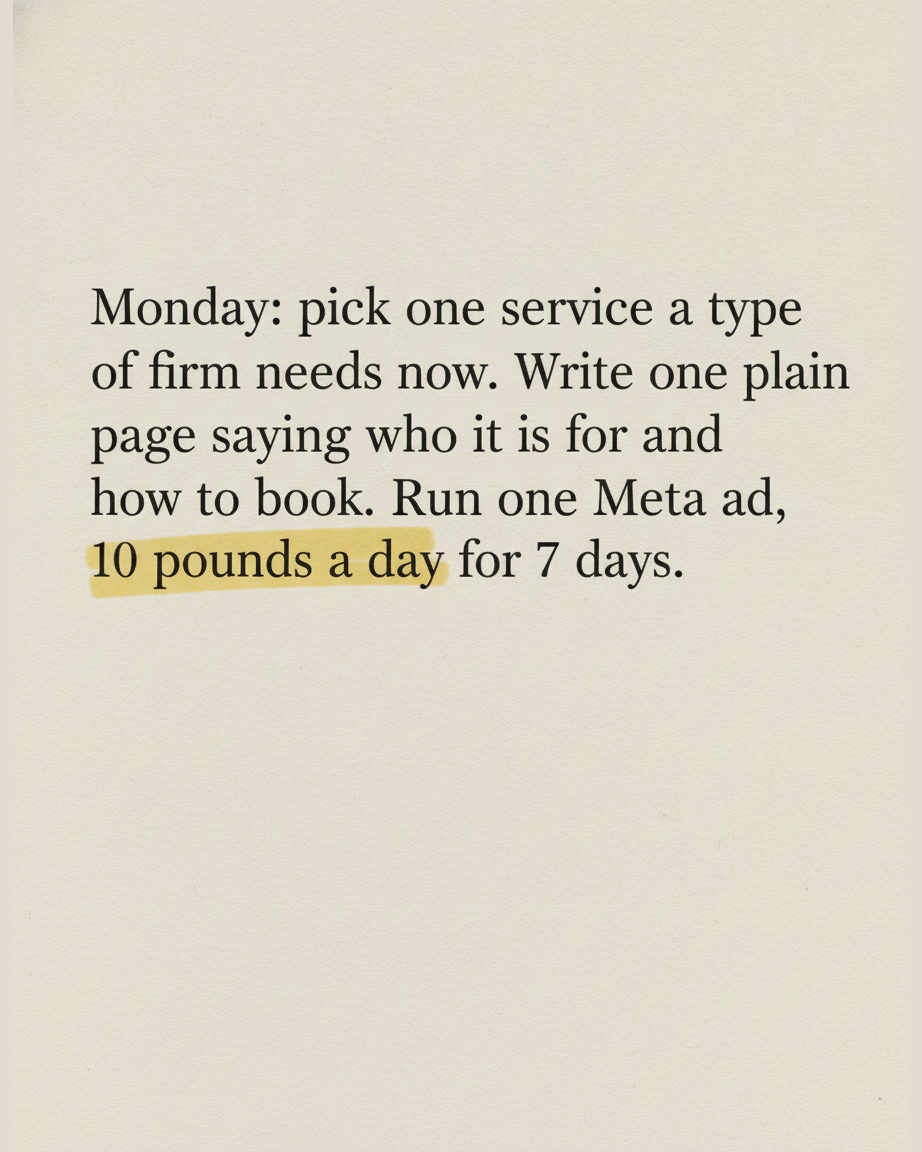
So here is the version we would run this week. On Monday, choose one service that a specific kind of business needs right now, usually tied to a deadline, a start up or a switch of accountant. Specificity is doing most of the work here, because a general offer gives a stranger nothing to recognise.
Then build one plain page on the firm's website. It needs three things only, which are who it is for, that enquiring costs nothing, and how to book. Point one Meta ad at that page at ten pounds a day for seven days. No rebrand, no committee, no new site.
Five enquiries or more means demand
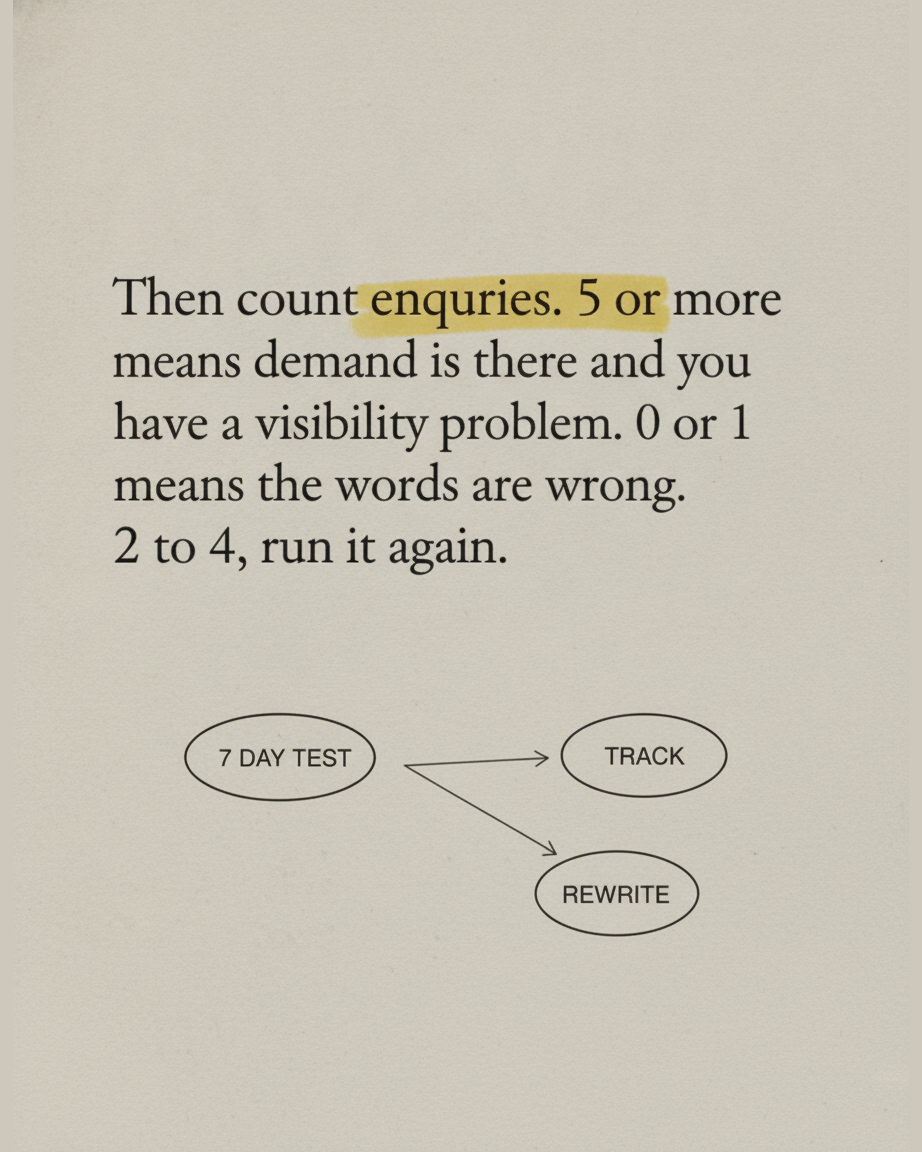
On the eighth day, count enquiries and read the result honestly. Five or more means demand exists and what you have is a visibility problem, which is the easier of the two problems to fix. Zero or one means the words or the offer are wrong, and we would resist the temptation to blame the market before rewriting the page.
Two to four is inconclusive, so run the same test again before drawing any conclusion. If it clears five, start the log of spend, enquiries, appointments, clients and recurring fees, then repeat the test to find out whether the outcome is genuinely repeatable.
Where this leaves you
Leave this another year and every new client still arrives through the founder. The practical cost is that stepping back, selling or simply taking a long holiday means inheriting key person risk with no mechanism to replace lost fees. The goal was never a busier owner. It is the fees the firm holds now plus a visible route to the next ones.
We would be careful not to oversell a single week. One test tells you whether demand exists, nothing more, and the repeatable version takes longer to build. It is still the fastest honest answer available to a firm owner who genuinely does not know. If the practice in this piece sounds like yours, it is worth a straight conversation about which of the two assets you currently hold.