Why traffic brings no enquiries, and what to fix first
Plenty of firms are visible on LinkedIn, in search and on their own blog, and still hear nothing back. This piece is for the owner who is being asked to approve more spend before anyone has checked whether the website can convert the attention it already gets.
The most common growth problem we are asked to solve is not invisibility. It is a firm with website traffic but no enquiries. The posts go out, the blog ranks for something, the Google listing gets clicks, and the inbox stays quiet. The instinct at that point is to buy more attention, because attention is the thing that feels measurable.
Our position is simpler. If people can already find you and still do not enquire, the gap is on the website, in the trust and booking path, and more traffic will only send more people through a route that already fails.
What follows is the argument for fixing the order, and a ten second test you can run on Monday without spending anything.
Attention everywhere, enquiries nowhere
A firm we worked with had attention from three directions at once. LinkedIn was active, the blog was published to a schedule, and Google sent a steady trickle of visitors. The enquiry count was zero. Not low, zero.
That combination is worth sitting with, because it breaks the assumption most marketing plans are built on. If visibility converted on its own, this firm would have had a pipeline. It had an audience and no conversations. Before anyone signs off another campaign, there is a ten second test that tells you whether the money will land on something that works.
If attention alone made clients
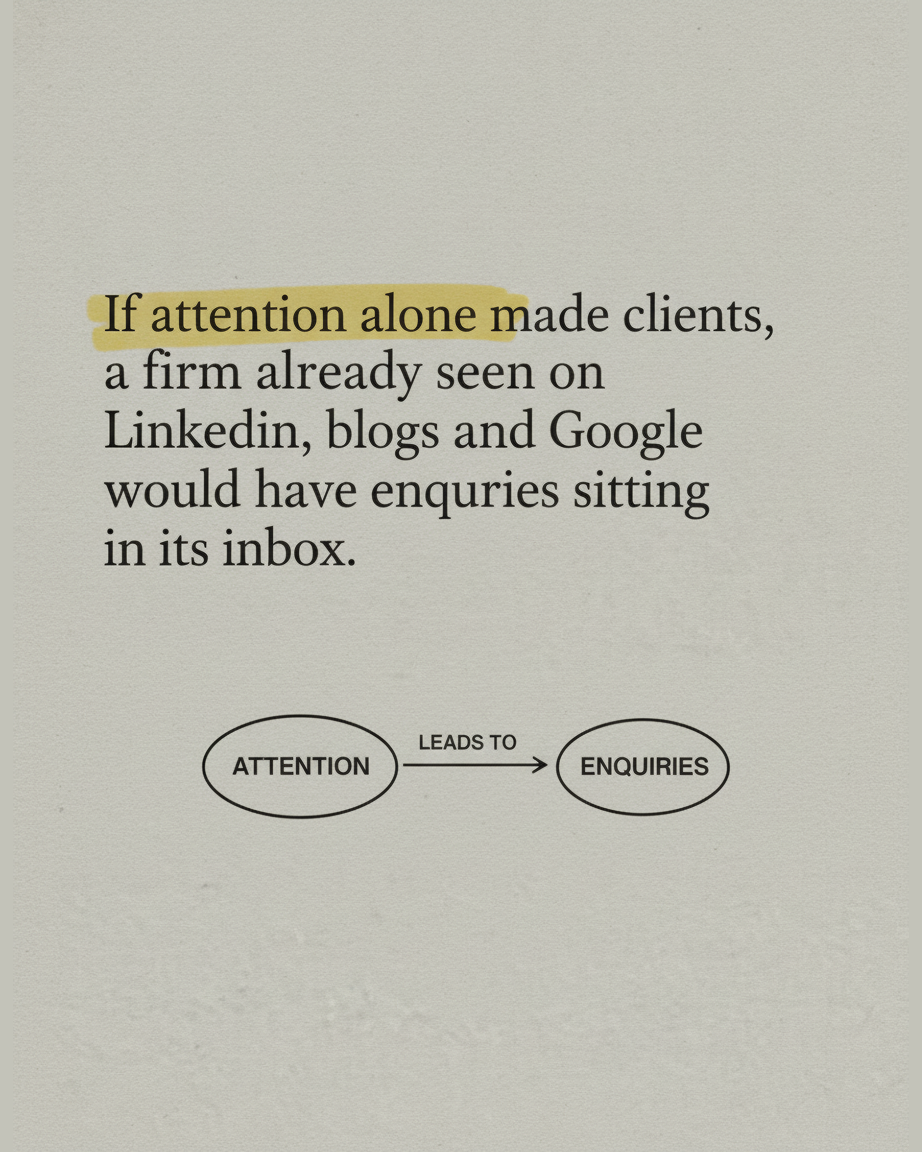
Test the assumption directly. If attention alone made clients, then any firm already seen on LinkedIn, in blog search results and on Google would have enquiries sitting in its inbox by default. Visibility would be the whole job, and the only sensible lever would be volume.
Most owners already know this is not how it works, and yet the marketing budget is usually built as though it is. The arrow from attention to enquiries is drawn as a straight line, when in practice there is a website sitting in the middle of it deciding what happens next.
Trust must exist before attention is bought, or the attention is wasted. More clicks into an unclear website simply increase the number of people who decide not to get in touch.
A two office practice with nothing coming in
The firm in question was a two office general practice. It had the attention described above and no enquiries to show for it. The owner, an FCMA, had no time for marketing, which is the normal state of affairs in a practice where the principal is also the senior technical resource.
That detail matters. The firm was not failing because nobody cared about marketing. It was failing because the only person who could fix the website was the person least able to spare a week on it, so the activity that could be outsourced continued and the activity that could not stood still.
What changed when the site was rebuilt
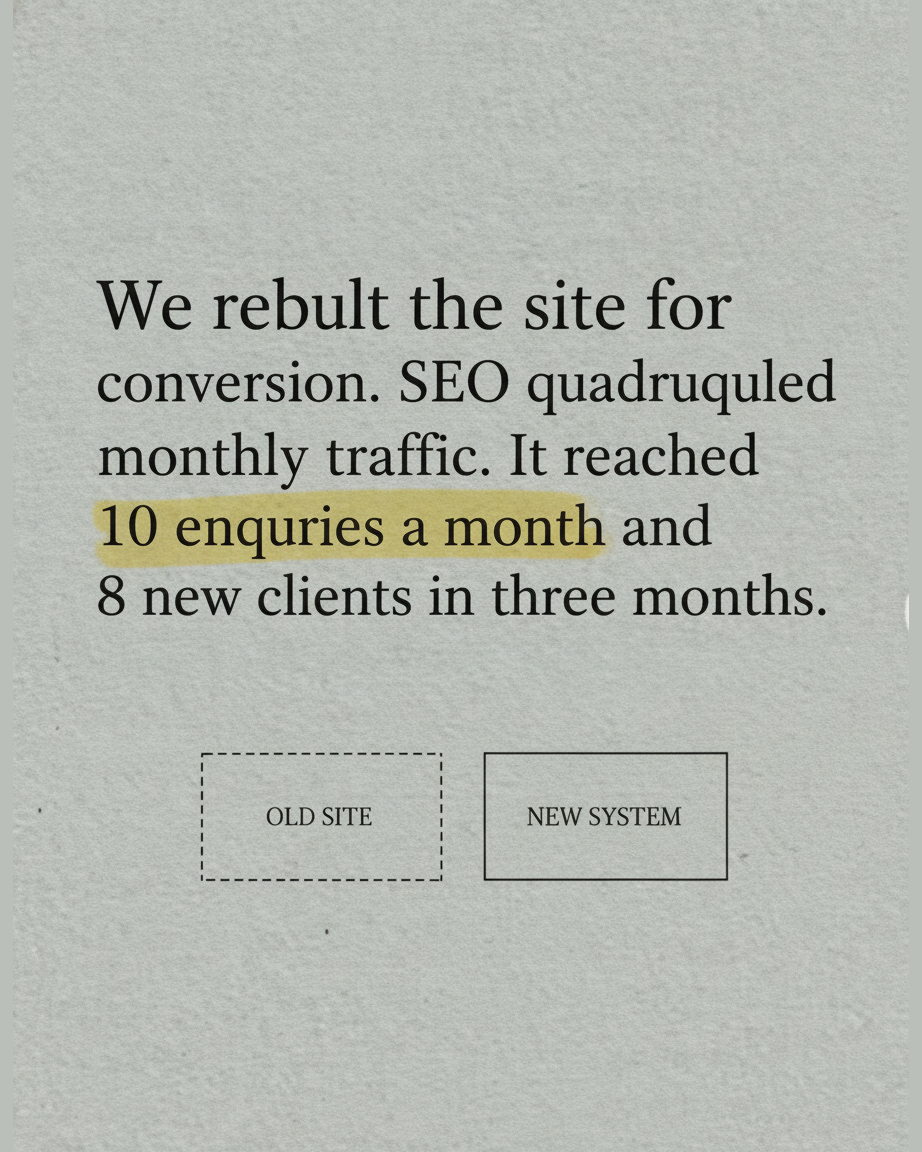
We rebuilt the site around conversion rather than presentation, then worked on search. Monthly traffic quadrupled, which is the part everyone expects to be the story. It was not. The meaningful number was that the same firm reached ten enquiries a month and signed eight new clients within three months.
The old site and the new one were receiving the same kind of visitor. What differed was what happened after the click. One page left people to work out whether the firm was for them. The other answered it, showed evidence and offered a way forward.
Booking turned interest into appointments
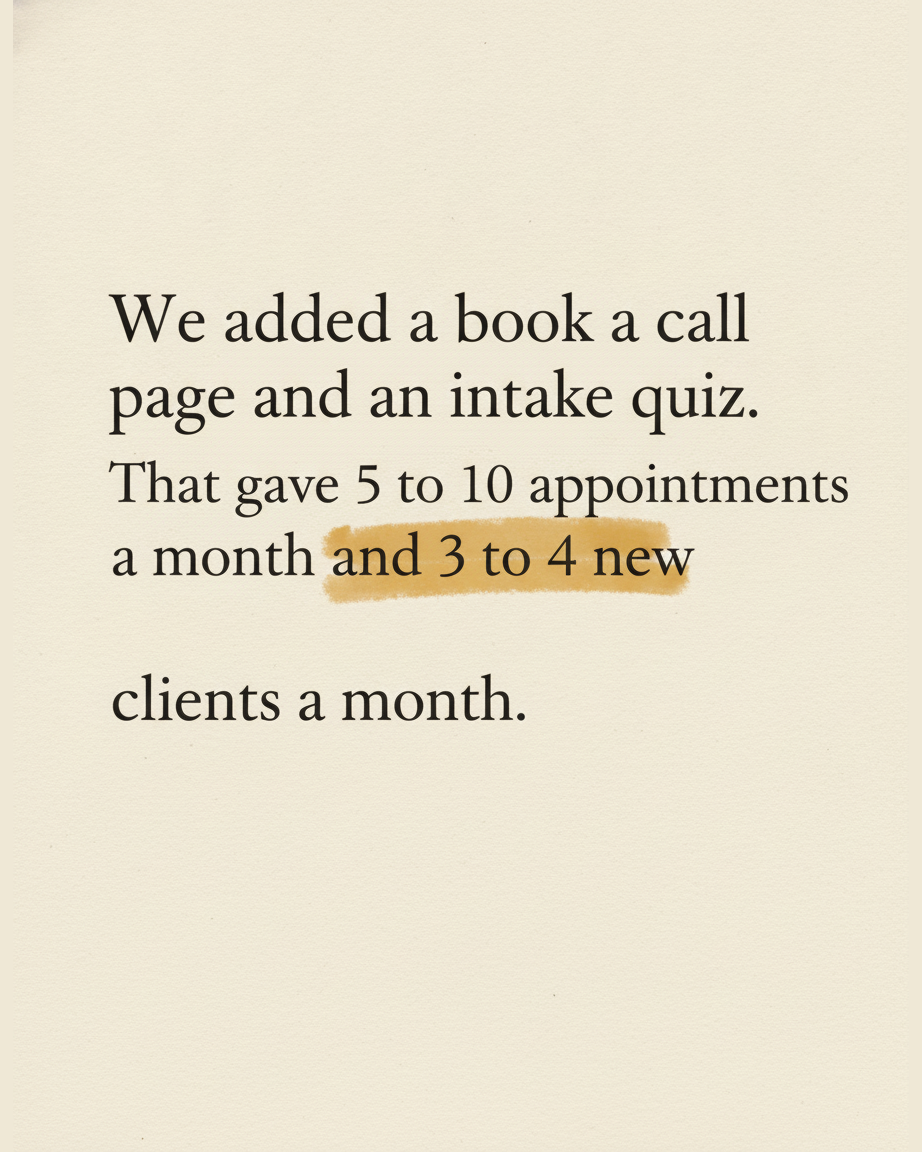
The next change was mechanical. We added a book a call page and an intake quiz, so an interested visitor could put themselves in the diary without composing an email and waiting for a reply. That produced five to ten appointments a month and three to four new clients a month.
Email is a surprisingly high barrier. It asks a stranger to introduce themselves, explain their situation in writing and then sit in silence hoping for a response. A booking route removes all three problems at once, which is why it so often moves the numbers more than another month of content.
Attention landing on uncertainty
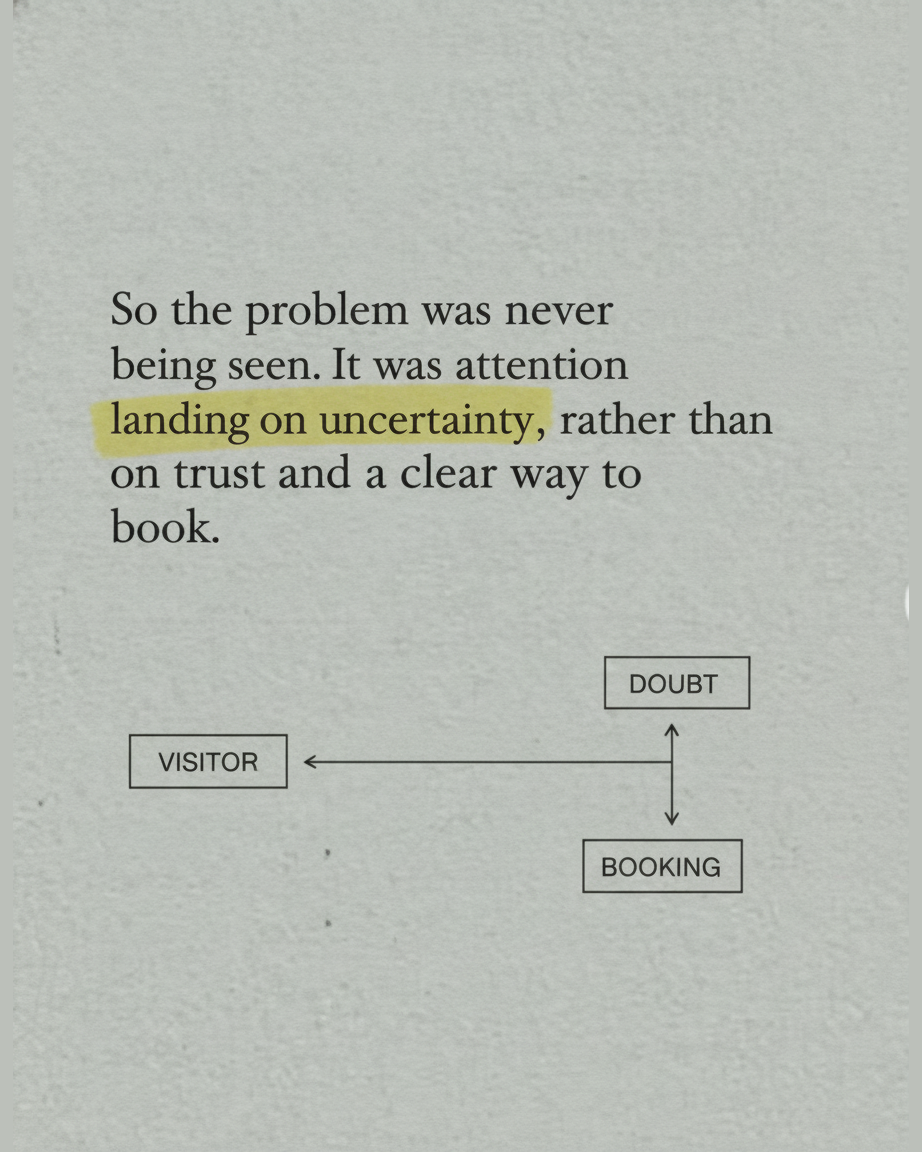
Read those results backwards and the diagnosis becomes obvious. The problem was never being seen. The problem was that attention was landing on uncertainty rather than on trust and a clear way to book.
Every visitor arrives at a fork. One path leads to doubt, which looks like a back button and no record that the person was ever there. The other leads to a booking. The website decides which path is easier to take. Buying more traffic without changing that fork simply increases the number of people quietly choosing doubt.
Three answers a stranger needs
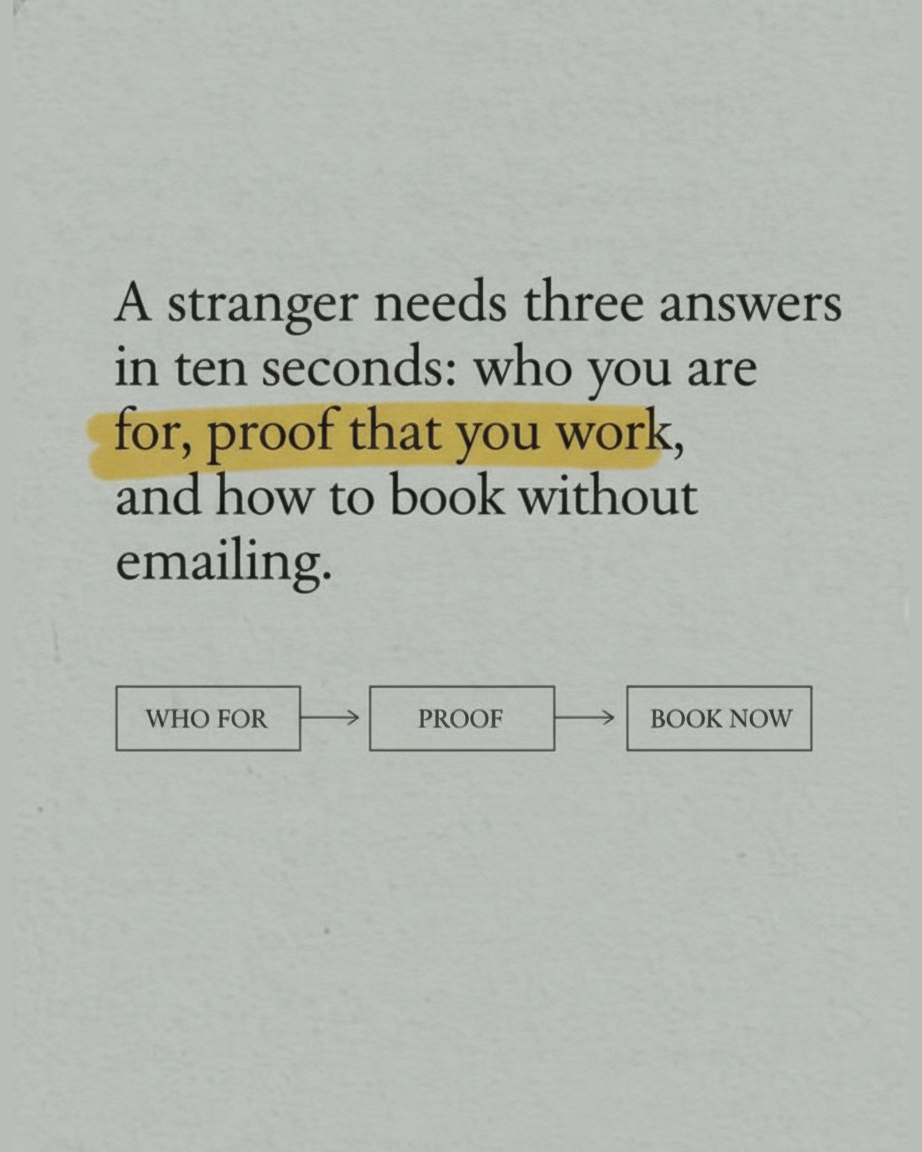
A stranger landing on your homepage needs three answers inside about ten seconds. Who the firm is for, evidence that the firm works, and how to book without sending an email.
They are sequential. Someone who cannot tell whether the firm serves businesses like theirs will not look for proof. Someone who sees no proof will not look for the booking button. And someone who gets through both and finds only a contact form and a general inbox has been handed a reason to postpone. Each missing answer stops the one behind it from mattering.
Trust comes before bought attention
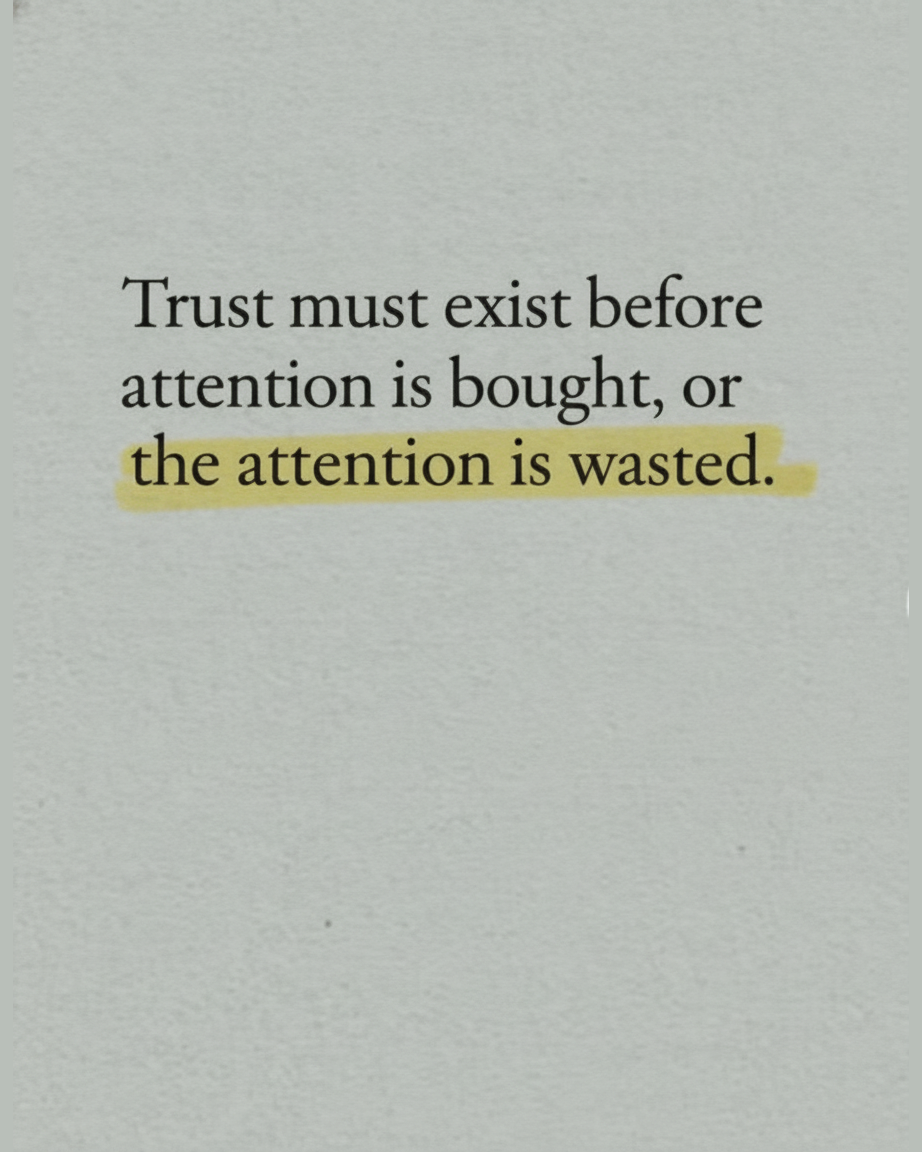
That gives the principle the rest of this rests on. Trust must exist before attention is bought, or the attention is wasted.
It is a sequencing rule rather than an argument against marketing. Spend is not the error. Spending ahead of the thing that converts the spend is the error, because the money buys arrivals at a page that cannot do anything with them. The firm pays twice, once for the clicks and again in the months of quiet that follow while everyone concludes the channel does not work.
Numbers you can actually plan around
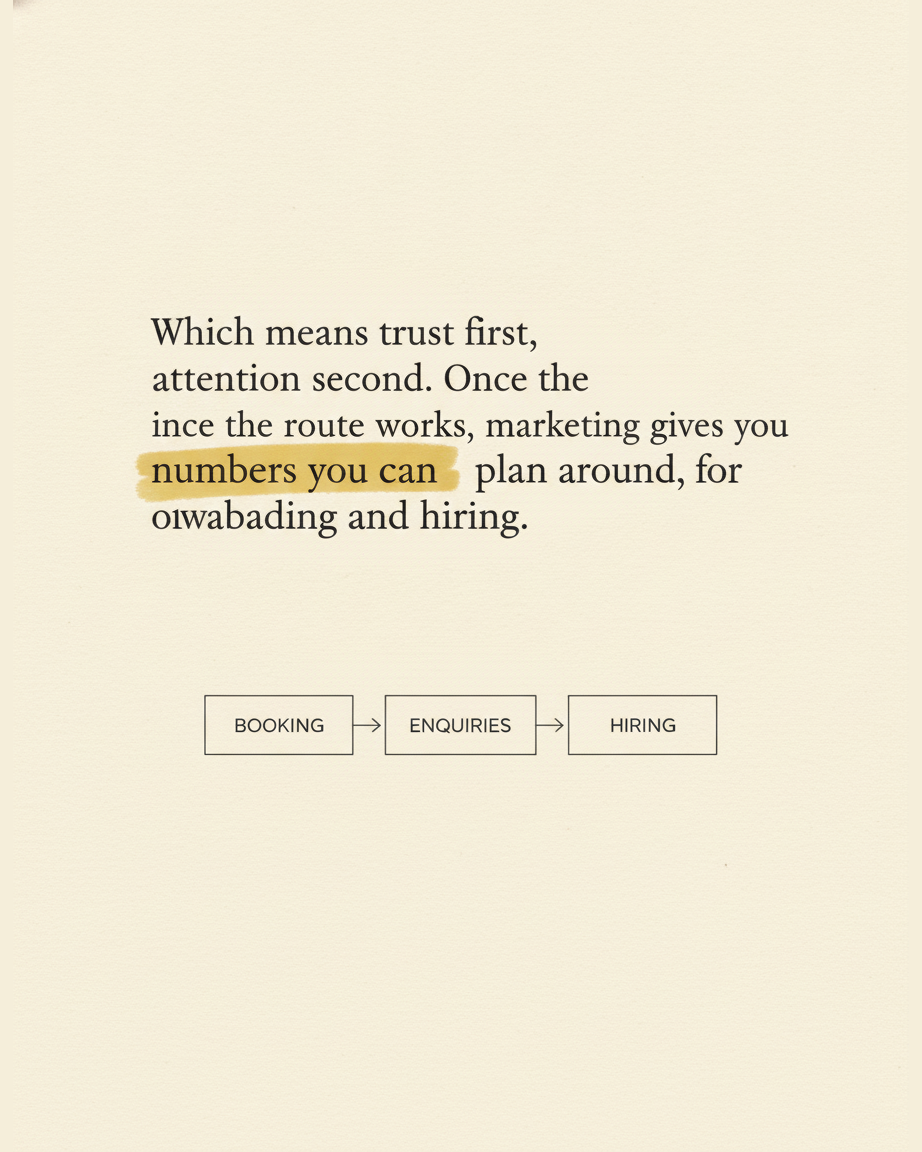
In practice this means trust first and attention second. Once the route from visitor to booked call works, marketing stops being a cost of unknown effect and starts producing numbers you can plan around.
That is the part owners tend to value most. A reliable count of bookings becomes a reliable count of enquiries, which becomes a defensible view of when to onboard, when to recruit and how much capacity the next quarter needs. Attention bought on top of a working route compounds. Attention bought without one produces activity reports and nothing you can staff against.
The ten second test to run on Monday
Here is the test. On Monday, show your homepage to someone who does not know the firm. Give them ten seconds, then close it. Ask three questions. Who is this firm for, what evidence did you see, and could you have booked a time without sending an email.
Pick someone genuinely outside the practice, not a colleague who already knows the answers. The ten second limit is the point, because that is roughly the attention a stranger gives a professional services site before deciding whether to keep reading.
What each answer tells you to do
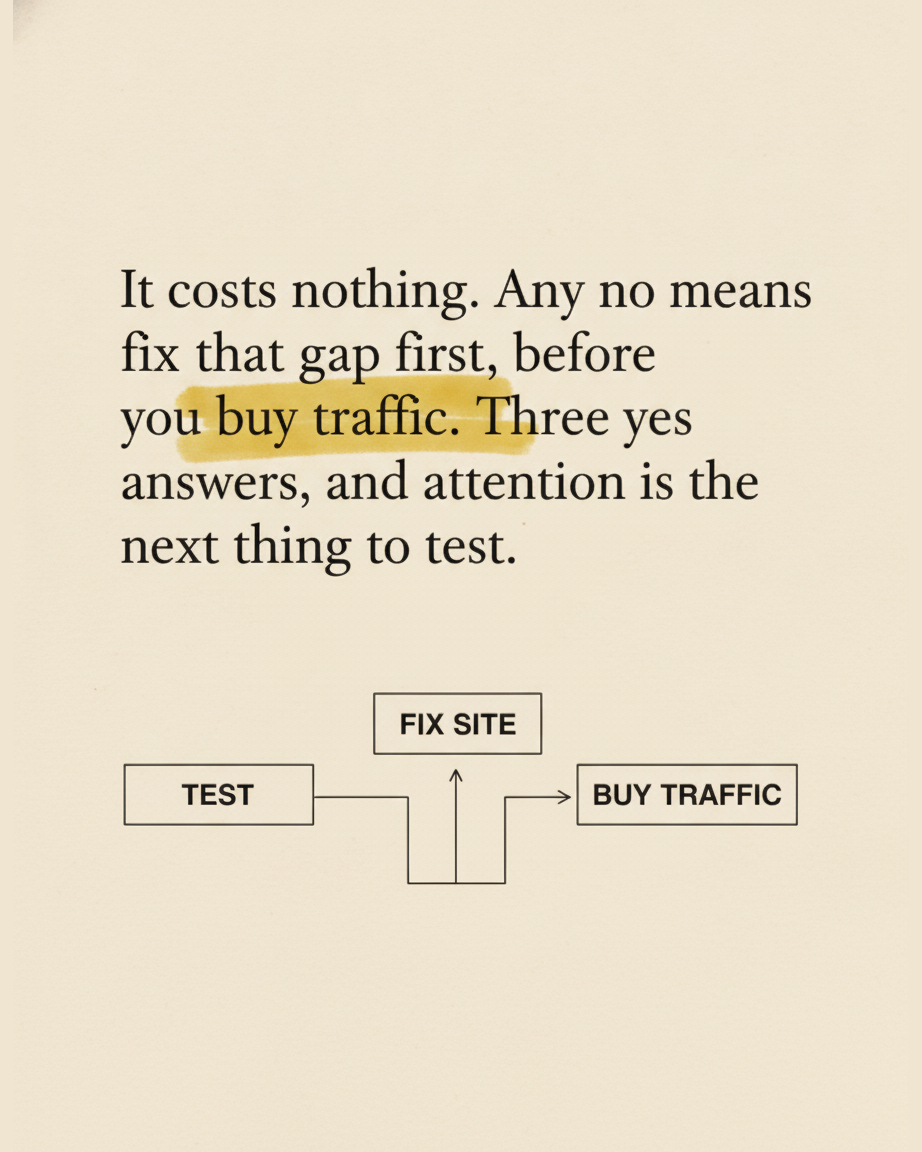
The test costs nothing and no ad spend is required. Any no identifies the next change. If they could not say who the firm is for, name the intended client more clearly. If they saw no evidence, put the evidence in public where a stranger can reach it. If they could not book, add a direct booking route.
Fix that gap before you buy traffic. Three yes answers mean the basic trust path passes, and attention becomes the next sensible variable to test rather than a guess made in the dark.
The cost of skipping the order
Skip the sequence and the cost is quiet rather than dramatic. You can spend another year on content, search and clicks with enquiries still sitting at zero, and every report will show progress on metrics that never turn into work. Nothing fails loudly enough to force a decision, which is exactly why these years accumulate.
Compare that with the alternative. The firm described earlier signed eight new clients in three months once the order was corrected. Same market, same services, same owner with no more time than before.
Where to start
Our position is that visibility is rarely the binding constraint for a firm that already appears on LinkedIn, in search and on Google. The constraint is what happens in the first ten seconds on the website, and whether a stranger can tell who you serve, see that you work and put themselves in the diary.
There are firms where the honest answer is genuinely a traffic problem, and the test will show that too. That is the value of running it, because it settles the argument either way before any money moves.
So run it on Monday. If the answers come back as no and you would rather not spend another year finding out the slow way, we are happy to look at the page with you.