Your first ask decides who turns up to the sales call
Firms often blame the sales call for weak prospects when the filtering happened much earlier. The wording of the first ask on a page or advert decides who gets through. This is for practice owners seeing interest but not the clients they want.
The question we hear most often from firm owners runs like this: the campaigns are getting interest, the list is growing, so why are the higher value clients still missing? Almost always the answer sits in the first ask, and almost always the comparison worth running is a free download versus a direct booking ask.
A download collects names. A booking page collects intent. Those are different populations, and the one you collect is decided before anyone speaks to you.
Our position is simple. The first ask selects the prospect. If you ask for an email in exchange for a checklist, you select people who are willing to take free paper. If you ask for a booking, you give serious buyers a route to act and you let everyone else leave quietly.
Four clients at high value
We ran this swap with a firm that had a free checklist sitting on a live page. It had been collecting addresses for months and producing nothing worth having. We replaced it with a direct booking page for the same service, left the traffic and the budget alone, and watched what came through.
Four clients at high value followed. That is the headline, but the number is not the interesting part. The interesting part is that nothing changed except the sentence asking the visitor to act. Same service, same market, same money. Different buyer.
The smaller ask assumption
The logic behind a lead magnet is reasonable on its face. Ask for less and more people will say yes. Build the relationship over email, then invite the warmest ones to talk. If a smaller ask genuinely made premium buyers more likely, an email address traded for a free checklist would bring worthwhile enquiries.
We believed a version of this for a long time, and plenty of firms still run on it. It is worth stating the assumption out loud, because once you write it down you can test whether the list you built actually contains the people you wanted.
The first ask is not a warm up step before the real conversation. It is the filter that decides who reaches the real conversation, and the wording of that offer selects the buyer.
A download only proves one thing
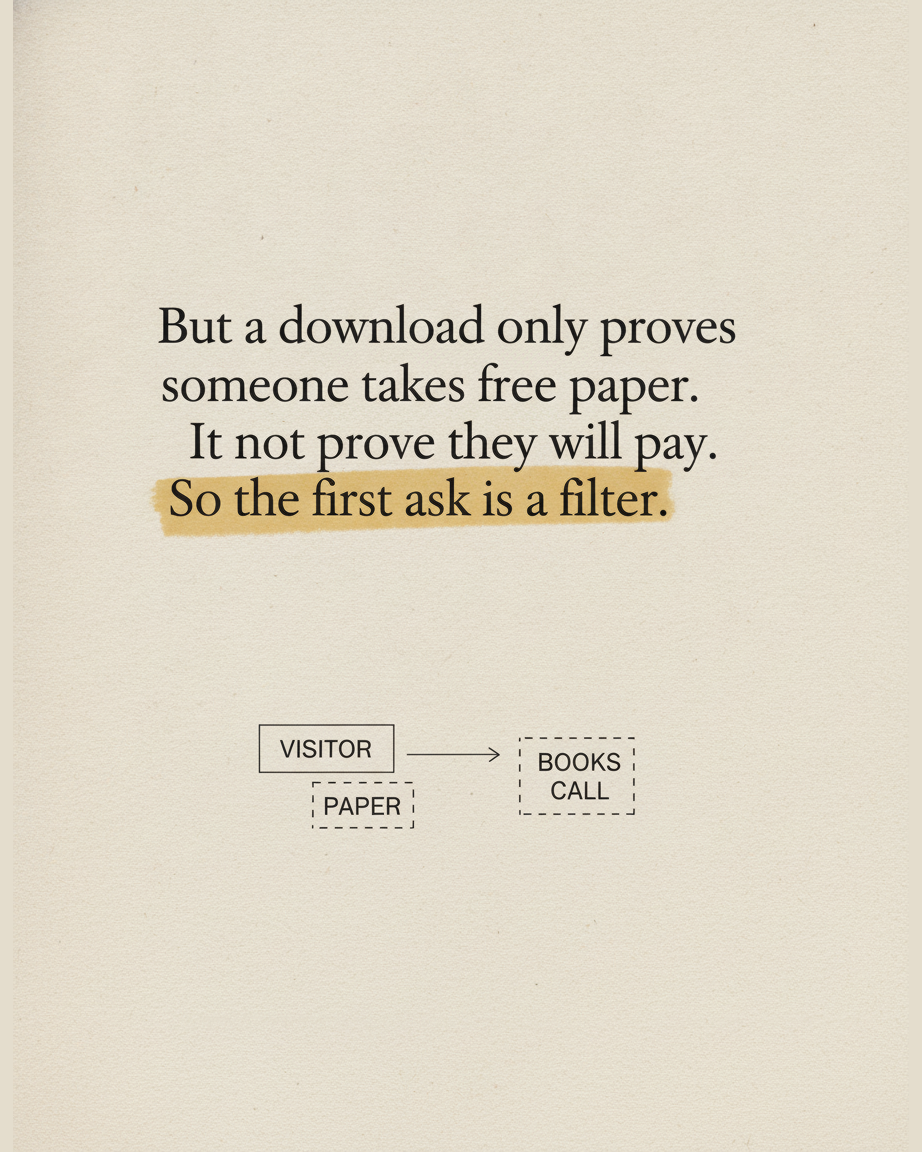
The assumption breaks at the point of evidence. A download proves that someone was willing to take free paper. It does not prove they have a problem worth paying to solve, a budget, or any intention of speaking to an accountant this quarter.
So the first ask is a filter, whether you designed it that way or not. Every visitor meets a fork. One route costs them an email address and thirty seconds. The other route costs them a slot in their diary and the mild discomfort of committing to a conversation. The second cost is the one that sorts people.
A two office practice tries it
Here is the case in full. A two office UK practice sells a company set up service for clients incorporating in the US. It is a specific service with a specific buyer, and the firm had a free checklist on the page doing the work of qualifying them. The checklist gave nothing worth having.
We built a booking page in its place and produced 27 short video advertisements to point at it. The volume matters for a reason we will come back to. One ask cannot tell you whether the message is wrong, so we gave the platform enough variants to find out.
One winner, then a steady flow
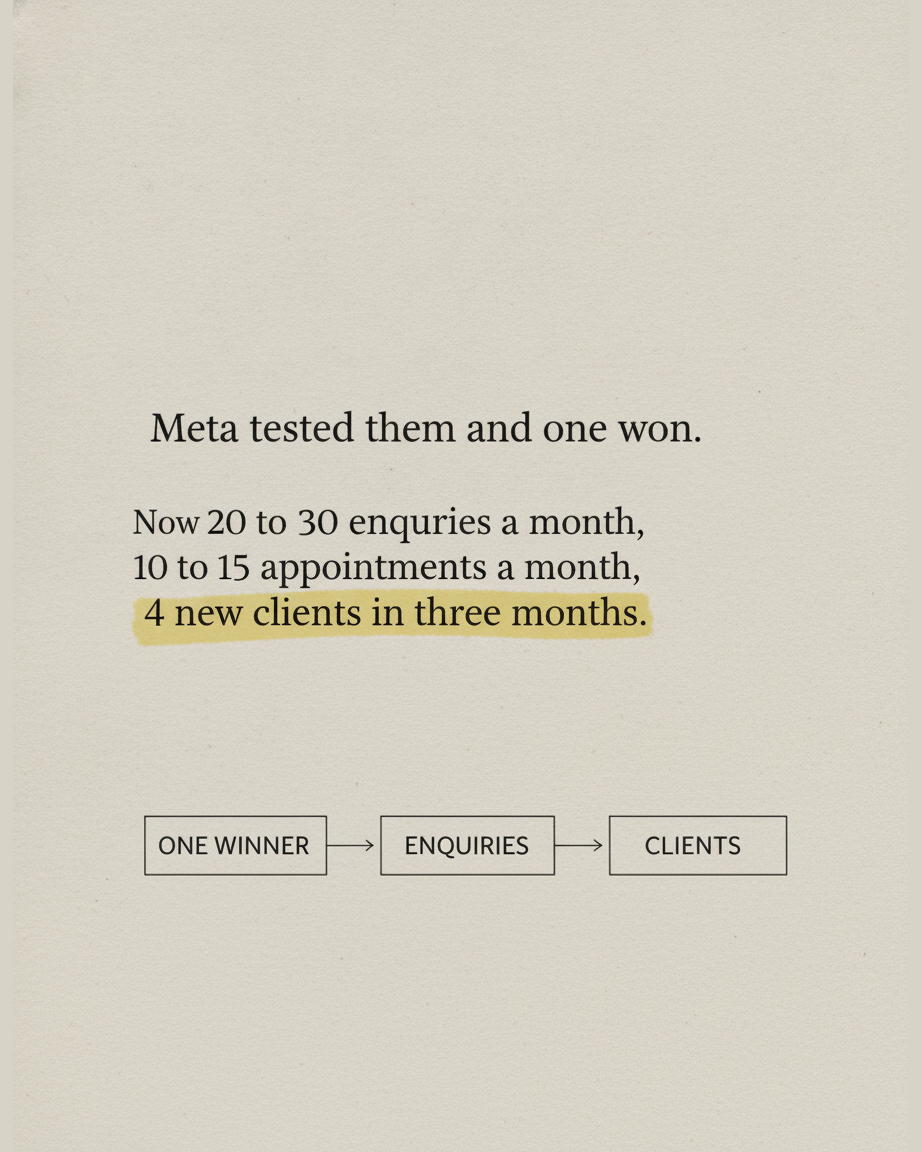
Meta tested the 27 variants against each other and one won clearly. From there the pattern settled: 20 to 30 enquiries a month, 10 to 15 appointments a month, and 4 new clients inside three months.
Read those three numbers as a chain rather than a scoreboard. Enquiries are not the point on their own, and neither are appointments. What changed was the proportion of enquiries that turned into a diary slot with someone who could actually buy the service. That ratio is the one we watch, and it is the one a download page quietly destroys.
Values far above average
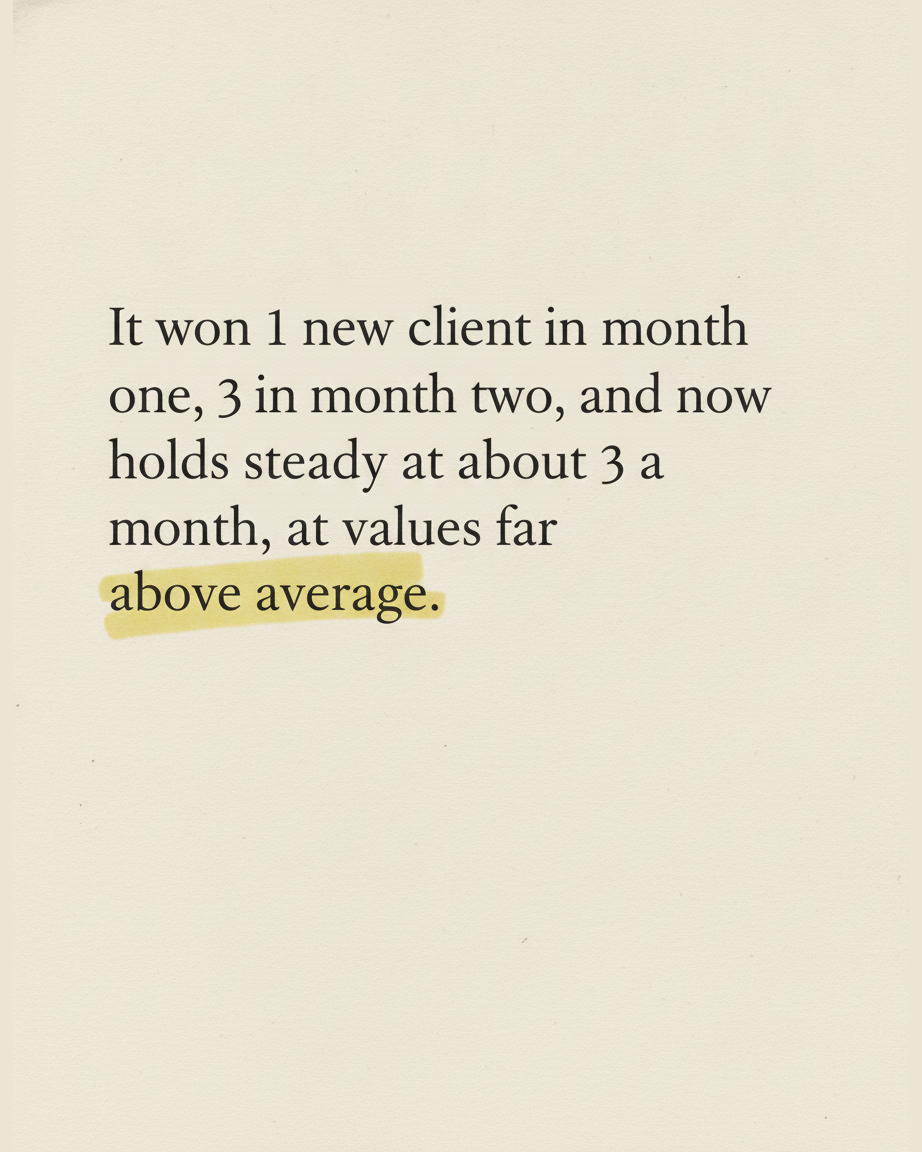
The shape of the growth is worth noting. One new client in month one, three in month two, then a steady run of roughly three a month. No spike followed by silence, which is what a one off burst of attention usually produces.
The more important detail is the value of those clients. They sat far above average for the practice. This is the part that gets missed when firms judge a campaign on enquiry count alone. A page that generates fewer enquiries but attracts people who buy the larger piece of work is the better page, and the raw numbers will never tell you that.
The ask set the intent
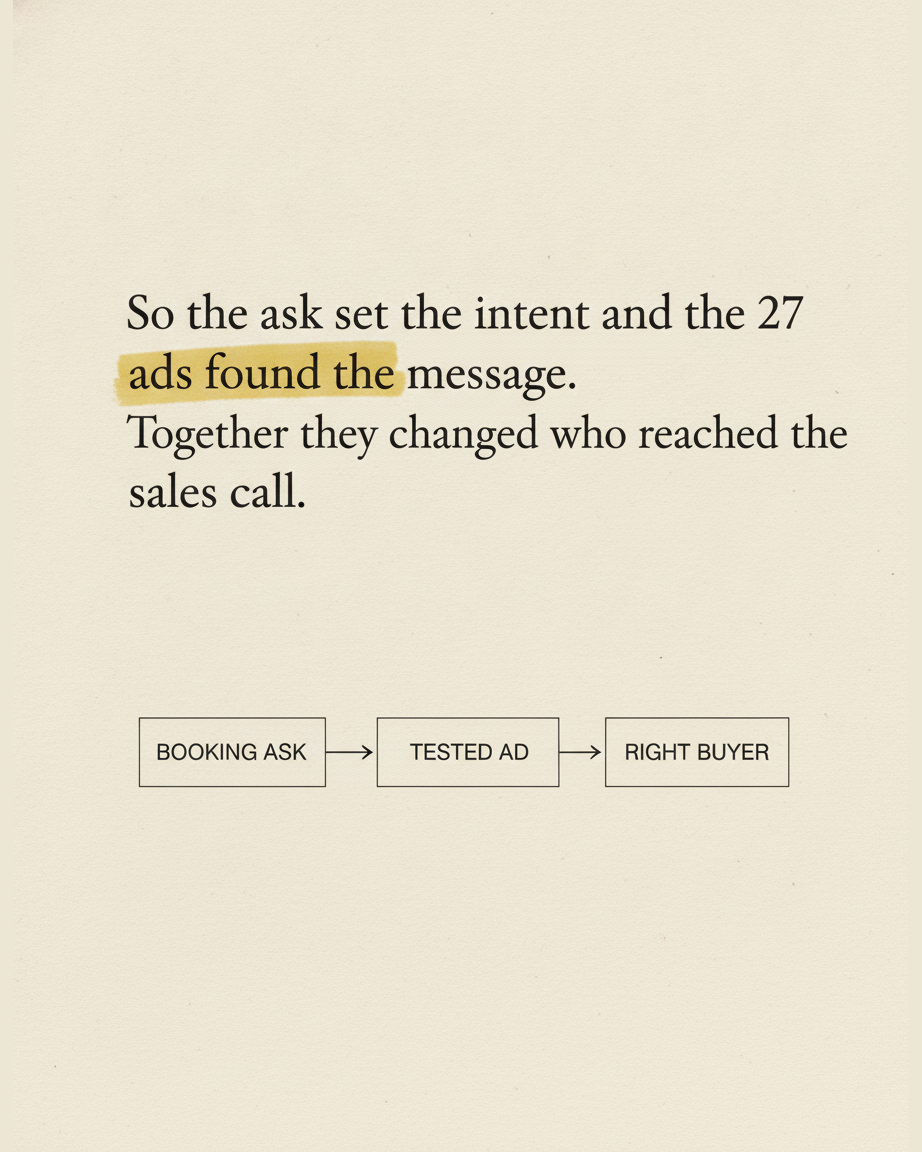
Two things were doing separate jobs here, and it helps to keep them apart. The ask set the intent, deciding what kind of person was willing to take the next step at all. The 27 advertisements found the message, deciding which framing of the service got that person's attention in the first place.
Together they changed who reached the sales call. The sales conversation itself did not improve. The people arriving at it did. That distinction is the whole argument, and it is why we start upstream when a firm tells us the leads are poor.
What another year of this costs
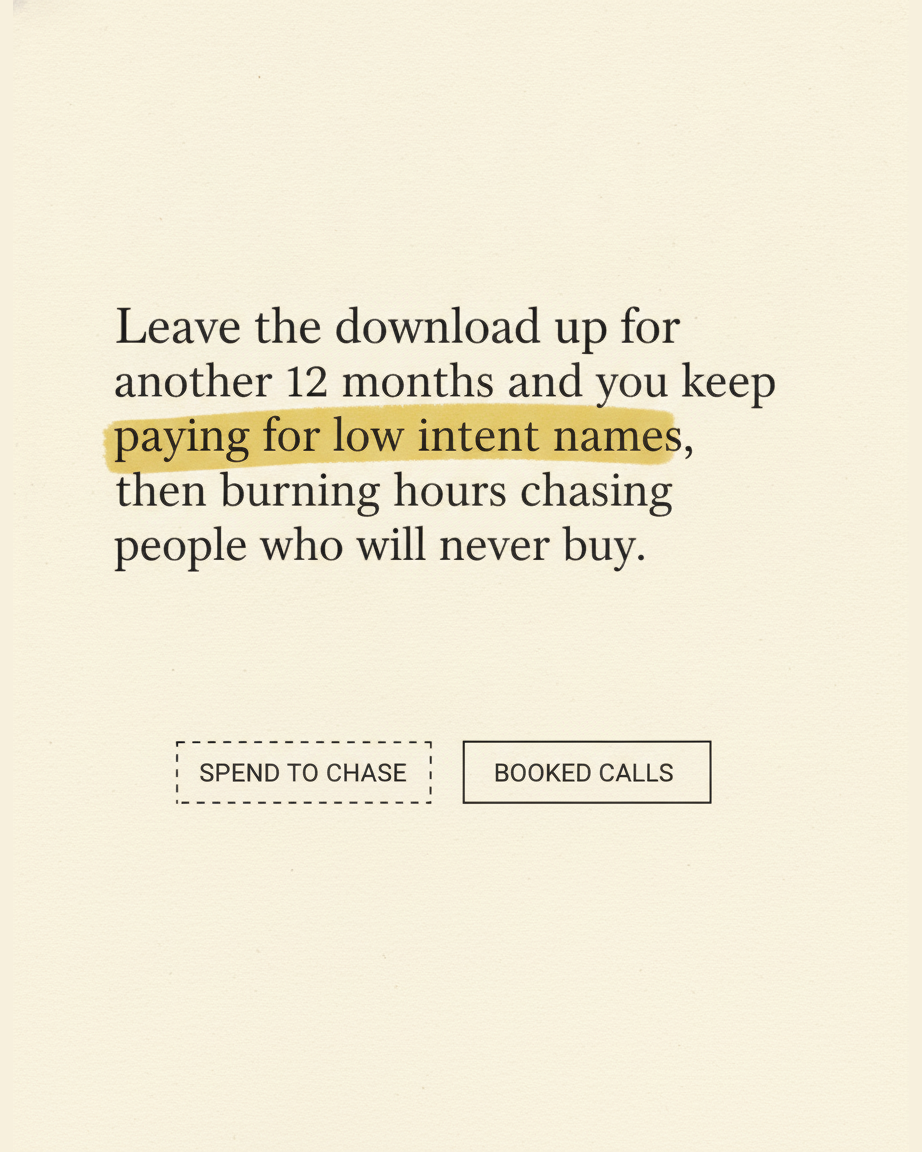
There is a cost to leaving things as they are, and it is not only the advertising spend. Keep the download live for another twelve months and you go on paying for low intent names, month after month, at whatever your cost per lead happens to be.
Then comes the second cost, which lands on your team rather than your card. Someone has to work that list. Hours disappear into follow up emails and polite calls with people who were never going to buy. The spend is visible in a dashboard. The wasted capacity usually is not, which is why it survives so long.
The swap to run on Monday
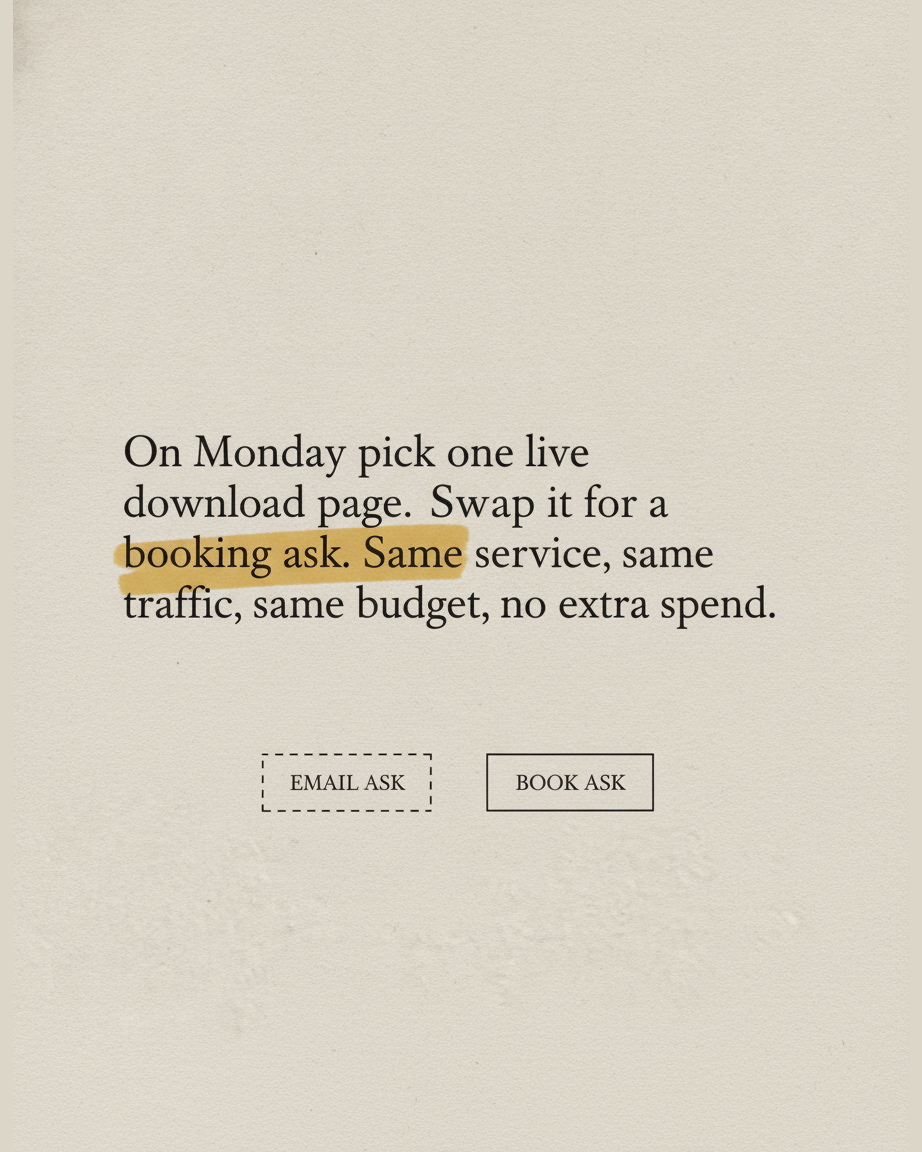
You do not need a new campaign to find out whether this applies to you. On Monday, find one live page or advert that asks for an email in exchange for a checklist or a download. Replace that ask with a direct booking ask for the same service.
Everything else stays fixed. Same traffic source, same service, same budget, no additional spend. The point of holding those constant is that any change in results can only be attributed to the ask itself. If you redesign the page and rewrite the advert at the same time, you learn nothing you can rely on.
Log it daily, compare fortnights
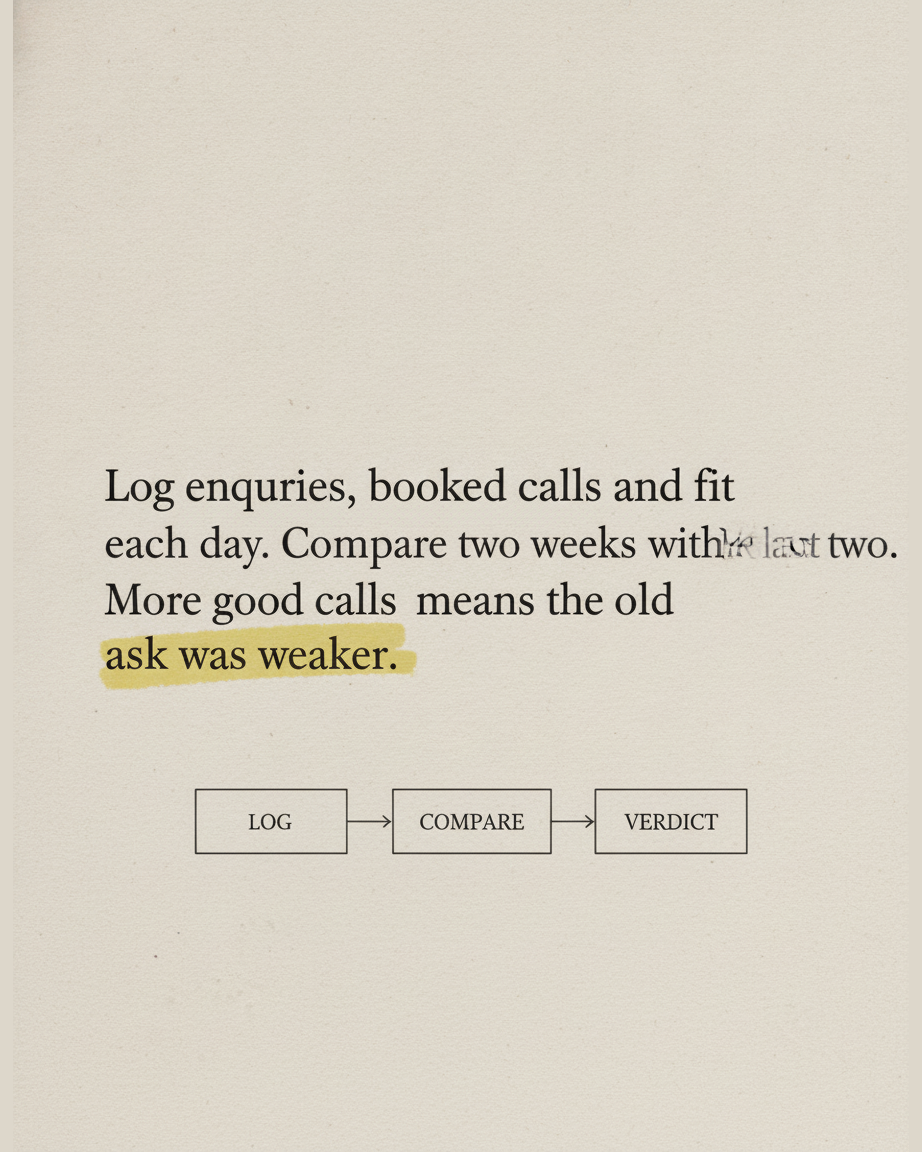
Record three things every day: enquiries received, appointments booked, and whether each prospect fits the client you actually want. The third column is the one firms skip, and it is the only one that answers the original question.
After two weeks, compare the fortnight against the fortnight before it. If suitable booked appointments have improved, the old ask was selecting weaker intent and you have your answer. Daily logging matters because memory flatters whichever option you prefer. Written entries, made at the time, are harder to argue with when the result is inconvenient.
If nothing improves, stay narrow
The test can come back flat, and that result deserves as much discipline as a positive one. Keep the conclusion narrow. What you have learned is that this ask, on this page, for this service, did not move suitable booked appointments in a fortnight. You have not learned that booking asks do not work.
The next variable to examine is the offer wording, because the problem may be what you are inviting people to book rather than the act of booking. The temptation at this stage is to restore the download on instinct. Resist it and change one thing instead.
The wording selects the buyer
Strip the case study away and one principle remains. The wording of an offer selects the buyer. Every sentence that asks someone to act is also deciding who will bother, and you are making that decision whether you think about it or not.
This is why we treat the first ask as a commercial choice rather than a copywriting detail. The firm in this piece did not become better at selling. It stopped inviting the wrong people and started giving the right ones a clear route to act. That is the whole of the change, and it is available to most practices this week.
Where to start
If your campaigns are producing interest without producing the clients you want, look at the first ask before you look at anything else. A free download selects people who take free paper. A direct booking ask, paired with wording that has been tested rather than guessed, gives serious buyers a route to act.
We are not claiming lead magnets never have a place. There are services and markets where a slower path makes sense. The claim is narrower than that: the ask is a filter, and most firms have never checked which one theirs is running.
If your practice looks like the one described here, a short conversation will tell you either way, without a pitch attached.