Why traffic is rarely the reason your website produces so few enquiries
Most firms respond to a quiet website by buying more attention. The more common problem is that a visitor cannot tell who the site is for, cannot find evidence, and cannot book without sending an email. This is for owners weighing up more SEO, more ads or another rebuild.
There is a particular kind of frustration in having website traffic but no enquiries worth following up. The analytics look healthy enough. People arrive, read a little, and leave. Nothing in the inbox suggests any of it happened.
The instinct at that point is to buy more attention. More search work, a paid campaign, perhaps a fresh design. We understand why, because traffic is the one number that moves when you spend.
Our position is simpler. A website earns enquiries when a specific buyer can see that the page is for them, find evidence without hunting, and book without emailing. If those three things are missing, more visitors meet the same gap and leave the same way. The repair is usually free, and it takes an afternoon.
From five or six enquiries to thirty
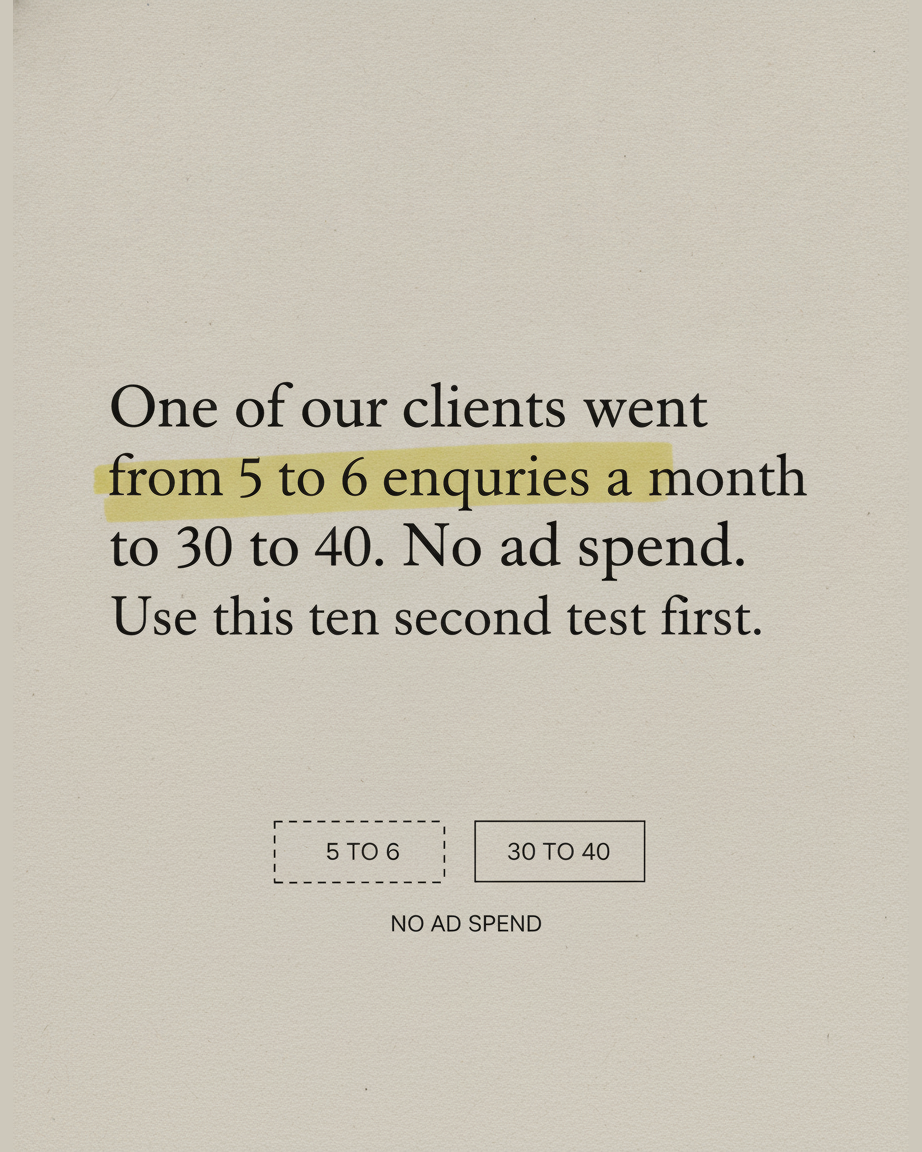
One of our clients moved from five or six enquiries a month to thirty or forty. No ad spend was added. That is worth stating plainly at the start, because it is the part of this argument people find hardest to accept. The volume of attention reaching the business did not change in any meaningful way. What changed was what happened to that attention when it arrived.
Before you approve another budget line, it is worth running a ten second test on your own homepage. It costs nothing and it tells you whether you have a traffic problem or a trust problem.
The assumption behind buying more attention
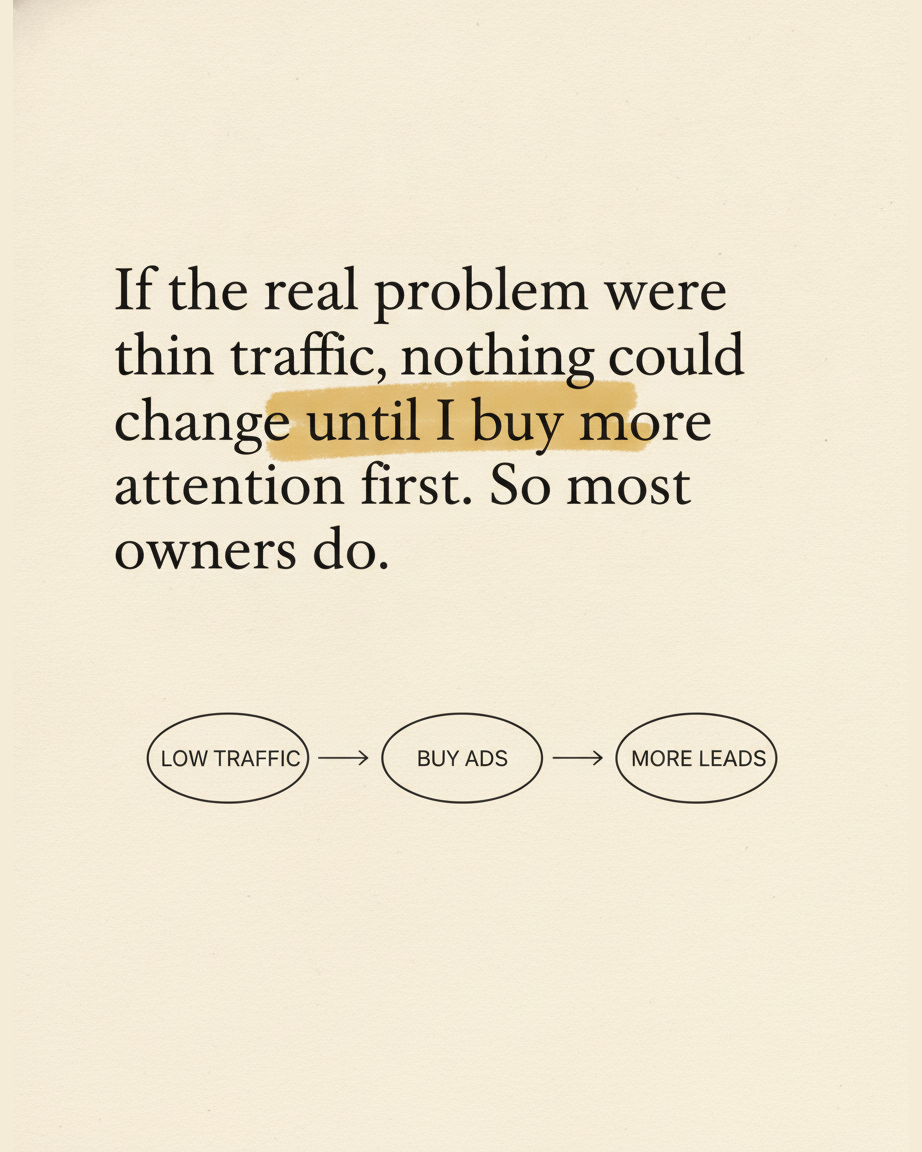
If thin traffic really is the problem, then nothing can improve until you buy more attention. That logic holds together, which is why most owners follow it. Low traffic leads to ads, ads lead to more leads, and the only question left is how much to spend.
The trouble is that the first step is an assumption rather than a finding. Very few firms test it before they commit. We tend to see the opposite picture when we look at the numbers: enough people arrive, and almost none of them take a next step. That is not a volume failure. It is something happening on the page itself.
Trust has to exist before attention is bought. Pay for visitors to a page that cannot say who it serves or show what it has done, and you are buying the same silence at a higher price.
A five person firm, no ad spend
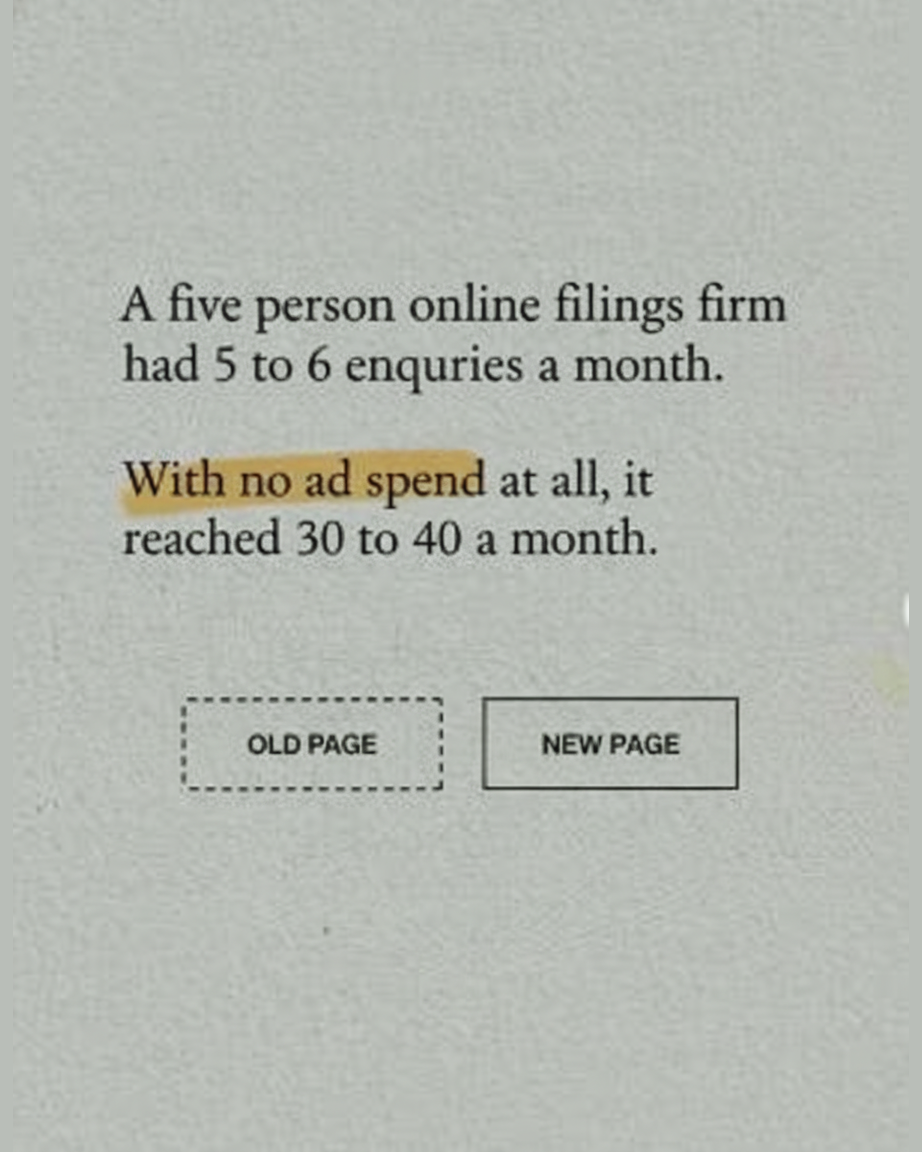
The firm in question was a five person online filings practice. It sat at five or six enquiries a month for a long time, with a website that looked respectable and said very little. With no ad spend at all, it reached thirty to forty enquiries a month.
We want to be careful about what that proves. It does not prove that every quiet website is one afternoon away from a different result. It proves that the ceiling in this case was not set by how many people arrived. The old page and the new page met roughly the same audience, and only one of them converted it.
What the enquiries turned into
Enquiries on their own are a soft measure, so it is fair to ask what happened next. The same firm now books twenty to thirty appointments a month and added twenty nine new clients in under four months. Enquiries are still climbing.
That detail matters because it rules out the obvious objection. A page that is clearer about who it serves could, in theory, simply attract more unsuitable enquiries and waste more of the team's time. Here the opposite happened. Naming the buyer narrowed the people who made contact and raised the proportion worth a conversation. Fewer polite dead ends, more diaries filled.
The destination changed, not the paint
It would be convenient to describe this as a restyle, because restyles are easy to buy. That is not what happened. The whole destination changed. The page was built for one buyer rather than anyone who might conceivably need an accountant. Proof was put on show instead of being kept for the second conversation. One story ran through the site rather than four competing ones. Leads that came in were managed rather than left in a shared inbox.
Those are four separate decisions, and none of them is a design choice. A new colour palette on the old structure would have produced the old result in nicer type.
Strangers decide before they call
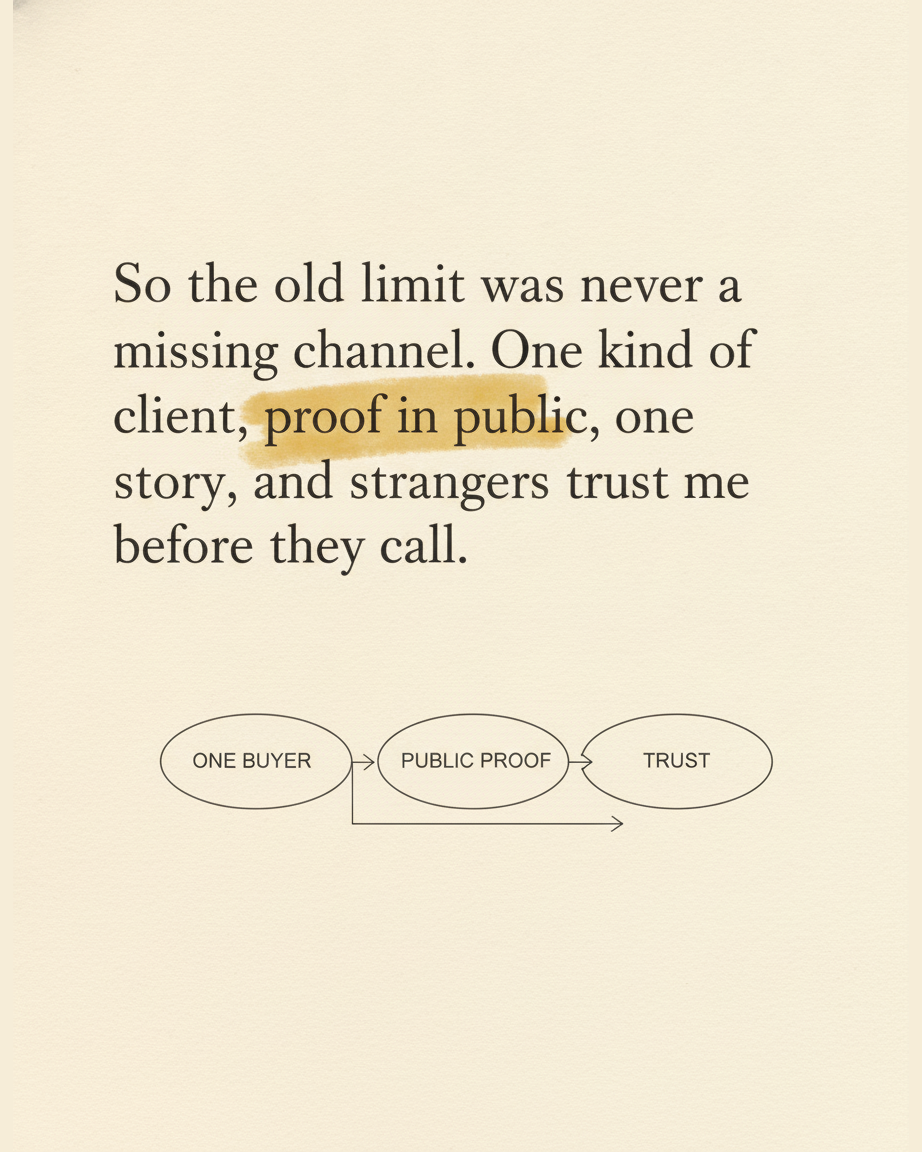
Once you look at it that way, the old limit was never a missing channel. One kind of client, proof in public, one story, and strangers arrive at the point where they trust you before they call.
That sequence is the whole mechanism. Nobody picks up the phone to a firm they are unsure about in order to find out whether it is the right firm. They decide first, quietly, from whatever is in front of them, and then they make contact. The website is doing the work of a referral when there is no referral. If it cannot do that work, the call never comes and you never learn why.
It has to be visible in ten seconds
If trust is formed before contact, it has to be formed quickly, because nobody studies a homepage. Which means the three things have to be seen in ten seconds. The first line names the buyer. Proof sits near the top rather than on a page nobody reaches. Booking needs no email.
Ten seconds sounds unfair until you watch how people actually behave on a phone. They glance, scroll once, and either stay or go. Everything below that first screen is read only by people who have already decided you might be worth reading. The job of the top of the page is to earn that decision.
The cost of leaving it another year
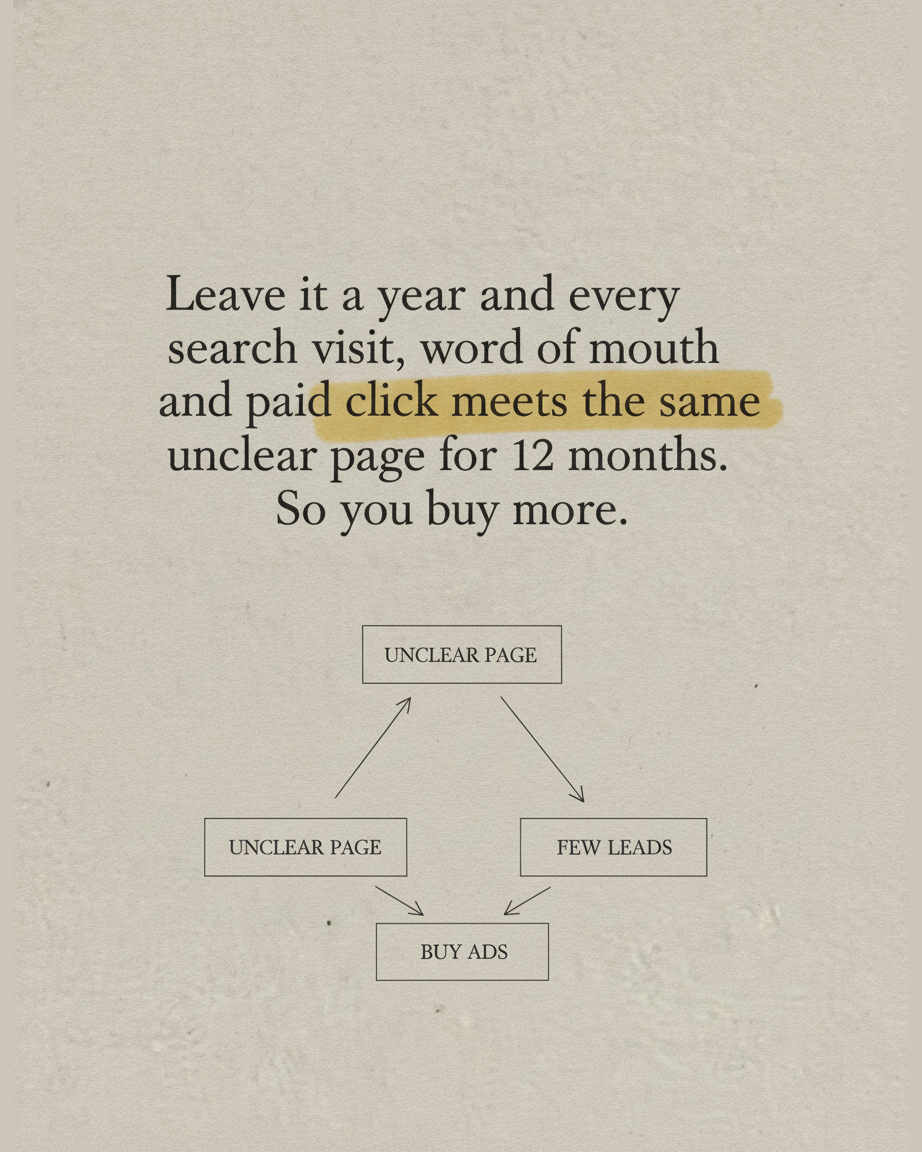
Leave the page as it is for a year and every search visit, every word of mouth referral and every paid click meets the same unclear page for twelve months. Referrals are the painful part. Someone recommends you, the person looks you up, and the site quietly undoes the recommendation.
What usually follows is the loop we see most often. The page is unclear, so leads are few, so you buy ads to make up the shortfall, which sends more people to the unclear page. The spend rises, the conversion rate stays where it was, and the conclusion drawn at the end of the year is that marketing does not work for your firm.
Trust comes before bought attention
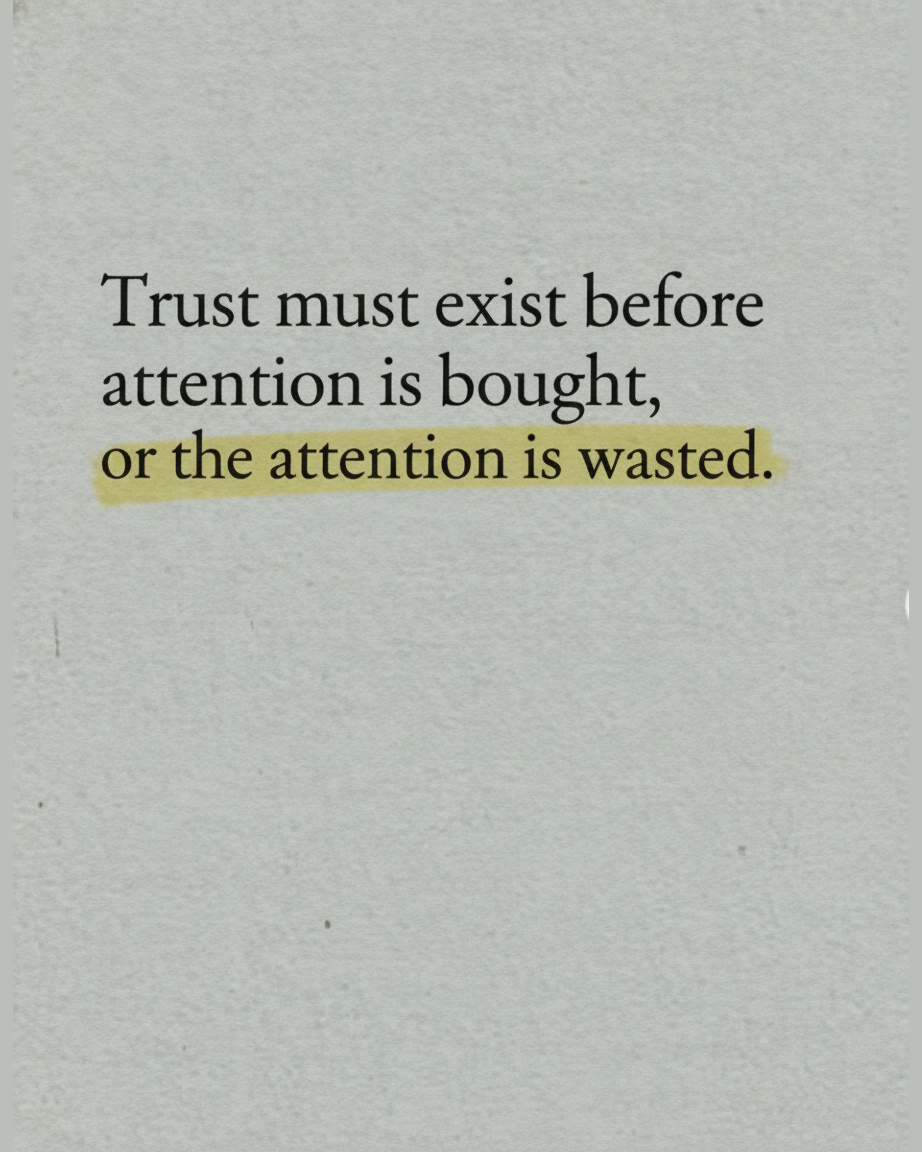
The principle underneath all of this is short. Trust must exist before attention is bought, or the attention is wasted.
It is worth holding on to because it settles the order of operations. Advertising does not create belief, it only delivers people to wherever belief is meant to form. If the destination cannot do that, the ad has bought you a visit and nothing else. The money is gone either way. We are not arguing against paid traffic, which works well for firms whose pages are ready for it. We are arguing against buying it first and hoping the page catches up.
Open your homepage on a phone
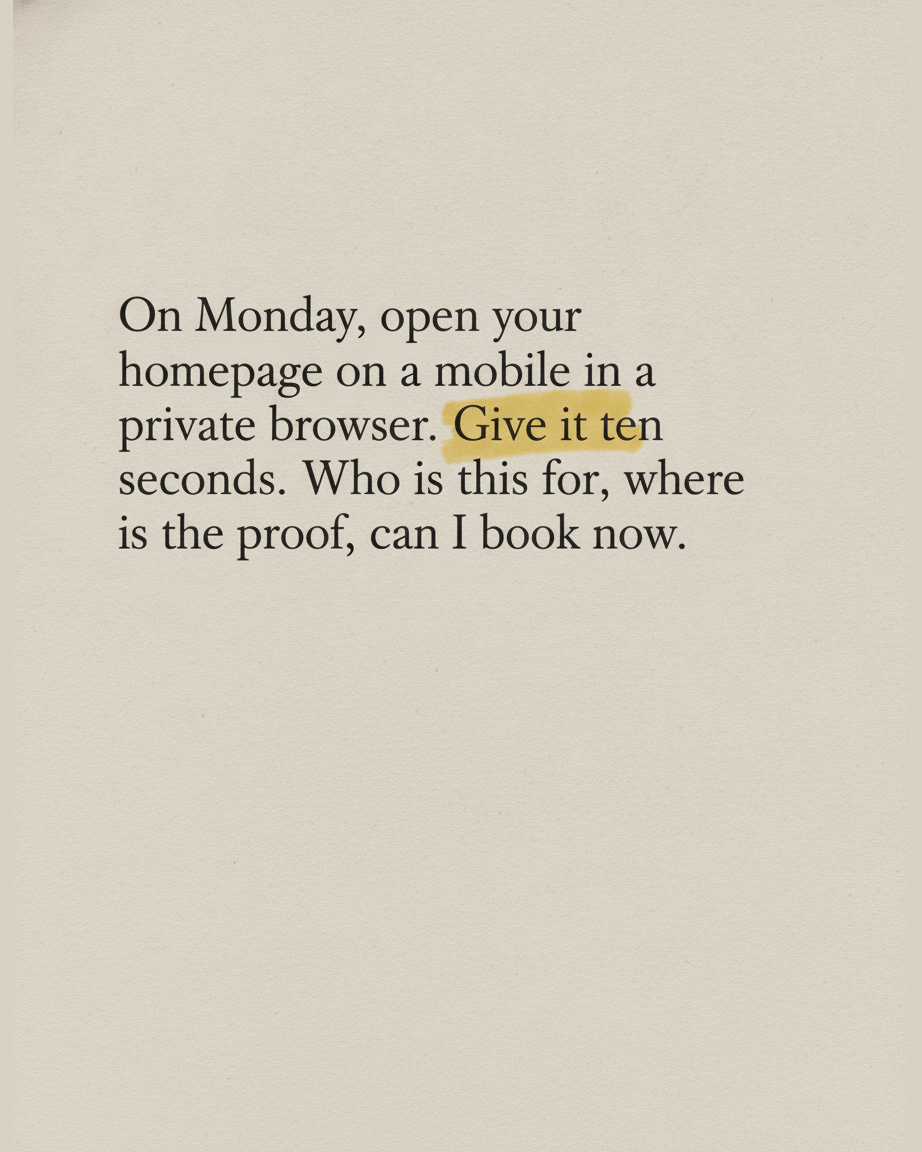
So here is the test, and it takes less time than reading about it. On Monday, open your homepage on a mobile in a private browser so you see it as a stranger does, without your own history filling in the gaps. Give it ten seconds.
Ask three questions. Can a stranger identify the exact kind of client the firm serves. Can they see evidence or reviews without hunting for them. Can they book without sending an email. Answer honestly, which is harder than it sounds when you wrote the page yourself. If you can, hand the phone to someone outside the firm and ask them instead.
What to do with every no
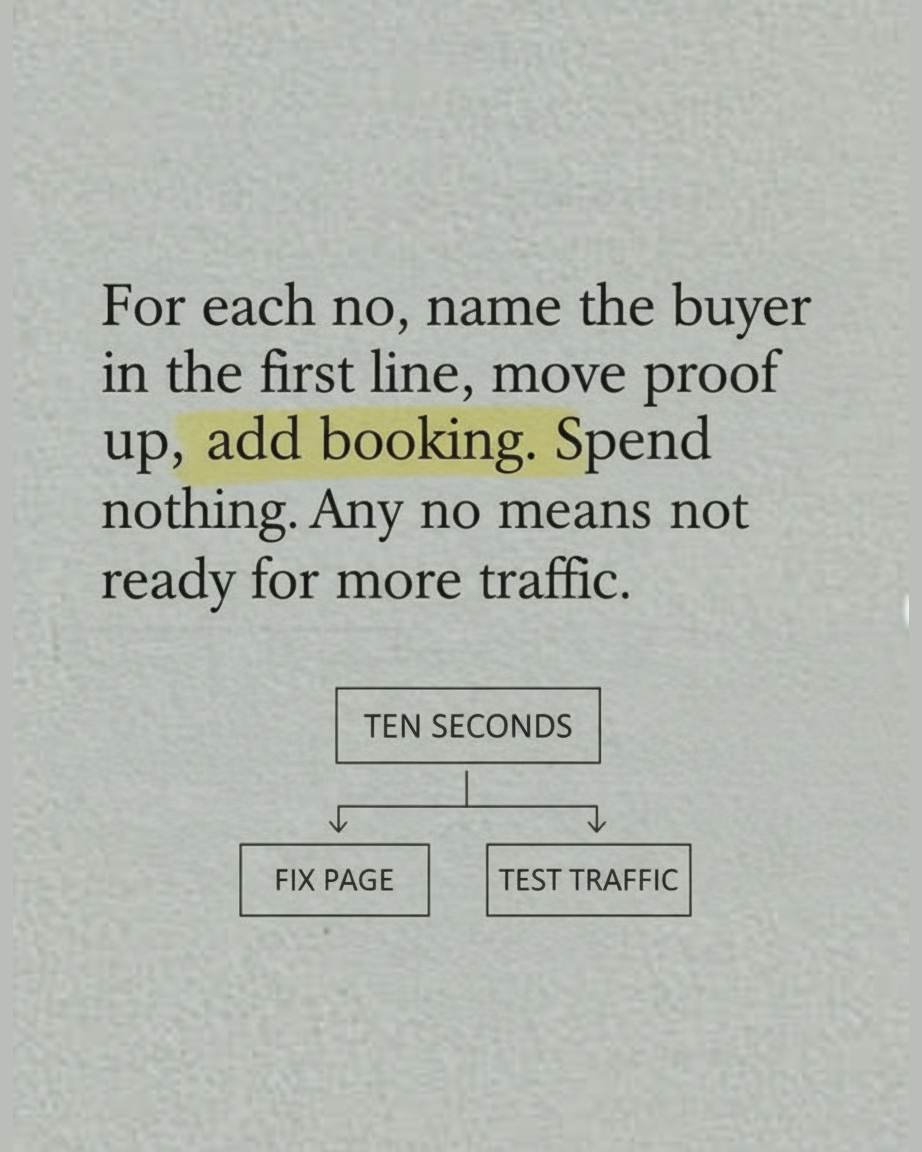
For each no, there is one repair. If the buyer is not clear, replace the generic first line with the client you actually want. If the evidence is buried, move the reviews and results you already have near the top. If booking means emailing, add a direct route to a time in the diary. None of this requires ad spend and none of it requires a rebuild.
Then run the ten second test again. Any remaining no means the page is not ready for more traffic. Three yes answers mean it passes the basic trust test and is ready for a controlled traffic test, which is a different claim from a guarantee that it will convert.
Keep this for budget week
The useful moment for this test is not today. It is the week before you approve more SEO, another ad budget or a full website rebuild, when a proposal is on the desk and the number at the bottom is large enough to make you pause.
Run the ten seconds first. If the page passes, the proposal is probably worth considering and you will judge it on better evidence. If it fails, you have found something cheaper to fix than anything in the quote, and you have found it before the money left the account. That is the whole argument in one habit.
Where to start
A website earns enquiries when a specific buyer can see it is for them, find evidence and book without emailing. More traffic does not repair those omissions, it only exposes them to more people.
There is nuance here. Some firms genuinely are invisible, and for them attention is the right purchase. The point is that you cannot know which situation you are in until you have run the ten second test and acted on the answers. Most owners discover the cheaper problem.
If your homepage failed on one or more of the three questions and you would rather not guess at the repair, we are happy to look at it with you and say plainly which gap is costing you most.